THE ADVENTURE COLLECTIVE® · Independent discovery and booking for outdoor travel

Ride from a small ranch outside Cusco through eucalyptus ridges to the Inca sites of Qenko, Puca Pucara, Tambomachay and Sacsayhuaman. This half-day, walking-pace tour pairs accessible horsemanship with high-Andean views and cultural insight.
Ride from a small ranch outside Cusco through eucalyptus ridges to the Inca sites of Qenko, Puca Pucara, Tambomachay and Sacsayhuaman. This half-day, walking-pace tour pairs accessible horsemanship with high-Andean views and cultural insight.
A low wooden gate opens onto a dirt corral and the Andes stretches eastward like folded cloth. Riders mount at a small ranch just outside central Cusco and set off at a steady, walking pace, horses moving with the slow confidence that comes from generations of use in this high valley.
Verified experiences and guided adventures in the surrounding area.
Operated by Valencia Travel Agency S.a.c. · Cusco, Cusco
A low wooden gate opens onto a dirt corral and the Andes stretches eastward like folded cloth. Riders mount at a small ranch just outside central Cusco and set off at a steady, walking pace, horses moving with the slow confidence that comes from generations of use in this high valley.
The route skirts the archaeological sites that ring Cusco: first Qenko's carved stone and ceremonial niches, then the red ramparts of Puca Pucara, and the water-carved terraces of Tambomachay before threading a short eucalyptus ridge to Sacsayhuaman's broad stone plaza. These ruins sit between 3,400–3,700 m, so the ride is more about altitude and steady footing than steep technical climbs. Paths are mostly compact dirt with short rocky stretches; total riding distance on a half-day group tour typically ranges from 6–10 km at walking speed, with modest cumulative elevation gain (roughly 200–300 m).
This landscape is Inca country: control points, ritual baths, and ceremonial platforms that illustrate imperial engineering and a worldview centered on water and light. The eucalyptus stands are a later introduction—planted in the 19th and 20th centuries—and offer a fragrant buffer between sites.
Practical guidance: allow 24–48 hours to acclimatize in Cusco, bring layers, sunscreen, and 1–2 liters of water. Helmets and basic tack are provided; wear sturdy closed-toe shoes and be prepared to dismount briefly if you choose to tour a ruin—note that entering some sites requires the Cusco Tourist Ticket. The pace is gentle and well suited to riders with basic fitness; guides and horsemen lead at walking speed, making this a manageable, scenic introduction to horseback travel in the high Andes.
easy.
4 hours.
Suitable for people with basic fitness; must be able to mount/dismount and sit on a horse for several hours.
No prior experience is required. Tours use calm horses and horsemen lead groups at a walking pace; guides give basic handling instruction.
No, the ticket to enter some archaeological sites is typically not included. Bring cash to purchase it if you plan to explore ruins on foot.
Possibly—Cusco sits around 3,400 m. Acclimatize for 24–48 hours, stay hydrated, and avoid heavy alcohol before the ride.
Yes, basic safety equipment such as helmets and first-aid kits are provided by the operator.
The route links peripheral Inca sites that controlled access to Cusco: Puca Pucara served as a checkpoint, Tambomachay is associated with water worship, and Sacsayhuaman was a ceremonial and defensive complex.
These archaeological sites are fragile; stay on designated paths, avoid climbing unmarked walls, and support local operators who follow site-protection rules.
Valencia Travel Agency S.a.c. operates guided outdoor trips and adventures with an emphasis on safety, stewardship, and memorable experiences.
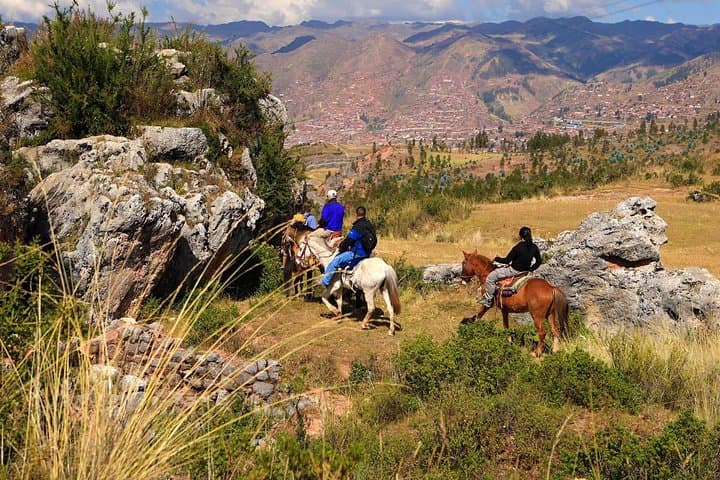
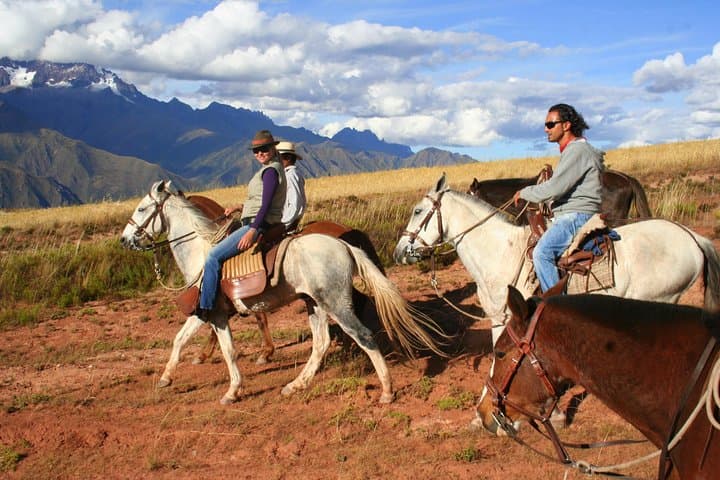
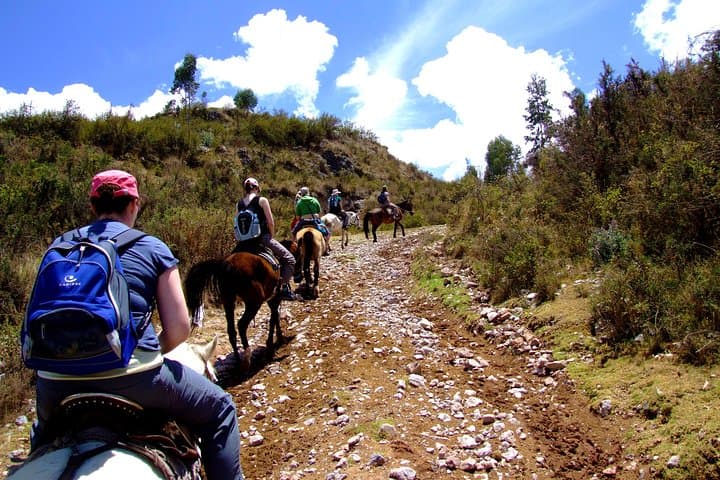
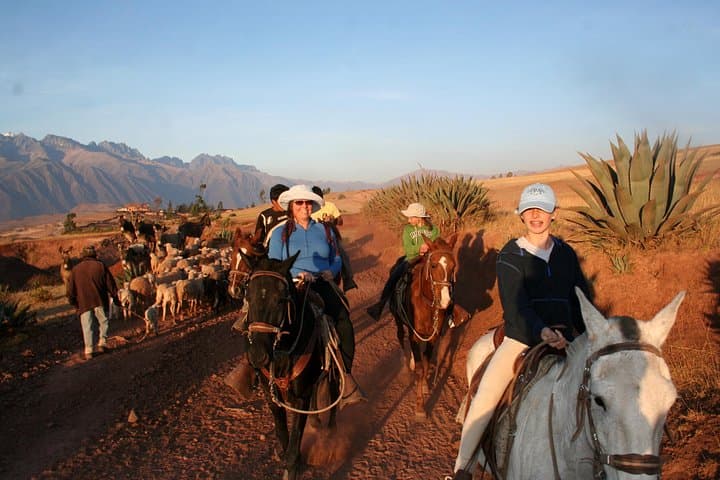
A low wooden gate opens onto a dirt corral and the Andes stretches eastward like folded cloth. Riders mount at a small ranch just outside central Cusco and set off at a steady, walking pace, horses moving with the slow confidence that comes from generations of use in this high valley.
A low wooden gate opens onto a dirt corral and the Andes stretches eastward like folded cloth. Riders mount at a small ranch just outside central Cusco and set off at a steady, walking pace, horses moving with the slow confidence that comes from generations of use in this high valley.
The route skirts the archaeological sites that ring Cusco: first Qenko's carved stone and ceremonial niches, then the red ramparts of Puca Pucara, and the water-carved terraces of Tambomachay before threading a short eucalyptus ridge to Sacsayhuaman's broad stone plaza. These ruins sit between 3,400–3,700 m, so the ride is more about altitude and steady footing than steep technical climbs. Paths are mostly compact dirt with short rocky stretches; total riding distance on a half-day group tour typically ranges from 6–10 km at walking speed, with modest cumulative elevation gain (roughly 200–300 m).
This landscape is Inca country: control points, ritual baths, and ceremonial platforms that illustrate imperial engineering and a worldview centered on water and light. The eucalyptus stands are a later introduction—planted in the 19th and 20th centuries—and offer a fragrant buffer between sites.
Practical guidance: allow 24–48 hours to acclimatize in Cusco, bring layers, sunscreen, and 1–2 liters of water. Helmets and basic tack are provided; wear sturdy closed-toe shoes and be prepared to dismount briefly if you choose to tour a ruin—note that entering some sites requires the Cusco Tourist Ticket. The pace is gentle and well suited to riders with basic fitness; guides and horsemen lead at walking speed, making this a manageable, scenic introduction to horseback travel in the high Andes.