THE ADVENTURE COLLECTIVE® · Independent discovery and booking for outdoor travel

See three of Rio’s defining sights in six hours: the open-armed Christ Redeemer, Selarón’s colorful steps and the soaring views from Sugarloaf. This compact tour mixes short walks with van and cable-car transfers for a practical, photo-ready morning or afternoon.
See three of Rio’s defining sights in six hours: the open-armed Christ Redeemer, Selarón’s colorful steps and the soaring views from Sugarloaf. This compact tour mixes short walks with van and cable-car transfers for a practical, photo-ready morning or afternoon.
You step out of the van into the cool, green hush of Tijuca and the city opens beneath you: favela rooftops, a ribbon of beach, and the bay glittering like a dare. The guide steers you up the paved approach to Corcovado where the 38m statue of Christ Redeemer waits with broad, watchful arms; from this perch the geometry of Rio—beaches, islands, and the sinuous Rodrigo de Freitas Lagoon—unfolds.
Verified experiences and guided adventures in the surrounding area.
Operated by Gray Line Brazil · Rio de Janeiro, Rio de Janeiro
You step out of the van into the cool, green hush of Tijuca and the city opens beneath you: favela rooftops, a ribbon of beach, and the bay glittering like a dare. The guide steers you up the paved approach to Corcovado where the 38m statue of Christ Redeemer waits with broad, watchful arms; from this perch the geometry of Rio—beaches, islands, and the sinuous Rodrigo de Freitas Lagoon—unfolds.
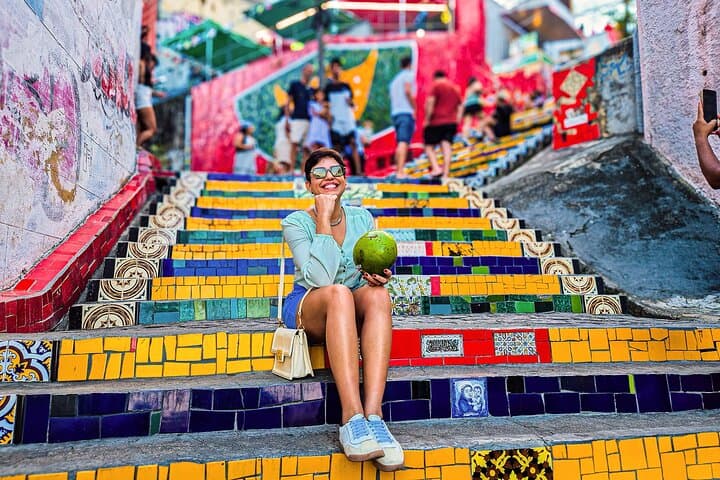
The day threads three stories of the city: the reforested slopes of Tijuca National Park, a 19th–20th century rescue of Atlantic Forest; Jorge Selarón’s tiled staircase in Lapa, a living, evolving folk-art project begun in the 1990s; and Sugarloaf’s granite monoliths, carved by ancient erosion and now climbed by cable car to 395 meters for sweeping views of Guanabara Bay.
Santa Teresa’s colonial streets offer a quieter pause—old Rio architecture, art studios and steep, cobbled lanes that contrast with the modernity below.
Practical notes: hotel pickup in Rio’s South Zone is included; the tour balances short walks and van transfers so basic mobility is enough. Expect 40–50 minutes at Corcovado and about 45 minutes atop Sugarloaf if you choose the cable-car option. Bring sun protection, a refillable water bottle and secure pockets—crowds can surge at viewpoints. Timing matters: morning light and late-afternoon sunsets change the city’s color and the quality of photos. Weather can close higher viewpoints, so reconfirm the morning of the tour and plan the rest of your afternoon accordingly.
easy.
6 hours.
Suitable for travelers in average fitness—short walks, steps and standing at viewpoints; minimal sustained exertion.
Van access to Corcovado and cable car tickets to Sugarloaf are included if you select that option—confirm your booking details before departure.
Yes; short walks are involved and strollers are accommodated, though there are steps at viewpoints.
High viewpoints can be closed or visibility reduced; operators typically reconfirm the morning and cancellation/refund policies apply if the tour is canceled.
Pickup is offered for hotels in Rio’s South Zone; exact pickup time is provided upon reconfirmation and you can request a single pickup point to avoid multiple stops.
Corcovado’s Christ Redeemer was completed in 1931 and has since become a symbol of modern Rio; the Selarón Steps are a living art project by Chilean artist Jorge Selarón started in the 1990s.
Tijuca is one of the largest urban rainforests re-grown and protected as a national park; visitors should stay on paths, avoid feeding wildlife and carry out trash to minimize impact.
Gray Line Brazil operates guided outdoor trips and adventures with an emphasis on safety, stewardship, and memorable experiences.



You step out of the van into the cool, green hush of Tijuca and the city opens beneath you: favela rooftops, a ribbon of beach, and the bay glittering like a dare. The guide steers you up the paved approach to Corcovado where the 38m statue of Christ Redeemer waits with broad, watchful arms; from this perch the geometry of Rio—beaches, islands, and the sinuous Rodrigo de Freitas Lagoon—unfolds.
You step out of the van into the cool, green hush of Tijuca and the city opens beneath you: favela rooftops, a ribbon of beach, and the bay glittering like a dare. The guide steers you up the paved approach to Corcovado where the 38m statue of Christ Redeemer waits with broad, watchful arms; from this perch the geometry of Rio—beaches, islands, and the sinuous Rodrigo de Freitas Lagoon—unfolds.
The day threads three stories of the city: the reforested slopes of Tijuca National Park, a 19th–20th century rescue of Atlantic Forest; Jorge Selarón’s tiled staircase in Lapa, a living, evolving folk-art project begun in the 1990s; and Sugarloaf’s granite monoliths, carved by ancient erosion and now climbed by cable car to 395 meters for sweeping views of Guanabara Bay.
Santa Teresa’s colonial streets offer a quieter pause—old Rio architecture, art studios and steep, cobbled lanes that contrast with the modernity below.
Practical notes: hotel pickup in Rio’s South Zone is included; the tour balances short walks and van transfers so basic mobility is enough. Expect 40–50 minutes at Corcovado and about 45 minutes atop Sugarloaf if you choose the cable-car option. Bring sun protection, a refillable water bottle and secure pockets—crowds can surge at viewpoints. Timing matters: morning light and late-afternoon sunsets change the city’s color and the quality of photos. Weather can close higher viewpoints, so reconfirm the morning of the tour and plan the rest of your afternoon accordingly.