THE ADVENTURE COLLECTIVE® · Independent discovery and booking for outdoor travel

Float 3–4 miles of the Chena River on a guided half-day fishing excursion from Fairbanks. Learn local techniques for Arctic grayling and northern pike while drifting through off-the-grid river country with hotel pickup included.
Float 3–4 miles of the Chena River on a guided half-day fishing excursion from Fairbanks. Learn local techniques for Arctic grayling and northern pike while drifting through off-the-grid river country with hotel pickup included.
By midmorning the Chena River moves like a patient guide, widening and easing its current as your drift boat slips into a channel lined with willow and spruce. The guide checks knots, hands you a rod, and points to a deep tail-current where the river seems to collect its secrets; you cast, and for a moment the water itself seems to consider the offering before the line tightens.
Verified experiences and guided adventures in the surrounding area.
Operated by 1st Alaska Outdoor School · Fairbanks, Alaska
By midmorning the Chena River moves like a patient guide, widening and easing its current as your drift boat slips into a channel lined with willow and spruce. The guide checks knots, hands you a rod, and points to a deep tail-current where the river seems to collect its secrets; you cast, and for a moment the water itself seems to consider the offering before the line tightens.
This half-day float covers roughly 3–4 miles of interior Alaska river country, an easy downstream drift that puts anglers into off-the-grid pockets within the Chena River corridor. Geologically, the Chena traces shallow valleys carved by glacial melt and spring runoffs; banks alternate between cobble bars and varnished peat hummocks that give way to muskeg beyond. Culturally, the river has been a travel and subsistence corridor for Alaska Native peoples and later a seasonal route for trappers and float-plane pilots. Today, it’s a classroom: guides share local lore, point out old trapper cabins, and explain how seasonal runs shape fishing strategy.
Expect to target species that thrive in these cold waters — Arctic grayling and northern pike are common, with whitefish and occasional salmon depending on season. Wildlife keeps company: sandhill cranes pat the shallows, and moose footprints punctuate muddy edges where the forest meets the river.
The trip is practical and approachable. Operators pick up from hotels in Fairbanks and provide rods, tackle, life jackets and snacks; the float itself is low-risk and designed for all fitness levels. Timing matters: late spring and summer bring longer daylight and the best window for grayling; late summer may produce more aggressive pike. Mosquitoes and wind are part of the package, so layering and insect protection are non-negotiable.
On the water, posture and patience win. Let the guide set drift lines and teach you when to twitch versus when to let a lure sit. The current does the work of presentation; you focus on timing strikes and reading seams where faster water meets slack. Bring a small camera and a plan for quick shoots — wet hands and cold fingers ramp up fast after a catch-and-release moment.
Practical notes: the excursion runs about 4–6 hours, with hotel pickup within Fairbanks. A valid Alaska fishing license is required for non-residents; the operator handles gear but not licensing. Weather can change quickly — be ready to reschedule if conditions threaten safety. For anglers wanting a concentrated day on river behavior and local species, this half-day float is a compact, instructive way to learn to read interior-Alaska water while standing in a landscape that keeps nudging you to look farther downstream.
easy.
4–6 hours.
Suitable for travelers in basic physical condition; you should be able to sit or stand in a boat for several hours and step in and out of a drift boat.
Yes. Non-residents must purchase an Alaska fishing license before the trip—operators typically do not provide licenses.
Most trips target Arctic grayling and northern pike; other species like whitefish or salmon depend on season and river conditions.
Yes. Guides teach casting and river reading; the float is beginner-friendly and suitable for a range of ages.
Tours may be canceled for safety; operators will offer alternatives or refunds according to their cancellation policy.
Yes. The operator supplies all necessary equipment including rods, tackle, life jackets and basic fishing gear.
Children are welcome but policies on minimum age vary—confirm during booking and ensure life jackets fit properly.
The Chena River corridor has long been a travel and subsistence route for Alaska Native communities and later served trapper and prospecting activity in the interior.
The river supports sensitive riparian habitat; practice catch-and-release where recommended, pack out waste, and follow guides' instructions to minimize shoreline disturbance.
1st Alaska Outdoor School operates guided outdoor trips and adventures with an emphasis on safety, stewardship, and memorable experiences.
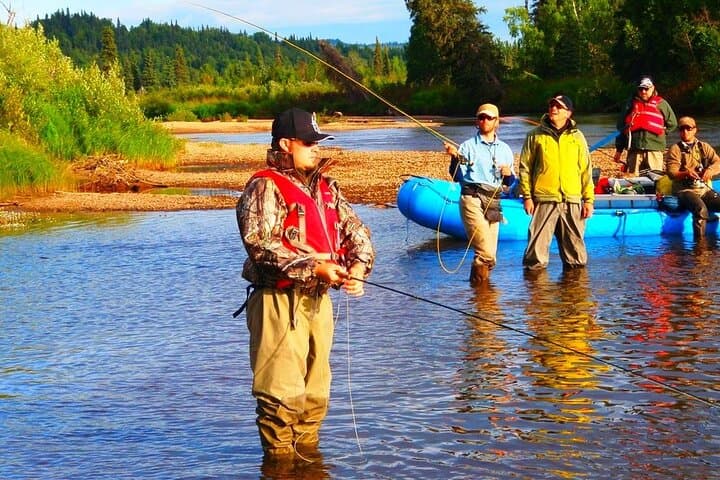
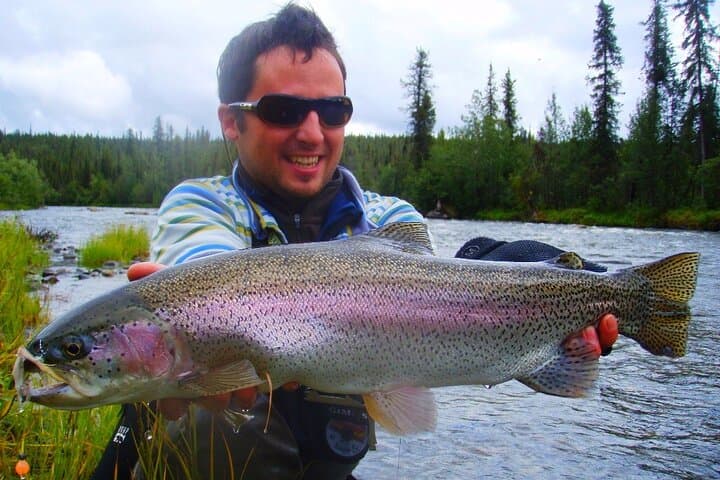
By midmorning the Chena River moves like a patient guide, widening and easing its current as your drift boat slips into a channel lined with willow and spruce. The guide checks knots, hands you a rod, and points to a deep tail-current where the river seems to collect its secrets; you cast, and for a moment the water itself seems to consider the offering before the line tightens.
By midmorning the Chena River moves like a patient guide, widening and easing its current as your drift boat slips into a channel lined with willow and spruce. The guide checks knots, hands you a rod, and points to a deep tail-current where the river seems to collect its secrets; you cast, and for a moment the water itself seems to consider the offering before the line tightens.
This half-day float covers roughly 3–4 miles of interior Alaska river country, an easy downstream drift that puts anglers into off-the-grid pockets within the Chena River corridor. Geologically, the Chena traces shallow valleys carved by glacial melt and spring runoffs; banks alternate between cobble bars and varnished peat hummocks that give way to muskeg beyond. Culturally, the river has been a travel and subsistence corridor for Alaska Native peoples and later a seasonal route for trappers and float-plane pilots. Today, it’s a classroom: guides share local lore, point out old trapper cabins, and explain how seasonal runs shape fishing strategy.
Expect to target species that thrive in these cold waters — Arctic grayling and northern pike are common, with whitefish and occasional salmon depending on season. Wildlife keeps company: sandhill cranes pat the shallows, and moose footprints punctuate muddy edges where the forest meets the river.
The trip is practical and approachable. Operators pick up from hotels in Fairbanks and provide rods, tackle, life jackets and snacks; the float itself is low-risk and designed for all fitness levels. Timing matters: late spring and summer bring longer daylight and the best window for grayling; late summer may produce more aggressive pike. Mosquitoes and wind are part of the package, so layering and insect protection are non-negotiable.
On the water, posture and patience win. Let the guide set drift lines and teach you when to twitch versus when to let a lure sit. The current does the work of presentation; you focus on timing strikes and reading seams where faster water meets slack. Bring a small camera and a plan for quick shoots — wet hands and cold fingers ramp up fast after a catch-and-release moment.
Practical notes: the excursion runs about 4–6 hours, with hotel pickup within Fairbanks. A valid Alaska fishing license is required for non-residents; the operator handles gear but not licensing. Weather can change quickly — be ready to reschedule if conditions threaten safety. For anglers wanting a concentrated day on river behavior and local species, this half-day float is a compact, instructive way to learn to read interior-Alaska water while standing in a landscape that keeps nudging you to look farther downstream.