THE ADVENTURE COLLECTIVE® · Independent discovery and booking for outdoor travel

Explore Central Zagori’s stone villages, iconic arched bridges and the Vikos Gorge in a focused half-day from Ioannina. Expect short walks, dramatic viewpoints and local history woven into every stop.
Explore Central Zagori’s stone villages, iconic arched bridges and the Vikos Gorge in a focused half-day from Ioannina. Expect short walks, dramatic viewpoints and local history woven into every stop.
You step out of an air-conditioned vehicle and the mountain wind in Zagori immediately rearranges your pace—cool, brisk, and focused. The route climbs away from Ioannina into a carved landscape where stone villages cling to ridgelines and rivers dare you to follow their course.
Verified experiences and guided adventures in the surrounding area.
Operated by Let's Book Travel · Ioannina, Epirus
You step out of an air-conditioned vehicle and the mountain wind in Zagori immediately rearranges your pace—cool, brisk, and focused. The route climbs away from Ioannina into a carved landscape where stone villages cling to ridgelines and rivers dare you to follow their course.
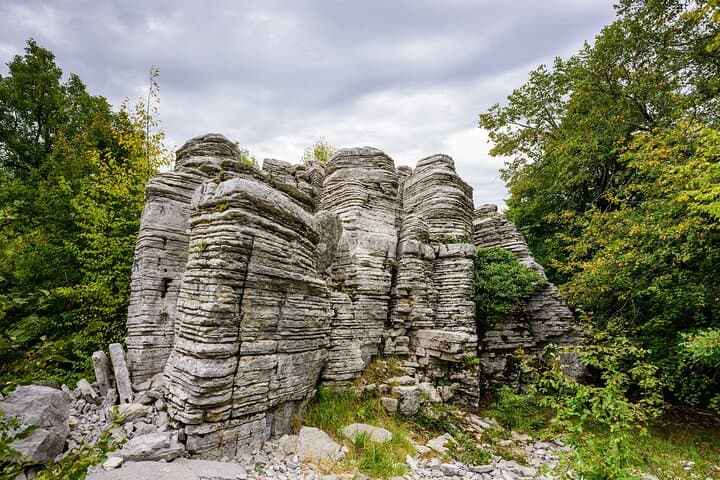
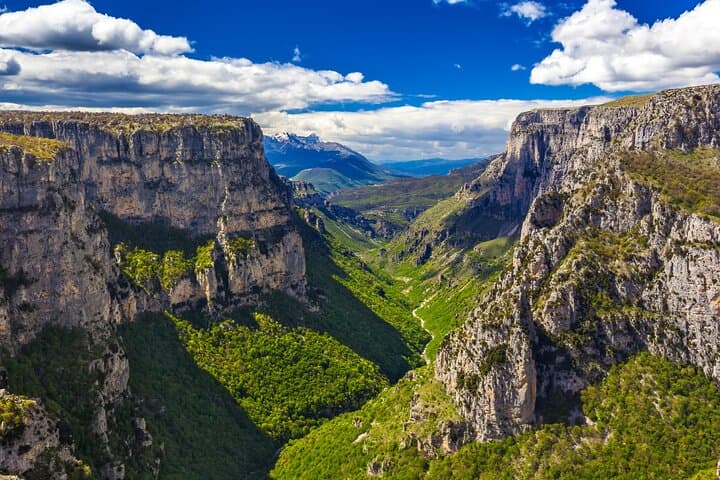
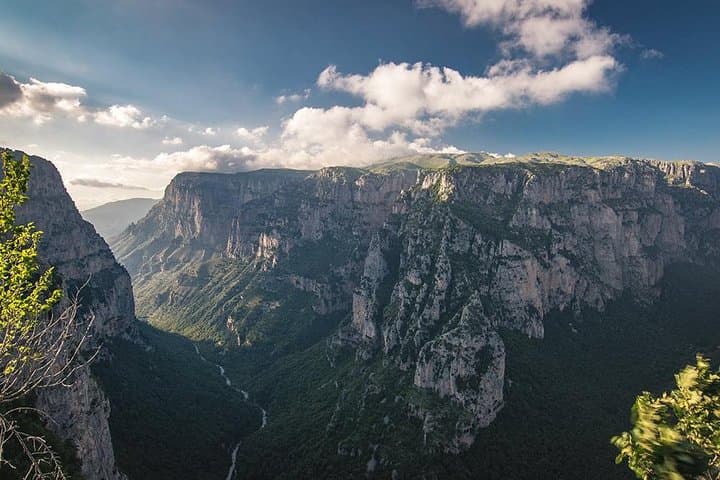
Central Zagori grew around shepherding routes and merchant links to Epirus’s lowlands; its 18th–19th century stone bridges were built by local craftsmen to span fast alpine streams, and the limestone here records millennia of uplift and water cutting deep gorges. At Monodendri you’ll see karstic slabs broken into a “stone forest” at roughly 1,500 m above sea level; at Oxia viewpoint the Vikos Gorge reveals near-vertical walls that speak to both glacial and fluvial forces.
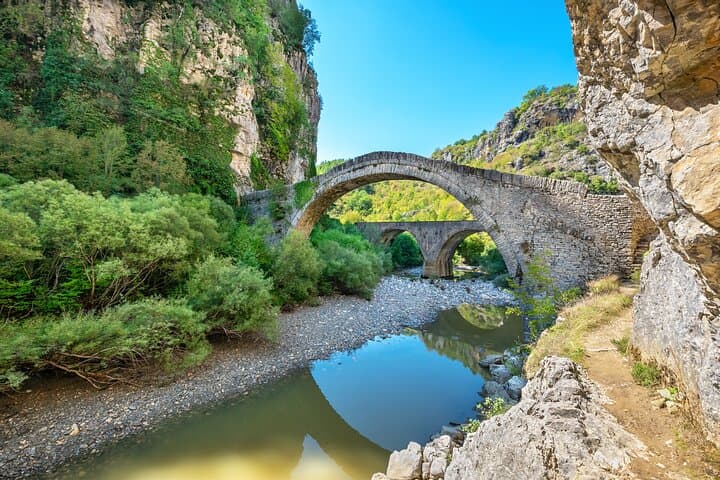
Villages like Kipoi, Vitsa and Koukouli preserve stone mansions, slate roofs and narrow alleys that reflect a culture shaped by mountain isolation and seasonal transhumance. The Vradeto steps are a human-made climb that links past routes; the bridges—Kapetan Arkouda, Kokkori, Plakidas, Lazaridi—are compact lessons in vernacular engineering.
Practically: expect frequent short stops, brief walks on uneven village lanes and viewpoints with limited facilities. Wear sturdy footwear, bring water and a jacket—the weather shifts quickly in the mountains. Photography stops are built into the tour, and guides typically sketch historical context while you move between sites.
This half-day is best for travelers who want concentrated exposure to Zagori’s geology, heritage and bridges without a full-day trek—an efficient, walk-friendly introduction to a rugged, living mountain region.
moderate.
6 hours.
Moderate fitness—able to walk short uneven distances and climb several flights of stone steps without difficulty
The tour runs about 6 hours with frequent short stops; walks at each stop are brief (5–30 minutes) on uneven surfaces.
Yes for most; children and older travelers should be able to manage short walks and stone steps—notify the operator of mobility concerns.
The tour includes private transport, snacks and soda; cafe purchases and formal admissions to museums are usually not included.
Yes—operators commonly adjust or cancel if conditions at viewpoints or mountain roads are unsafe due to weather.
Zagori’s villages flourished under semi-autonomous arrangements in Ottoman times; the stone arch bridges, built in the 18th–19th centuries, facilitated trade and seasonal movement.
Much of the area lies within Vikos–Aoos National Park—stay on paths, avoid disturbing flora/fauna, and pack out waste to protect fragile karst and forest habitats.
Let's Book Travel operates guided outdoor trips and adventures with an emphasis on safety, stewardship, and memorable experiences.
You step out of an air-conditioned vehicle and the mountain wind in Zagori immediately rearranges your pace—cool, brisk, and focused. The route climbs away from Ioannina into a carved landscape where stone villages cling to ridgelines and rivers dare you to follow their course.
You step out of an air-conditioned vehicle and the mountain wind in Zagori immediately rearranges your pace—cool, brisk, and focused. The route climbs away from Ioannina into a carved landscape where stone villages cling to ridgelines and rivers dare you to follow their course.
Central Zagori grew around shepherding routes and merchant links to Epirus’s lowlands; its 18th–19th century stone bridges were built by local craftsmen to span fast alpine streams, and the limestone here records millennia of uplift and water cutting deep gorges. At Monodendri you’ll see karstic slabs broken into a “stone forest” at roughly 1,500 m above sea level; at Oxia viewpoint the Vikos Gorge reveals near-vertical walls that speak to both glacial and fluvial forces.
Villages like Kipoi, Vitsa and Koukouli preserve stone mansions, slate roofs and narrow alleys that reflect a culture shaped by mountain isolation and seasonal transhumance. The Vradeto steps are a human-made climb that links past routes; the bridges—Kapetan Arkouda, Kokkori, Plakidas, Lazaridi—are compact lessons in vernacular engineering.
Practically: expect frequent short stops, brief walks on uneven village lanes and viewpoints with limited facilities. Wear sturdy footwear, bring water and a jacket—the weather shifts quickly in the mountains. Photography stops are built into the tour, and guides typically sketch historical context while you move between sites.
This half-day is best for travelers who want concentrated exposure to Zagori’s geology, heritage and bridges without a full-day trek—an efficient, walk-friendly introduction to a rugged, living mountain region.