THE ADVENTURE COLLECTIVE® · Independent discovery and booking for outdoor travel

Step aboard an F40 catamaran for a four-hour coastal sail off southern Lanzarote. Participate in the maneuvers, anchor to snorkel in clear Atlantic coves, and enjoy included stand-up paddleboarding while taking in volcanic shores.
Step aboard an F40 catamaran for a four-hour coastal sail off southern Lanzarote. Participate in the maneuvers, anchor to snorkel in clear Atlantic coves, and enjoy included stand-up paddleboarding while taking in volcanic shores.
The catamaran slips away from the quay and the island breathes salt and wind into the rigging—Lanzarote’s low volcanic profile recedes into a line of ochre cliffs and black lava fields. Onboard an F40, the deck is wide and steady; the sails take the lead and the motor is a courteous background, used only to enter and leave port. Passengers are invited to handle sheets and steer, turning a passive cruise into a short-school of seamanship framed by the Atlantic.
Verified experiences and guided adventures in the surrounding area.
Operated by Catamaran F40lanzarote · Playa Blanca, Las Palmas (Canary Islands)
The catamaran slips away from the quay and the island breathes salt and wind into the rigging—Lanzarote’s low volcanic profile recedes into a line of ochre cliffs and black lava fields. Onboard an F40, the deck is wide and steady; the sails take the lead and the motor is a courteous background, used only to enter and leave port. Passengers are invited to handle sheets and steer, turning a passive cruise into a short-school of seamanship framed by the Atlantic.
Geology and history stage the trip: Lanzarote’s coastline is the product of relatively recent volcanic activity, the dark rock and sculpted cliffs shaped by eruptions that defined the island’s character. Culturally the waters have long supported fishing and small-scale seafaring; today, the route often hugs the southern coast and, with an easterly breeze, can point toward Isla de Lobos near Fuerteventura. Expect stops to anchor in clear coves for snorkeling and to try the included stand-up paddleboard—reefs and rocky shelves encourage marine life viewing.
Practical edge: the outing is four hours, suitable for all fitness levels, and typically departs from southern Lanzarote marinas. Pack reef-safe sunscreen, a quick-dry layer, and a reusable water bottle. If prone to seasickness, take preventative medication the morning of the sail. Arrive early for a short safety briefing and to stow gear; boats commonly provide masks, snorkels, and basic guidance. The half-day format balances active participation—helping with maneuvers and steering—with relaxed swims, making it a compact, instructive way to read Lanzarote from the sea.
easy.
4 hours.
Suitable for most fitness levels; participants should be able to climb aboard from a dock and swim short distances for snorkeling.
No—this is a participatory sail where crew will teach basic maneuvers; previous experience is welcome but not required.
Yes—snorkels and masks are typically included; bring your own if you prefer a custom fit.
Yes—infants must sit on an adult’s lap and operators generally accept families; check age limits with the operator before booking.
Trips may be cancelled for safety reasons and some operators offer no refunds for cancellations, so confirm the cancellation policy and check forecasts before travel.
Lanzarote’s modern shoreline was shaped by 18th–20th century volcanic events; maritime traditions have long linked the island to neighboring Fuerteventura and local fishing communities.
Many coastal zones benefit from marine protections—use reef‑safe products, avoid touching coral, and follow crew guidance to minimize impact.
Catamaran F40lanzarote operates guided outdoor trips and adventures with an emphasis on safety, stewardship, and memorable experiences.
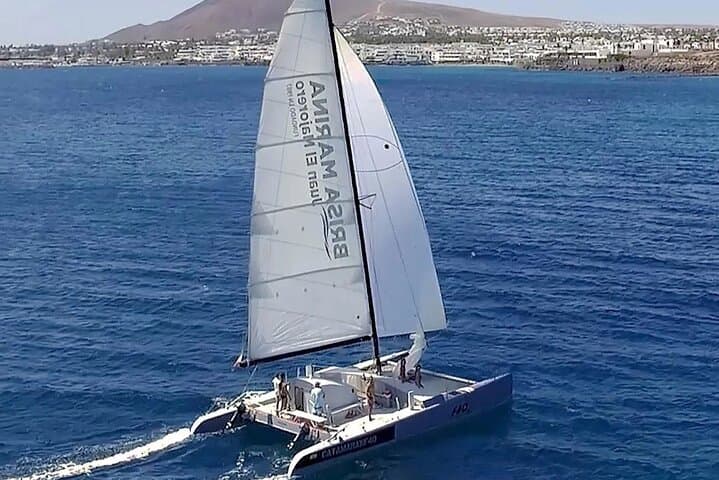
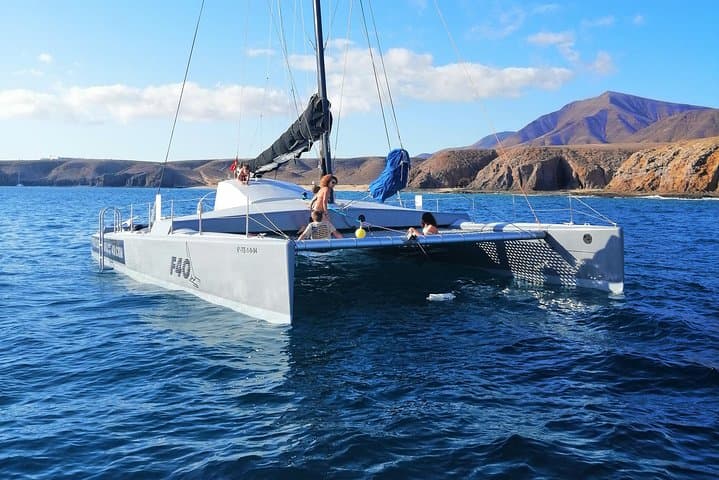
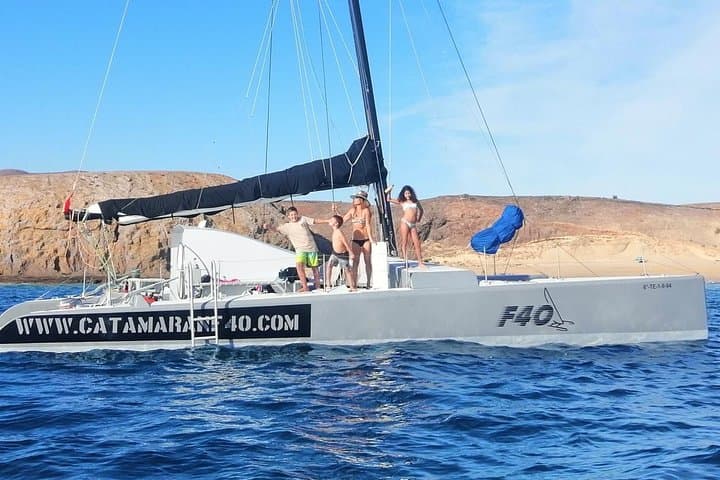
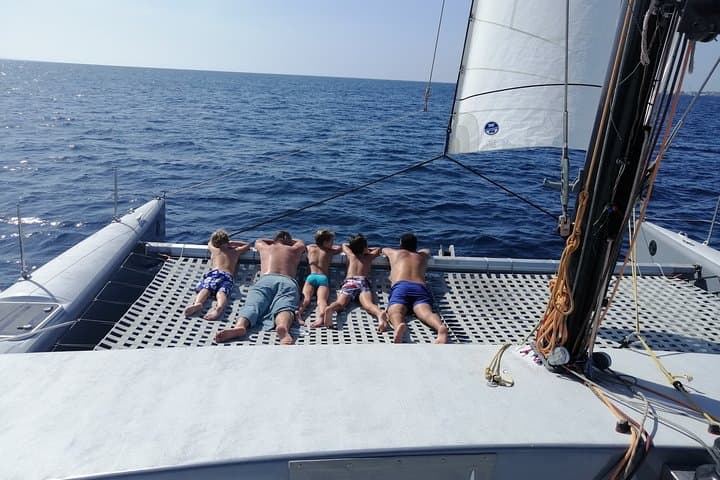
The catamaran slips away from the quay and the island breathes salt and wind into the rigging—Lanzarote’s low volcanic profile recedes into a line of ochre cliffs and black lava fields. Onboard an F40, the deck is wide and steady; the sails take the lead and the motor is a courteous background, used only to enter and leave port. Passengers are invited to handle sheets and steer, turning a passive cruise into a short-school of seamanship framed by the Atlantic.
The catamaran slips away from the quay and the island breathes salt and wind into the rigging—Lanzarote’s low volcanic profile recedes into a line of ochre cliffs and black lava fields. Onboard an F40, the deck is wide and steady; the sails take the lead and the motor is a courteous background, used only to enter and leave port. Passengers are invited to handle sheets and steer, turning a passive cruise into a short-school of seamanship framed by the Atlantic.
Geology and history stage the trip: Lanzarote’s coastline is the product of relatively recent volcanic activity, the dark rock and sculpted cliffs shaped by eruptions that defined the island’s character. Culturally the waters have long supported fishing and small-scale seafaring; today, the route often hugs the southern coast and, with an easterly breeze, can point toward Isla de Lobos near Fuerteventura. Expect stops to anchor in clear coves for snorkeling and to try the included stand-up paddleboard—reefs and rocky shelves encourage marine life viewing.
Practical edge: the outing is four hours, suitable for all fitness levels, and typically departs from southern Lanzarote marinas. Pack reef-safe sunscreen, a quick-dry layer, and a reusable water bottle. If prone to seasickness, take preventative medication the morning of the sail. Arrive early for a short safety briefing and to stow gear; boats commonly provide masks, snorkels, and basic guidance. The half-day format balances active participation—helping with maneuvers and steering—with relaxed swims, making it a compact, instructive way to read Lanzarote from the sea.