THE ADVENTURE COLLECTIVE® · Independent discovery and booking for outdoor travel

A compact, culturally rich trek from Sapa to Cat Cat Village that combines a short mountain walk with visits to a waterfall, old French hydraulic works and Black H’mong community life. Ideal for travelers short on time who still want an authentic upland experience.
A compact, culturally rich trek from Sapa to Cat Cat Village that combines a short mountain walk with visits to a waterfall, old French hydraulic works and Black H’mong community life. Ideal for travelers short on time who still want an authentic upland experience.
Misty terraces and a wooden bridge appear as the path drops into a narrow valley below Sapa town. The village air carries the scent of wet earth and wood smoke; a small river threads the hamlet and dares you closer to the falls. A local H’mong guide leads the way, translating daily rhythms into gestures and short stories while the trail winds past stone houses and terraced fields.
Verified experiences and guided adventures in the surrounding area.
Operated by Vietnam Treasures Travel · Sapa, Lao Cai
Misty terraces and a wooden bridge appear as the path drops into a narrow valley below Sapa town. The village air carries the scent of wet earth and wood smoke; a small river threads the hamlet and dares you closer to the falls. A local H’mong guide leads the way, translating daily rhythms into gestures and short stories while the trail winds past stone houses and terraced fields.
Cat Cat Village sits on the southern slopes of Mount Fansipan and grew where ethnic Black H’mong families established upland homes centuries ago. The valley’s bedrock is largely metamorphic schist, shaped by streams that once powered a French-built hydraulic station—remnants still visible—constructed during colonial-era efforts to electrify the area. The landscape is agricultural and human-made: rice terraces, irrigation channels and seasonal vegetable plots define much of what you see.
Visitors can expect a roughly 2.5 km walk over uneven stone paths, short stair sections, a waterfall and viewpoints for photos. The route is cultural as much as scenic; artisans weave textiles and local children wave from doorways. Respectful curiosity keeps interactions positive.
Practical notes: plan 2–3.5 hours including stops; wear grippy footwear for wet stone steps and a light rain layer during monsoon months. Carry water and small change for entrance fees or village purchases. Trails are short but steep in places—take your time on the uphill return where steps can be slippery. With a sensible pace, this half-day trek offers an accessible window into Sapa’s highland life and landscape.
moderate.
2–3.5 hours.
Suitable for travelers with moderate fitness—able to manage short steep sections and uneven stone steps.
The walking portion is about 2.5 km with uneven stone paths and short steep sections; most visitors complete it in 2–3.5 hours including stops—moderate fitness recommended.
This tour includes the village entry ticket and guide services, though small additional purchases in the village are paid separately.
Yes—families and older travelers can join if they can manage some stairs and downhill/uphill walking; the pace is adjustable with the guide.
Yes—car/van transport between Sapa town and Cat Cat Village is included both ways in the tour.
The valley has long been home to Black H’mong communities; French colonial projects left small industrial traces such as the hydraulic station near the stream.
Tourism increases foot traffic and erosion on stone paths—stick to designated routes, avoid trampling terraces and support local businesses to benefit the community.
Vietnam Treasures Travel operates guided outdoor trips and adventures with an emphasis on safety, stewardship, and memorable experiences.
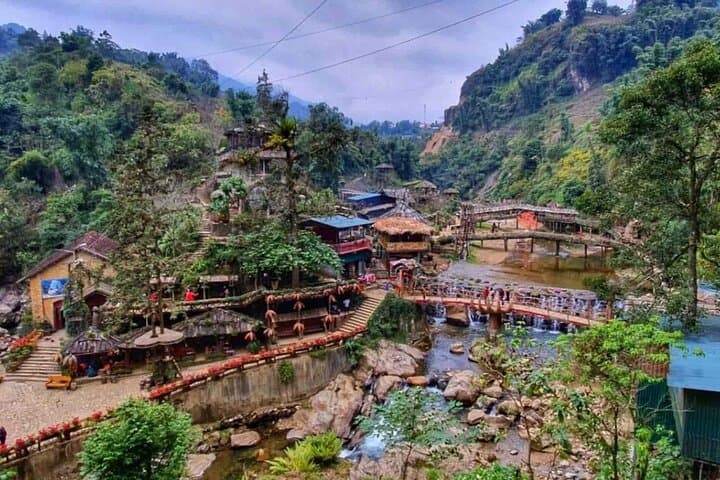
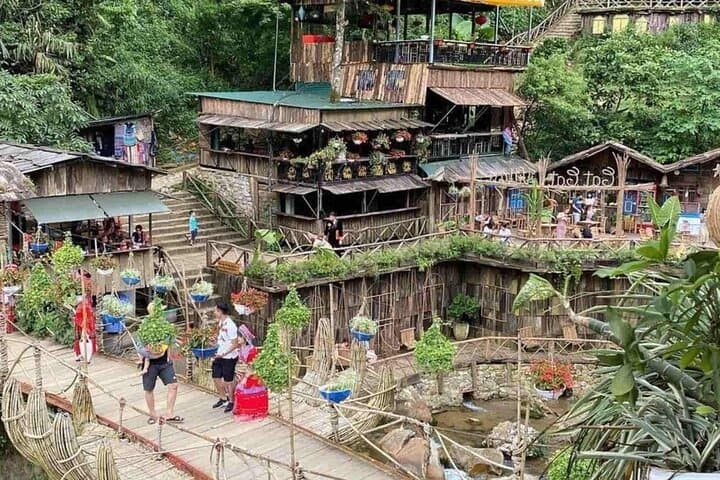

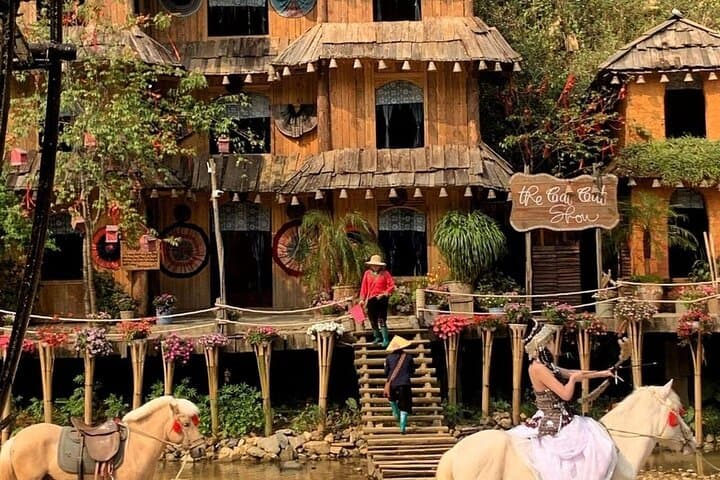
Misty terraces and a wooden bridge appear as the path drops into a narrow valley below Sapa town. The village air carries the scent of wet earth and wood smoke; a small river threads the hamlet and dares you closer to the falls. A local H’mong guide leads the way, translating daily rhythms into gestures and short stories while the trail winds past stone houses and terraced fields.
Misty terraces and a wooden bridge appear as the path drops into a narrow valley below Sapa town. The village air carries the scent of wet earth and wood smoke; a small river threads the hamlet and dares you closer to the falls. A local H’mong guide leads the way, translating daily rhythms into gestures and short stories while the trail winds past stone houses and terraced fields.
Cat Cat Village sits on the southern slopes of Mount Fansipan and grew where ethnic Black H’mong families established upland homes centuries ago. The valley’s bedrock is largely metamorphic schist, shaped by streams that once powered a French-built hydraulic station—remnants still visible—constructed during colonial-era efforts to electrify the area. The landscape is agricultural and human-made: rice terraces, irrigation channels and seasonal vegetable plots define much of what you see.
Visitors can expect a roughly 2.5 km walk over uneven stone paths, short stair sections, a waterfall and viewpoints for photos. The route is cultural as much as scenic; artisans weave textiles and local children wave from doorways. Respectful curiosity keeps interactions positive.
Practical notes: plan 2–3.5 hours including stops; wear grippy footwear for wet stone steps and a light rain layer during monsoon months. Carry water and small change for entrance fees or village purchases. Trails are short but steep in places—take your time on the uphill return where steps can be slippery. With a sensible pace, this half-day trek offers an accessible window into Sapa’s highland life and landscape.