THE ADVENTURE COLLECTIVE® · Independent discovery and booking for outdoor travel

See Casablanca’s coastal skyline, step inside the vast Hassan II Mosque, and lose yourself in the medina’s market alleys on a compact half-day tour. This guide covers what to expect, what to pack, and the cultural notes that make the city distinctive.
See Casablanca’s coastal skyline, step inside the vast Hassan II Mosque, and lose yourself in the medina’s market alleys on a compact half-day tour. This guide covers what to expect, what to pack, and the cultural notes that make the city distinctive.
You arrive along the Atlantic, where the Corniche throws up a cool breeze and the Hassan II Mosque sits half over the water, its minaret cutting a precise silhouette against the sky. The tour moves deliberately—first the mosque’s tiled courtyards and carved woodwork revealed in a guided visit, then the maze of the old Medina where alleys narrow and vendors call out spices, leather and brass.
Verified experiences and guided adventures in the surrounding area.
Operated by Morocco Magic Travels · Casablanca, Casablanca-Settat
You arrive along the Atlantic, where the Corniche throws up a cool breeze and the Hassan II Mosque sits half over the water, its minaret cutting a precise silhouette against the sky. The tour moves deliberately—first the mosque’s tiled courtyards and carved woodwork revealed in a guided visit, then the maze of the old Medina where alleys narrow and vendors call out spices, leather and brass.
Casablanca’s streets tell a layered history: a fishing port reshaped by French colonial planners into one of North Africa’s Art Deco showcases, and then reasserted by modern Moroccan civic projects like the mosque completed in the 1990s. Geologically, the city’s flat coastal plain meets the Atlantic here, and the Corniche’s cliff-backed beaches speak to persistent marine forces that sculpt the shoreline.
Culturally, expect a pragmatic mix—traditional souk trade alongside cafés playing live music and contemporary Moroccan cuisine. Local insights include the quieter Habous Quarter with bookshops and artisan workshops, and Mohammed V Square’s population of colonial-era façades.
Practical guidance: this is a low-impact, walk-heavy half-day—comfortable shoes, sun protection and a light layer are wise. The mosque enforces a dress code and security screening; cameras are allowed in many areas but follow guide instructions. Plan mid-morning or late afternoon to avoid the hottest sun and to catch softer light for photography. The tour’s minivan transfers reduce walking between dispersed sites, making this a compact way to sample Casablanca’s architecture, markets and coastal energy in one accessible outing.
easy.
4–4.5 hours.
Light walking ability; suitable for most fitness levels with intermittent standing and short walks.
Guided-entry fees are included for private options; shared tours typically include mosque admission as stated—confirm at booking.
Expect several short walks (10–30 minutes) between stops and through the Medina; the minivan covers longer transfers.
Bargaining is common at souks; tipping small amounts for guides or drivers is appreciated but not mandatory.
Yes—stroller access is possible in many areas, but alleys can be crowded and uneven, so a carrier may be easier.
Casablanca grew from a modest Atlantic port into a 20th‑century colonial and commercial hub; Hassan II Mosque (completed 1993) is a recent national landmark blending traditional craftsmanship with modern engineering.
Coastal areas face pressure from development and litter; limit single-use plastics, respect protected mosque grounds, and heed local guidance to minimize impact.
Morocco Magic Travels operates guided outdoor trips and adventures with an emphasis on safety, stewardship, and memorable experiences.
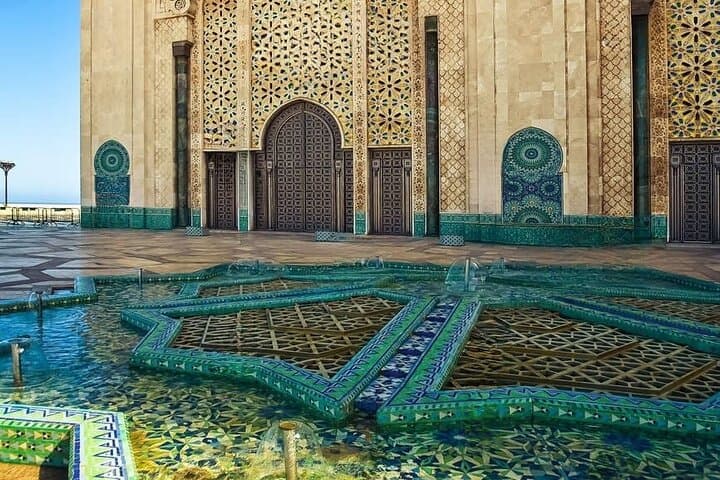
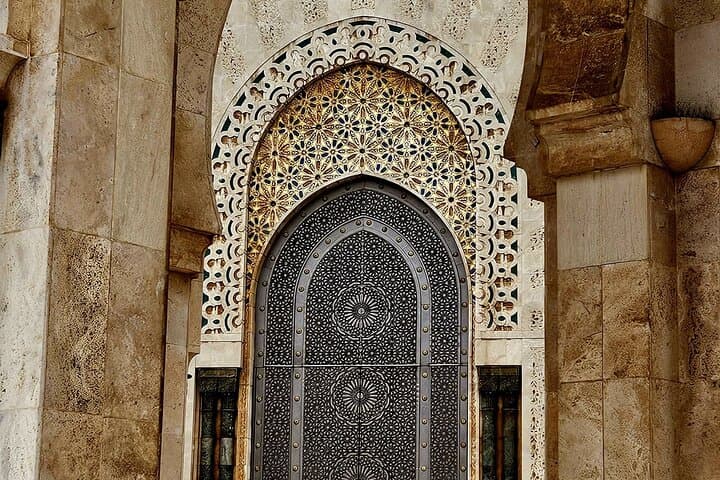
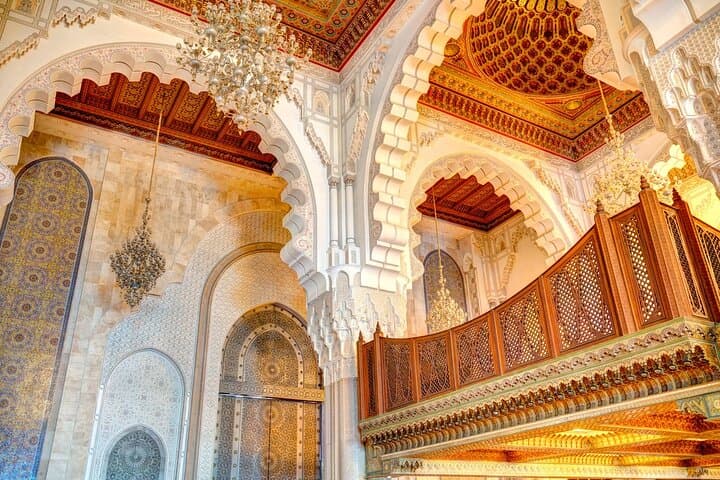
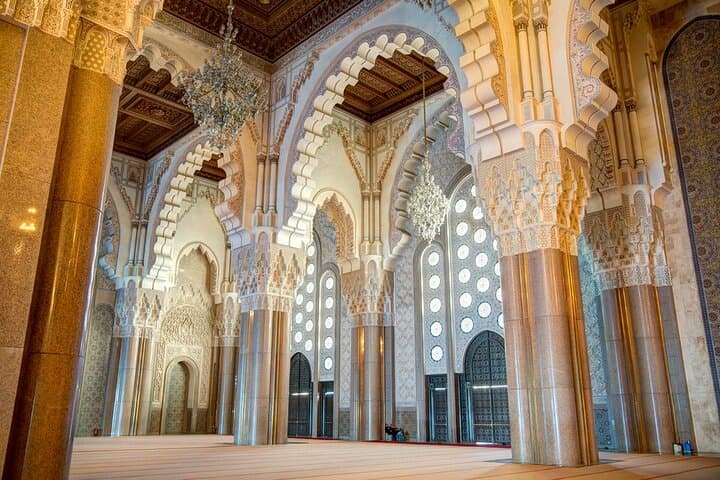
You arrive along the Atlantic, where the Corniche throws up a cool breeze and the Hassan II Mosque sits half over the water, its minaret cutting a precise silhouette against the sky. The tour moves deliberately—first the mosque’s tiled courtyards and carved woodwork revealed in a guided visit, then the maze of the old Medina where alleys narrow and vendors call out spices, leather and brass.
You arrive along the Atlantic, where the Corniche throws up a cool breeze and the Hassan II Mosque sits half over the water, its minaret cutting a precise silhouette against the sky. The tour moves deliberately—first the mosque’s tiled courtyards and carved woodwork revealed in a guided visit, then the maze of the old Medina where alleys narrow and vendors call out spices, leather and brass.
Casablanca’s streets tell a layered history: a fishing port reshaped by French colonial planners into one of North Africa’s Art Deco showcases, and then reasserted by modern Moroccan civic projects like the mosque completed in the 1990s. Geologically, the city’s flat coastal plain meets the Atlantic here, and the Corniche’s cliff-backed beaches speak to persistent marine forces that sculpt the shoreline.
Culturally, expect a pragmatic mix—traditional souk trade alongside cafés playing live music and contemporary Moroccan cuisine. Local insights include the quieter Habous Quarter with bookshops and artisan workshops, and Mohammed V Square’s population of colonial-era façades.
Practical guidance: this is a low-impact, walk-heavy half-day—comfortable shoes, sun protection and a light layer are wise. The mosque enforces a dress code and security screening; cameras are allowed in many areas but follow guide instructions. Plan mid-morning or late afternoon to avoid the hottest sun and to catch softer light for photography. The tour’s minivan transfers reduce walking between dispersed sites, making this a compact way to sample Casablanca’s architecture, markets and coastal energy in one accessible outing.