THE ADVENTURE COLLECTIVE® · Independent discovery and booking for outdoor travel

See Cape Town in four concentrated hours: a Table Mountain viewpoint, the painted streets of Bo-Kaap, quiet walks in the Company Gardens, and candid museum stops that unpack the city’s history. This half-day tour is a compact, guided primer for first-time visitors.
See Cape Town in four concentrated hours: a Table Mountain viewpoint, the painted streets of Bo-Kaap, quiet walks in the Company Gardens, and candid museum stops that unpack the city’s history. This half-day tour is a compact, guided primer for first-time visitors.
Morning light slides off the flat top of Table Mountain and into the streets below, where tour vans thread past colonial facades, bright Malay houses, and a harbor that keeps time with the Atlantic. On a half-day with a licensed guide, Cape Town condenses into a focused four-hour circuit: a vantage at Table Mountain, a walk through the Company Gardens, the chromatic alleyways of Bo-Kaap, and the sobering stories at District Six and the Slave Lodge. It feels immediate — the city asking you to read it in chapters rather than an encyclopedia.
Verified experiences and guided adventures in the surrounding area.
Operated by Ordain Hove · Cape Town, Western Cape
Morning light slides off the flat top of Table Mountain and into the streets below, where tour vans thread past colonial facades, bright Malay houses, and a harbor that keeps time with the Atlantic. On a half-day with a licensed guide, Cape Town condenses into a focused four-hour circuit: a vantage at Table Mountain, a walk through the Company Gardens, the chromatic alleyways of Bo-Kaap, and the sobering stories at District Six and the Slave Lodge. It feels immediate — the city asking you to read it in chapters rather than an encyclopedia.
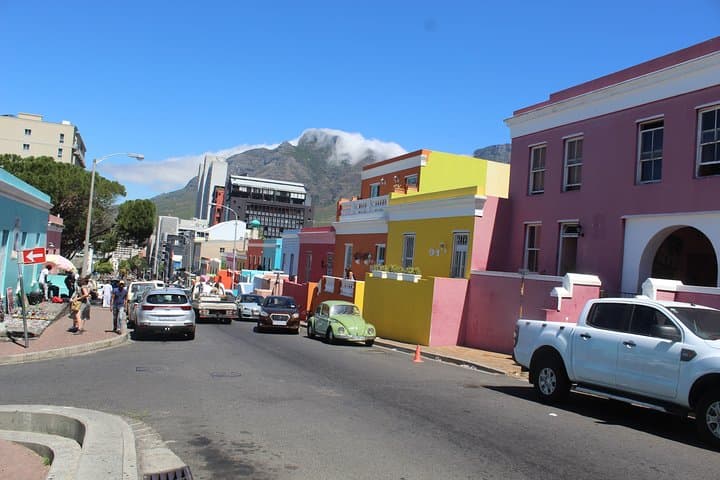
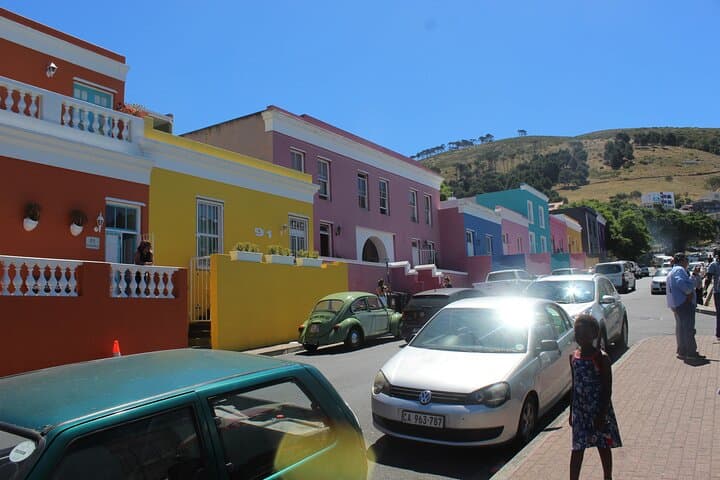
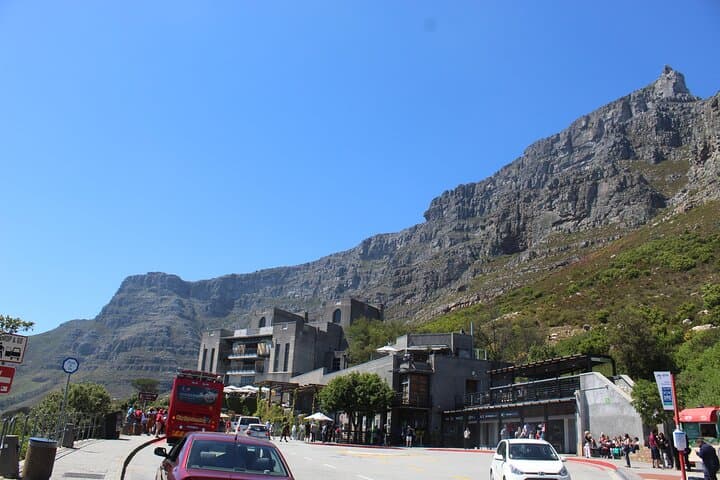
Cape Town’s history is visible in its architecture and geography. The Castle of Good Hope, built by the Dutch East India Company in the 17th century, still fires a noon cannon; its stones speak to a colonial era that reshaped local communities and trade routes. Bo-Kaap’s stepped, painted houses reflect a Muslim Malay community descended from people brought to the Cape after 1652; their flavors and festivals are a living archive. Geologically, Table Mountain is a sandstone plateau—ancient, hard-edged, and weathered by the ocean winds—offering panoramic context for the city’s layout: harbor, suburbs, and the long sweep to Bloubergstrand.
Culturally, the tour balances upbeat neighborhood stops with weightier museum visits. The Company Gardens invites a quieter pace — ginkgo and rubber trees that shelter pigeons, Egyptian geese, and an occasion-scampering squirrel — while the Iziko museums and Slave Lodge confront the complexities of Cape Town’s past. Guides on this route are typically local and accredited; they calibrate anecdote and archive so that each corner holds a human story as well as a photograph.
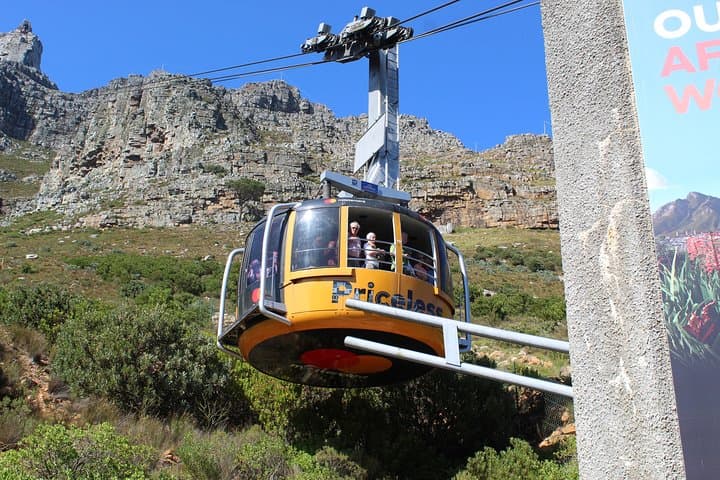
Practically, expect light walking: the itinerary includes roughly 40 minutes on foot through historic precincts and gardens, with short stops at major viewpoints. Pickup is usually from central hotels; plan to be ready about 30 minutes before departure. Bottled water and an air-conditioned vehicle are provided, but bring comfortable walking shoes and a wind layer: Cape Town’s famous south-easter, the Cape Doctor, can close the Table Mountain cable car on windy days. Cable car tickets and museum admissions are often not included, so confirm with your operator if you want to pre-book entries.
Timing matters: morning departures often beat the strongest winds and crowds, while late-afternoon light softens Table Mountain for photos. This half-day is efficient — not exhaustive — but it gives travellers a coherent, human-scaled primer on Cape Town’s landscapes, communities, and the historical threads you’ll want to follow on a longer stay.
easy.
4 hours.
Suitable for basic fitness; expect short walks and standing at viewpoints
The tour runs approximately four hours, with multiple short stops and about 40 minutes of walking.
Yes; hotel pickup from central Cape Town locations is usually provided—expect pickup about 30 minutes before departure.
Admissions are often not included; check your booking or ask the operator if you want them prepaid.
The tour is stroller-accessible in many areas and marked suitable for all physical fitness levels, but some cobbled streets can be uneven.
Operators may cancel or reroute if weather closes the cable car or makes driving unsafe; refunds are typically available with 24-hour cancellation policies.
Yes—Bo-Kaap is very photo-friendly and guides encourage respectful interaction; ask before photographing people in personal settings.
Cape Town began as a resupply station for the Dutch East India Company in 1652; its strategic harbor shaped colonial, slave, and migrant histories that are still visible in neighborhoods and museums.
The Table Mountain National Park protects both fynbos vegetation and coastal habitats; visitors are encouraged to stick to paths, avoid feeding wildlife, and support local conservation fees where applicable.
Ordain Hove operates guided outdoor trips and adventures with an emphasis on safety, stewardship, and memorable experiences.
Morning light slides off the flat top of Table Mountain and into the streets below, where tour vans thread past colonial facades, bright Malay houses, and a harbor that keeps time with the Atlantic. On a half-day with a licensed guide, Cape Town condenses into a focused four-hour circuit: a vantage at Table Mountain, a walk through the Company Gardens, the chromatic alleyways of Bo-Kaap, and the sobering stories at District Six and the Slave Lodge. It feels immediate — the city asking you to read it in chapters rather than an encyclopedia.
Morning light slides off the flat top of Table Mountain and into the streets below, where tour vans thread past colonial facades, bright Malay houses, and a harbor that keeps time with the Atlantic. On a half-day with a licensed guide, Cape Town condenses into a focused four-hour circuit: a vantage at Table Mountain, a walk through the Company Gardens, the chromatic alleyways of Bo-Kaap, and the sobering stories at District Six and the Slave Lodge. It feels immediate — the city asking you to read it in chapters rather than an encyclopedia.
Cape Town’s history is visible in its architecture and geography. The Castle of Good Hope, built by the Dutch East India Company in the 17th century, still fires a noon cannon; its stones speak to a colonial era that reshaped local communities and trade routes. Bo-Kaap’s stepped, painted houses reflect a Muslim Malay community descended from people brought to the Cape after 1652; their flavors and festivals are a living archive. Geologically, Table Mountain is a sandstone plateau—ancient, hard-edged, and weathered by the ocean winds—offering panoramic context for the city’s layout: harbor, suburbs, and the long sweep to Bloubergstrand.
Culturally, the tour balances upbeat neighborhood stops with weightier museum visits. The Company Gardens invites a quieter pace — ginkgo and rubber trees that shelter pigeons, Egyptian geese, and an occasion-scampering squirrel — while the Iziko museums and Slave Lodge confront the complexities of Cape Town’s past. Guides on this route are typically local and accredited; they calibrate anecdote and archive so that each corner holds a human story as well as a photograph.
Practically, expect light walking: the itinerary includes roughly 40 minutes on foot through historic precincts and gardens, with short stops at major viewpoints. Pickup is usually from central hotels; plan to be ready about 30 minutes before departure. Bottled water and an air-conditioned vehicle are provided, but bring comfortable walking shoes and a wind layer: Cape Town’s famous south-easter, the Cape Doctor, can close the Table Mountain cable car on windy days. Cable car tickets and museum admissions are often not included, so confirm with your operator if you want to pre-book entries.
Timing matters: morning departures often beat the strongest winds and crowds, while late-afternoon light softens Table Mountain for photos. This half-day is efficient — not exhaustive — but it gives travellers a coherent, human-scaled primer on Cape Town’s landscapes, communities, and the historical threads you’ll want to follow on a longer stay.