THE ADVENTURE COLLECTIVE® · Independent discovery and booking for outdoor travel

See African penguins up close on Boulders Beach and stand where two great currents tussle at Cape Point—all in a focused half-day from Cape Town. This small-group tour mixes easy walks, coastal drives, and stops for photos along False Bay.
See African penguins up close on Boulders Beach and stand where two great currents tussle at Cape Point—all in a focused half-day from Cape Town. This small-group tour mixes easy walks, coastal drives, and stops for photos along False Bay.
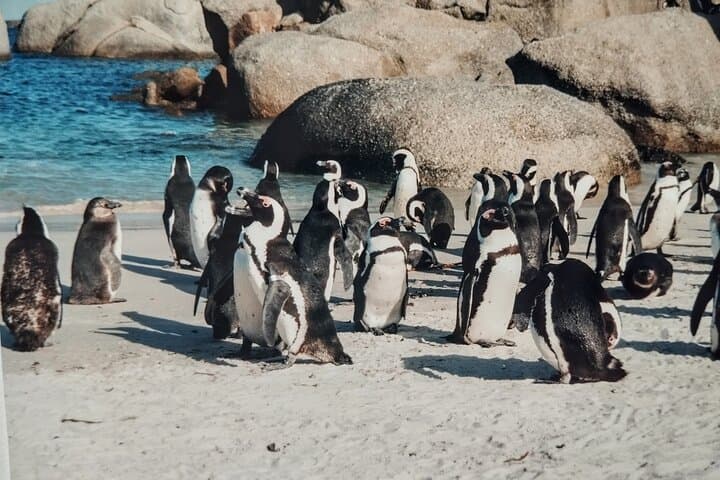
The morning air along False Bay tastes of salt and wind; the van threads the coast past pastel bathing huts and surfers paddling in the shallow curl. Within an hour you’re standing on a boardwalk, granite boulders rolling into the sea as African penguins shuffle between shelter and surf—their confident, comical gait cutting a bright line across the grey stone.
Verified experiences and guided adventures in the surrounding area.
Operated by Ingwe Africa Safaris & Tours · Cape Town, Western Cape
The morning air along False Bay tastes of salt and wind; the van threads the coast past pastel bathing huts and surfers paddling in the shallow curl. Within an hour you’re standing on a boardwalk, granite boulders rolling into the sea as African penguins shuffle between shelter and surf—their confident, comical gait cutting a bright line across the grey stone.
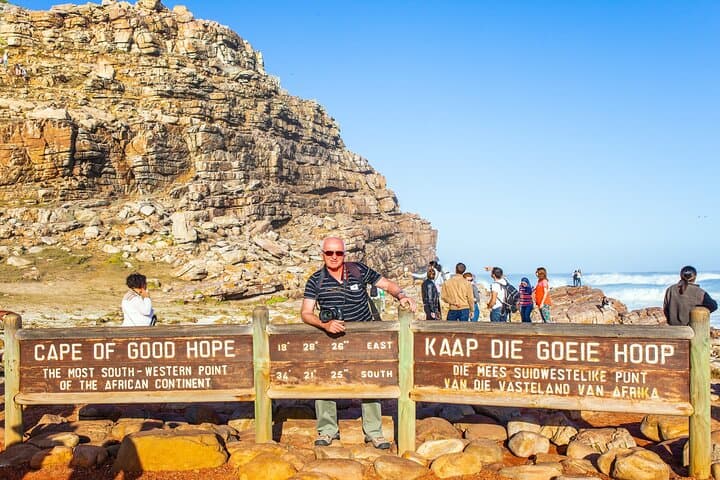
This half-day loop pairs natural history and maritime lore. Boulders Beach hosts thousands of African penguins that recolonised the area in the 1980s after historic declines; Cape Point and the Cape of Good Hope were charted by 15th-century Portuguese explorers such as Bartolomeu Dias, and later became a flashpoint of ocean currents and ship traffic. Geologically the reserve is ancient Table Mountain sandstone carved into steep capes and sheltered bays; botanically it’s fynbos country, low, leathery shrubs adapted to fire and wind.
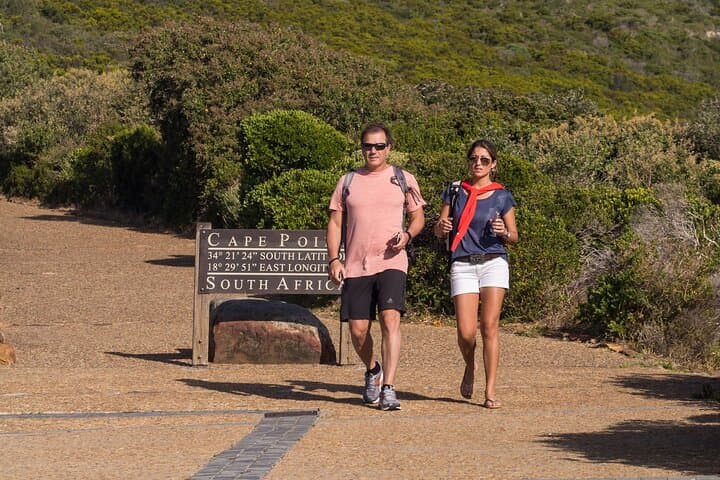
Expect short walks on maintained boardwalks and a 10–20 minute uphill path to the Cape Point lighthouse if you skip the funicular. Terrain is uneven rock and compacted paths; distance covered on foot is modest but sun, wind, and sudden drops in temperature make layers useful. Wildlife is bold—keep a respectful distance from penguins and baboons, and follow your guide’s instructions.
Practical: bring sunscreen, a windproof layer, sturdy shoes, and a refillable water bottle. Morning departures avoid the largest crowds and give softer light for photos. The tour is ideal for travelers short on time who want a concentrated sample of Cape Town’s coastal highlights without long hikes.
easy.
4–5 hours.
Light fitness required: short, mostly flat boardwalks and a 10–20 minute uphill walk to the lighthouse if chosen.
No—penguins are commonly visible on the rocks and boardwalks but sightings in the water aren’t guaranteed; the boardwalk offers reliable viewing.
Parts of the tour and transportation are wheelchair accessible, but accessibility can vary at outdoor sites; notify the operator in advance to discuss arrangements.
Yes—when operational the Flying Dutchman Funicular runs from the car park to the lighthouse; otherwise allow 10–20 minutes for the uphill walk.
Tipping is customary for good service in South Africa; 10–15% of the tour cost or a small cash amount per person is typical.
The Cape was first rounded by Portuguese navigators in the 15th century; place names and lighthouses reflect centuries of seafaring and colonial trade.
The African Penguin is a vulnerable species and Boulders Beach is managed to limit disturbance—stay on paths, don’t feed wildlife, and support local conservation fees when possible.
Ingwe Africa Safaris & Tours operates guided outdoor trips and adventures with an emphasis on safety, stewardship, and memorable experiences.
The morning air along False Bay tastes of salt and wind; the van threads the coast past pastel bathing huts and surfers paddling in the shallow curl. Within an hour you’re standing on a boardwalk, granite boulders rolling into the sea as African penguins shuffle between shelter and surf—their confident, comical gait cutting a bright line across the grey stone.
The morning air along False Bay tastes of salt and wind; the van threads the coast past pastel bathing huts and surfers paddling in the shallow curl. Within an hour you’re standing on a boardwalk, granite boulders rolling into the sea as African penguins shuffle between shelter and surf—their confident, comical gait cutting a bright line across the grey stone.
This half-day loop pairs natural history and maritime lore. Boulders Beach hosts thousands of African penguins that recolonised the area in the 1980s after historic declines; Cape Point and the Cape of Good Hope were charted by 15th-century Portuguese explorers such as Bartolomeu Dias, and later became a flashpoint of ocean currents and ship traffic. Geologically the reserve is ancient Table Mountain sandstone carved into steep capes and sheltered bays; botanically it’s fynbos country, low, leathery shrubs adapted to fire and wind.
Expect short walks on maintained boardwalks and a 10–20 minute uphill path to the Cape Point lighthouse if you skip the funicular. Terrain is uneven rock and compacted paths; distance covered on foot is modest but sun, wind, and sudden drops in temperature make layers useful. Wildlife is bold—keep a respectful distance from penguins and baboons, and follow your guide’s instructions.
Practical: bring sunscreen, a windproof layer, sturdy shoes, and a refillable water bottle. Morning departures avoid the largest crowds and give softer light for photos. The tour is ideal for travelers short on time who want a concentrated sample of Cape Town’s coastal highlights without long hikes.