THE ADVENTURE COLLECTIVE® · Independent discovery and booking for outdoor travel

Spend half a day at Boudhanath, Kathmandu’s vast Buddhist stupa and the heart of the city’s Tibetan community. This guided walk combines rooftop views, monastery visits, and cultural context in an easy, sensory-packed morning or afternoon.
Spend half a day at Boudhanath, Kathmandu’s vast Buddhist stupa and the heart of the city’s Tibetan community. This guided walk combines rooftop views, monastery visits, and cultural context in an easy, sensory-packed morning or afternoon.
A white dome dominates the plaza, faces of the Buddha gazing calmly in four directions while a river of worshippers moves clockwise around its base. Prayer flags snap in the wind; the low chatter of monks and the brisk clack of prayer wheels create a steady rhythm. From rooftop cafés you look down on the stupa’s broad mandala and the dense cluster of Tibetan monasteries that give this quarter its distinctive character.
Verified experiences and guided adventures in the surrounding area.
Operated by Himalayan Advisor Pvt. Ltd. · Kathmandu, Bagmati Province
A white dome dominates the plaza, faces of the Buddha gazing calmly in four directions while a river of worshippers moves clockwise around its base. Prayer flags snap in the wind; the low chatter of monks and the brisk clack of prayer wheels create a steady rhythm. From rooftop cafés you look down on the stupa’s broad mandala and the dense cluster of Tibetan monasteries that give this quarter its distinctive character.
Boudhanath dates back many centuries and is one of Nepal’s most important Buddhist sites; it became a focal point for Tibetan refugees who settled here in large numbers after 1959, shaping the neighborhood’s language, food, and crafts. The stupa’s distinctive hemispherical dome and all-seeing eyes are architectural echoes of Himalayan Buddhist symbolism, while nearby thanka studios and monasteries preserve artistic techniques brought from the Tibetan plateau.
On this half-day tour you’ll circumnavigate the stupa, visit at least one monastery, and climb to a rooftop tea house for a panoramic view. Expect mostly flat, paved walking with short flights of steps to rooftops. The experience is sensory — incense, chanting, brass prayer wheels — but also instructive: guides explain iconography, pilgrimage practice, and respectful behavior.
Practical tips: wear modest clothing that covers shoulders and knees, carry local currency for small purchases, and keep phone cameras unobtrusive during rituals. Morning and late afternoon light are best for photos and cooler temperatures. The pace is gentle, accessible to most travelers, and offers a compact cultural immersion in under three hours.
easy.
2–3 hours.
Suitable for most fitness levels; requires standing and short, easy walks on paved ground
Yes — standard tours include entrance fees to Boudhanath and the monastery visits listed by the operator.
The main circumambulatory path around the stupa is generally flat and stroller-friendly, but some rooftops and interior halls have steps and limited accessibility.
Meals are not typically included; the tour allows time to buy tea or a light lunch at rooftop cafés at your own expense.
Early mornings or late afternoons are quieter and offer softer light for photos, while midday is busiest with local devotees and tour groups.
Boudhanath evolved over many centuries into a major pilgrimage center; after the 1959 Tibetan exodus the area grew into Kathmandu’s largest Tibetan enclave with monasteries and artisan workshops.
Boudhanath is a UNESCO-listed cultural site that underwent major restoration after the 2015 earthquake; visitors are encouraged to minimize plastic waste, respect shrine areas, and support local artisans.
Himalayan Advisor Pvt. Ltd. operates guided outdoor trips and adventures with an emphasis on safety, stewardship, and memorable experiences.
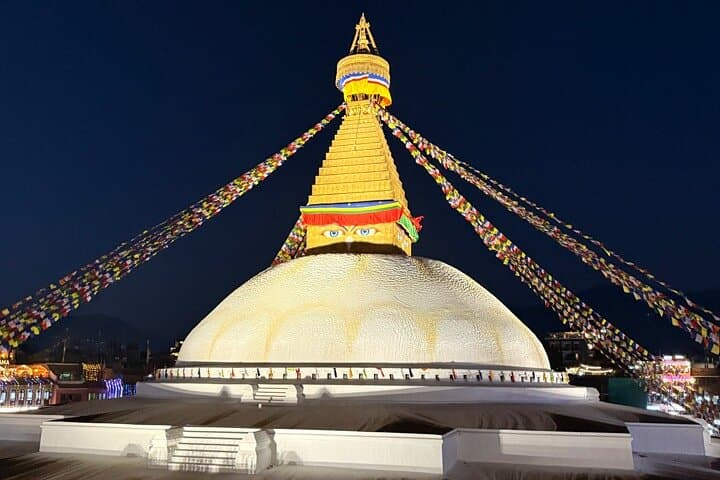
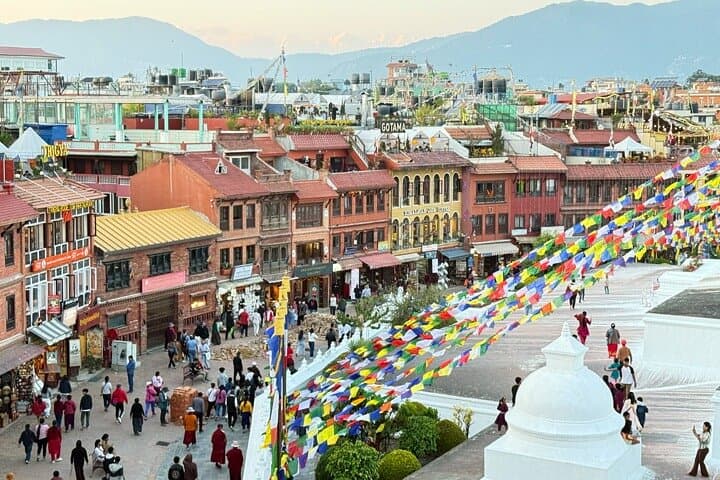
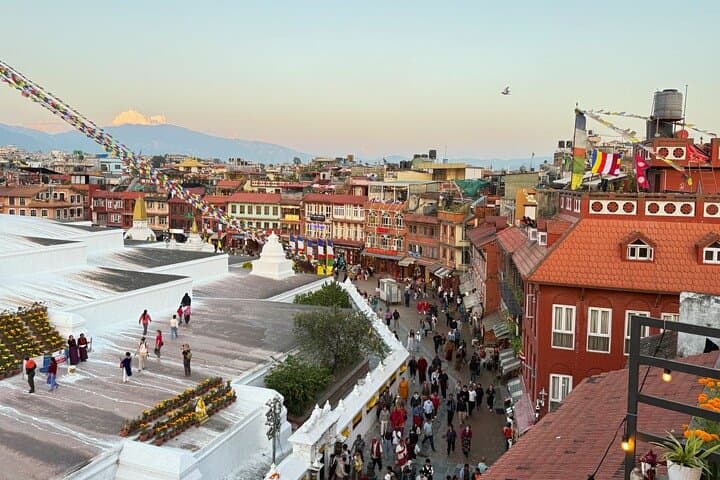
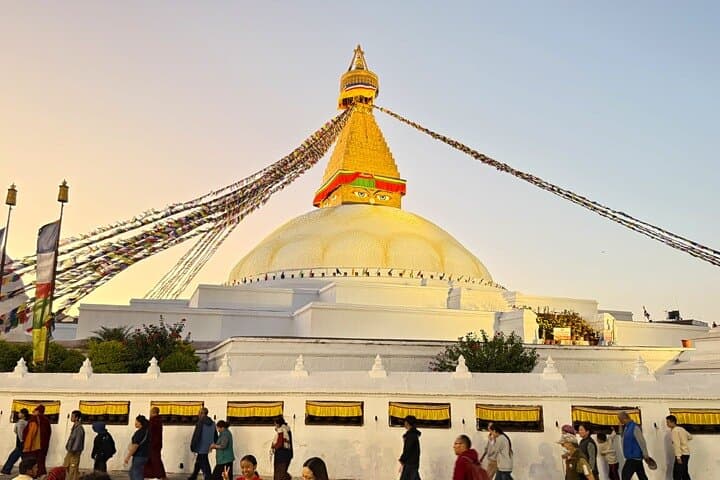
A white dome dominates the plaza, faces of the Buddha gazing calmly in four directions while a river of worshippers moves clockwise around its base. Prayer flags snap in the wind; the low chatter of monks and the brisk clack of prayer wheels create a steady rhythm. From rooftop cafés you look down on the stupa’s broad mandala and the dense cluster of Tibetan monasteries that give this quarter its distinctive character.
A white dome dominates the plaza, faces of the Buddha gazing calmly in four directions while a river of worshippers moves clockwise around its base. Prayer flags snap in the wind; the low chatter of monks and the brisk clack of prayer wheels create a steady rhythm. From rooftop cafés you look down on the stupa’s broad mandala and the dense cluster of Tibetan monasteries that give this quarter its distinctive character.
Boudhanath dates back many centuries and is one of Nepal’s most important Buddhist sites; it became a focal point for Tibetan refugees who settled here in large numbers after 1959, shaping the neighborhood’s language, food, and crafts. The stupa’s distinctive hemispherical dome and all-seeing eyes are architectural echoes of Himalayan Buddhist symbolism, while nearby thanka studios and monasteries preserve artistic techniques brought from the Tibetan plateau.
On this half-day tour you’ll circumnavigate the stupa, visit at least one monastery, and climb to a rooftop tea house for a panoramic view. Expect mostly flat, paved walking with short flights of steps to rooftops. The experience is sensory — incense, chanting, brass prayer wheels — but also instructive: guides explain iconography, pilgrimage practice, and respectful behavior.
Practical tips: wear modest clothing that covers shoulders and knees, carry local currency for small purchases, and keep phone cameras unobtrusive during rituals. Morning and late afternoon light are best for photos and cooler temperatures. The pace is gentle, accessible to most travelers, and offers a compact cultural immersion in under three hours.