THE ADVENTURE COLLECTIVE® · Independent discovery and booking for outdoor travel

Cover four of Bagan’s most important pagodas in a focused four‑hour tour. This half‑day itinerary highlights Shwezigon, Thatbyinnyu, Ananda and Dhamayangyi with hotel pickup and an English guide.
Cover four of Bagan’s most important pagodas in a focused four‑hour tour. This half‑day itinerary highlights Shwezigon, Thatbyinnyu, Ananda and Dhamayangyi with hotel pickup and an English guide.
You step out of the air‑conditioned van and the plain opens—flat, sunbaked earth dotted with domes, spires and the occasional palm that leans as if to peer at history.
Verified experiences and guided adventures in the surrounding area.
Operated by Grayline Vietnam Threeland Travel · Nyaung-U, Mandalay Region
You step out of the air‑conditioned van and the plain opens—flat, sunbaked earth dotted with domes, spires and the occasional palm that leans as if to peer at history.
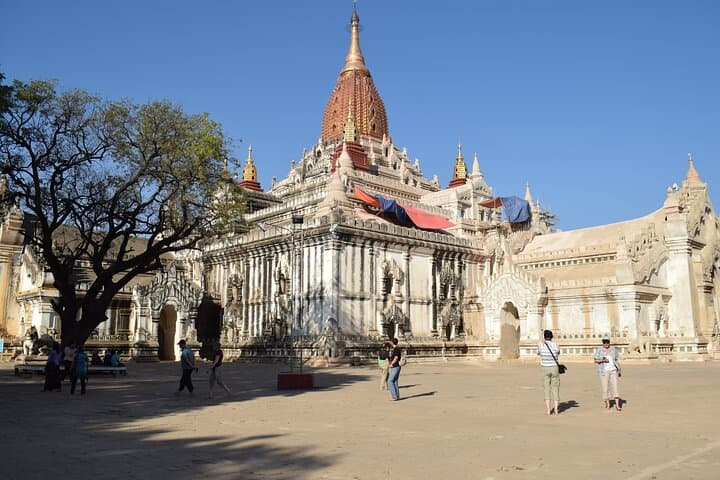
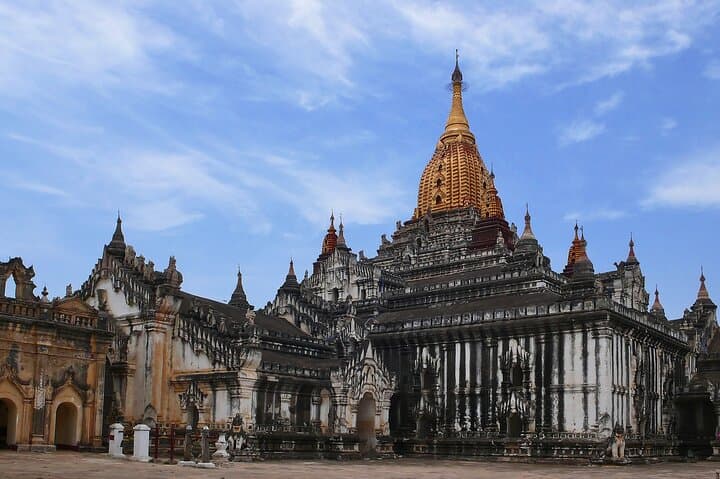
In four hours the tour moves with calm focus: Shwezigon’s gilded dome catching the slit of morning, Thatbyinnyu’s white stucco rising like a ship’s mast against blue, Ananda’s carved reliefs and Buddhas offering quiet presence, and Dhamayangyi’s heavy walls that still hold the story of a fierce king. The landscape is the Irrawaddy’s alluvial plain—sandy soils that once made construction easy and, paradoxically, preservation difficult. Wind and the river have shaped more than the ground; they shaped a civilization.
Bagan was the heart of the Pagan Kingdom from the 11th to 13th centuries when Theravada Buddhism spread and more than 4,000 monuments were built. Today about 2,000 remain, their stucco murals and stonework offering a direct line to artisans and monks of the past.
Practical details are pragmatic: expect short walks on packed earth and occasional uneven steps; modest dress (shoulders and knees covered) is required at active temples; and mid‑day heat can be intense—plan mornings or late afternoons. The tour includes hotel pickup and AC transfer, an English‑speaking guide, purified drinking water and a towel.
Bring sun protection, a refillable bottle, and comfortable shoes. Move respectfully—do not climb walls closed to the public and keep voices low inside shrines. With four hours and a steady pace, this half‑day gives a concentrated look at Bagan’s architectural highs without losing the human scale of its villages and workshops.
easy.
4 hours.
Suitable for most fitness levels; involves walking short distances and negotiating uneven steps.
The tour lasts about four hours and typically visits Shwezigon Pagoda, Thatbyinnyu Temple, Ananda Temple and Dhamayangyi Temple.
Yes—roundtrip hotel pickup and drop‑off in the Bagan/Nyaung‑U area is included and transportation is by AC vehicle.
Yes—shoulders and knees should be covered when entering temples; light scarves and long shirts are acceptable for warm weather.
The tour is suitable for children, with pricing policies varying by age; some temples have steps and uneven ground, so those with limited mobility may need assistance.
Bagan was the capital of the Pagan Kingdom (11th–13th centuries) and a center for Theravada Buddhism; thousands of religious monuments were constructed during this era.
Many monuments are fragile; visitors should avoid touching murals and climbing closed structures. Supporting local guides and artisans helps sustain conservation and community income.
Grayline Vietnam Threeland Travel operates guided outdoor trips and adventures with an emphasis on safety, stewardship, and memorable experiences.
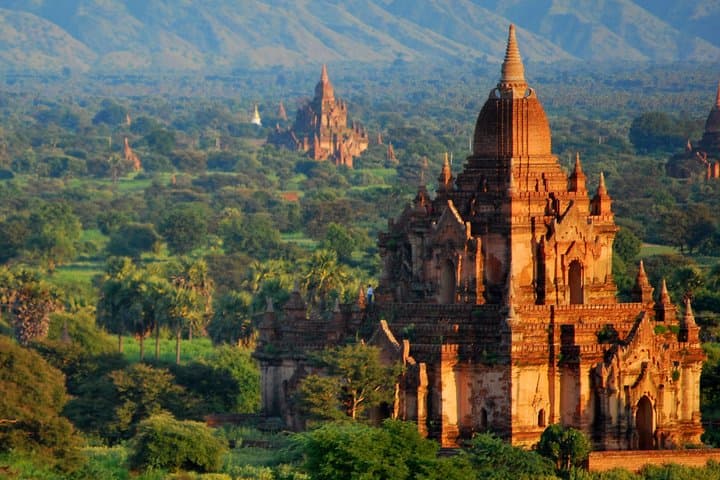
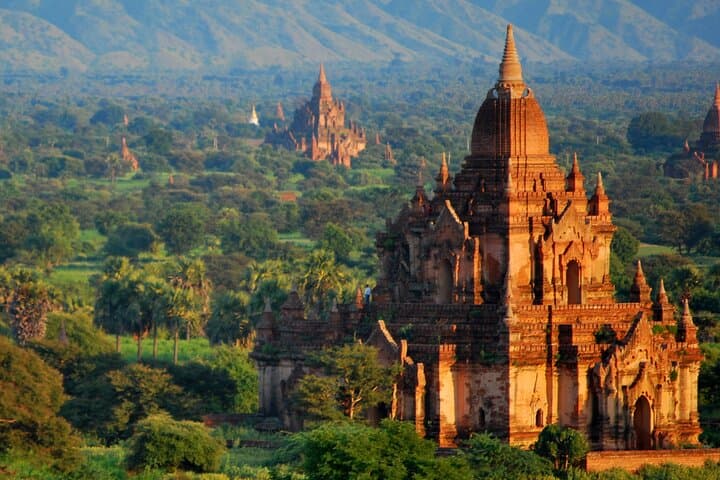
You step out of the air‑conditioned van and the plain opens—flat, sunbaked earth dotted with domes, spires and the occasional palm that leans as if to peer at history.
You step out of the air‑conditioned van and the plain opens—flat, sunbaked earth dotted with domes, spires and the occasional palm that leans as if to peer at history.
In four hours the tour moves with calm focus: Shwezigon’s gilded dome catching the slit of morning, Thatbyinnyu’s white stucco rising like a ship’s mast against blue, Ananda’s carved reliefs and Buddhas offering quiet presence, and Dhamayangyi’s heavy walls that still hold the story of a fierce king. The landscape is the Irrawaddy’s alluvial plain—sandy soils that once made construction easy and, paradoxically, preservation difficult. Wind and the river have shaped more than the ground; they shaped a civilization.
Bagan was the heart of the Pagan Kingdom from the 11th to 13th centuries when Theravada Buddhism spread and more than 4,000 monuments were built. Today about 2,000 remain, their stucco murals and stonework offering a direct line to artisans and monks of the past.
Practical details are pragmatic: expect short walks on packed earth and occasional uneven steps; modest dress (shoulders and knees covered) is required at active temples; and mid‑day heat can be intense—plan mornings or late afternoons. The tour includes hotel pickup and AC transfer, an English‑speaking guide, purified drinking water and a towel.
Bring sun protection, a refillable bottle, and comfortable shoes. Move respectfully—do not climb walls closed to the public and keep voices low inside shrines. With four hours and a steady pace, this half‑day gives a concentrated look at Bagan’s architectural highs without losing the human scale of its villages and workshops.