THE ADVENTURE COLLECTIVE® · Independent discovery and booking for outdoor travel

Spend a calm half-day among bamboo groves and giant pandas at the Chengdu Panda Breeding Research Base. This concise guide explains what to expect, when to go, and how to make the most of a two‑ to three‑hour visit.
Spend a calm half-day among bamboo groves and giant pandas at the Chengdu Panda Breeding Research Base. This concise guide explains what to expect, when to go, and how to make the most of a two‑ to three‑hour visit.
Morning light filters through groves of bamboo as visitors step into the Chengdu Panda Breeding Research Base, where slow-moving giants and playful cubs share terraces cut into gentle hills.
Verified experiences and guided adventures in the surrounding area.
Operated by China Exploration · Chengdu, Sichuan
Morning light filters through groves of bamboo as visitors step into the Chengdu Panda Breeding Research Base, where slow-moving giants and playful cubs share terraces cut into gentle hills.
Established in the late 1980s, the base grew from conservation urgency—captive breeding and scientific study aimed at reversing decades of habitat loss across Sichuan. The site sits on low foothills formed by the eastern edge of the Tibetan Plateau; limestone and red soil shape drainage and support the dense bamboo stands pandas rely on.
Local culture mixes with science here: researchers in casual field coats, volunteers offering bilingual interpretation, and nearby Chengdu’s tea-house rhythms set the pace before and after the visit. The experience is observational—walking lanes, viewing platforms, and interpretive exhibits that explain breeding success, veterinary care, and rewilding trials.
Practical guidance: expect a 40-minute drive from central Chengdu and plan for two to three hours onsite. Early mornings are the best window for active behavior—feeding, climbing and playful tussles—while afternoons are often nap times. Follow posted routes, avoid loud noises and keep a respectful distance; photographs are welcome but flash is discouraged. Bring sun protection, refillable water, and a comfortable pair of shoes for paved paths that can be uneven when wet. For families, the base accommodates children, but infants and toddlers should be closely supervised around viewing railings.
The visit is equal parts wildlife spectacle and a real-world look at conservation in action—informative, accessible, and unmistakably local.
easy.
2–3 hours.
Suitable for most fitness levels; involves light walking on paved paths and gentle inclines.
The tour runs about 2–3 hours on site with roughly a 40-minute transfer from central Chengdu each way.
This half‑day private tour includes entrance tickets, a private vehicle with driver, and an English‑speaking guide per the itinerary.
No—feeding and touching pandas is prohibited for animal welfare and biosecurity; observation is from designated viewing areas only.
Yes; the base is family-friendly but children must be supervised at all times and kept behind barriers.
Founded in the late 1980s, the Chengdu Base was created to coordinate captive breeding and research to prevent giant panda extinction and to reintroduce individuals to the wild.
The base focuses on breeding, medical care, and release research; visitor fees and strict biosecurity measures support ongoing conservation work and habitat protection.
China Exploration operates guided outdoor trips and adventures with an emphasis on safety, stewardship, and memorable experiences.


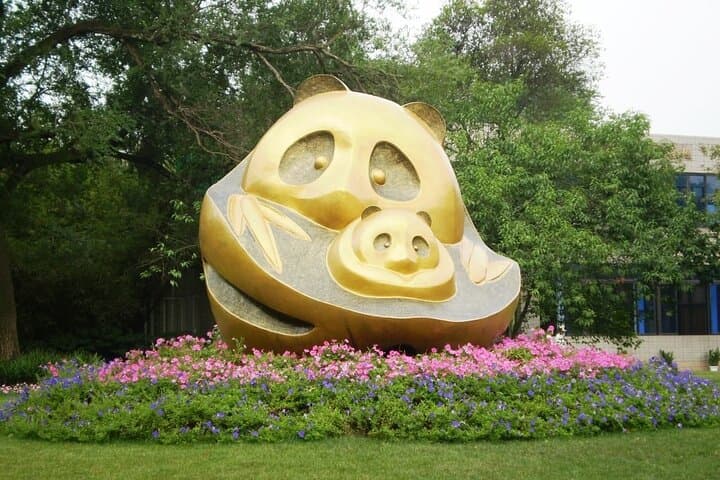
Morning light filters through groves of bamboo as visitors step into the Chengdu Panda Breeding Research Base, where slow-moving giants and playful cubs share terraces cut into gentle hills.
Morning light filters through groves of bamboo as visitors step into the Chengdu Panda Breeding Research Base, where slow-moving giants and playful cubs share terraces cut into gentle hills.
Established in the late 1980s, the base grew from conservation urgency—captive breeding and scientific study aimed at reversing decades of habitat loss across Sichuan. The site sits on low foothills formed by the eastern edge of the Tibetan Plateau; limestone and red soil shape drainage and support the dense bamboo stands pandas rely on.
Local culture mixes with science here: researchers in casual field coats, volunteers offering bilingual interpretation, and nearby Chengdu’s tea-house rhythms set the pace before and after the visit. The experience is observational—walking lanes, viewing platforms, and interpretive exhibits that explain breeding success, veterinary care, and rewilding trials.
Practical guidance: expect a 40-minute drive from central Chengdu and plan for two to three hours onsite. Early mornings are the best window for active behavior—feeding, climbing and playful tussles—while afternoons are often nap times. Follow posted routes, avoid loud noises and keep a respectful distance; photographs are welcome but flash is discouraged. Bring sun protection, refillable water, and a comfortable pair of shoes for paved paths that can be uneven when wet. For families, the base accommodates children, but infants and toddlers should be closely supervised around viewing railings.
The visit is equal parts wildlife spectacle and a real-world look at conservation in action—informative, accessible, and unmistakably local.