THE ADVENTURE COLLECTIVE® · Independent discovery and booking for outdoor travel

Ride a classic tuk-tuk through the Angkor complex to see Angkor Wat and Angkor Thom in a focused half-day. This guide covers what to expect, brief history, terrain, and practical tips for a smooth visit.
Ride a classic tuk-tuk through the Angkor complex to see Angkor Wat and Angkor Thom in a focused half-day. This guide covers what to expect, brief history, terrain, and practical tips for a smooth visit.
A morning breeze pushes through the open sides of a three-wheeled tuk-tuk as it pulls away from a Siem Reap hotel and threads toward the first stone horizon: Angkor Wat.
Verified experiences and guided adventures in the surrounding area.
Operated by Bravo Indochina Tours · Siem Reap, Siem Reap Province
A morning breeze pushes through the open sides of a three-wheeled tuk-tuk as it pulls away from a Siem Reap hotel and threads toward the first stone horizon: Angkor Wat.
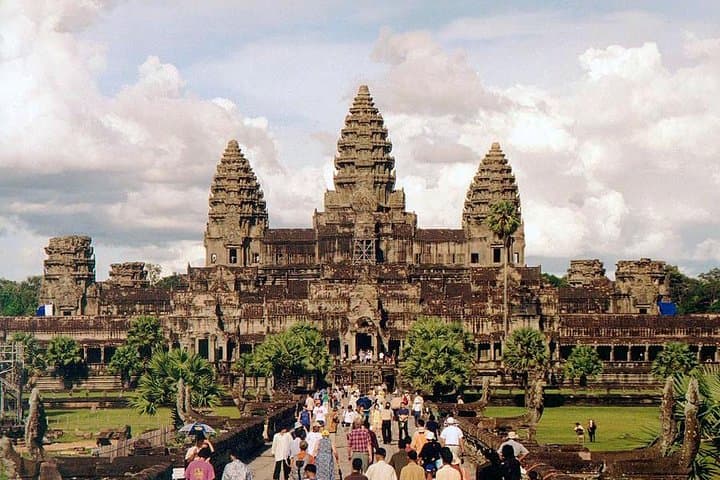
Rising from a broad moat, the 12th-century temple presents stepped galleries, carved lintels and long, sunlit causeways that reward slow footsteps and patient framing. The guide parks and gives the rhythm of the site—where to pause for bas-reliefs, where the light favours the central towers—and the group disperses across courtyards to photograph, reflect and move between chambers.
From Angkor Wat the ride continues to Angkor Thom, a fortified city built under Jayavarman VII. Visitors cross moats and climb causeways lined with carved devas and demons, arrive at the Bayon with its enigmatic smiling faces, and trace the Terrace of the Elephants where kings once reviewed armies. Geology here is simple: sandstone blocks quarried and ferried into place, weathered by monsoon seasons and the slow climb of tropical vegetation.
This half-day circuit is cultural first and physical second—short walks on uneven stone, open-air travel between sites, and frequent stops for context and photos. Practicalities: entrance fees to the Angkor Archaeological Park are separate, wear modest clothing for temple entry, bring sun protection and a refillable bottle, and allow flexibility for crowds and heat. The tuk-tuk format makes moving between distant monuments fast while keeping the day light and adaptable—ideal for travelers who want a concentrated, interpretive introduction to Angkor’s most iconic sites.
easy.
6–8 hours.
Suitable for travelers with basic mobility; involves repeated brief walks on uneven stone and steps with plenty of stops.
No—entrance to the Angkor Archaeological Park is paid separately at the official ticket counter; bring ID and small cash for the pass.
This shared tour typically accommodates up to 13 travelers, moving between sites together with a local guide and tuk-tuk driver.
Short walks are required on uneven surfaces and steps; children and guests with mobility limits should assess stair and ground conditions but can often participate with assistance.
Yes—hotel pickup and drop-off in Siem Reap is included, so confirm pickup details when you book.
Angkor Wat was built in the early 12th century under King Suryavarman II, while Angkor Thom and the Bayon temple complex were major works of Jayavarman VII in the late 12th to early 13th centuries.
Visitor fees fund preservation and local management; stay on marked paths, avoid touching carvings and use refillable water to reduce plastic waste.
Bravo Indochina Tours operates guided outdoor trips and adventures with an emphasis on safety, stewardship, and memorable experiences.
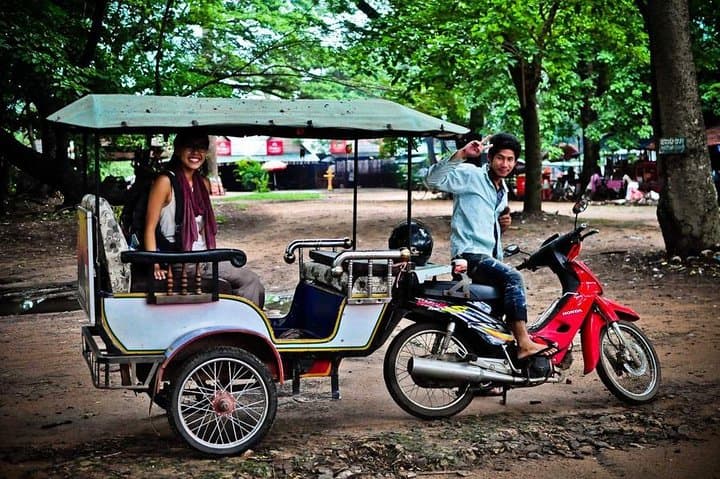
A morning breeze pushes through the open sides of a three-wheeled tuk-tuk as it pulls away from a Siem Reap hotel and threads toward the first stone horizon: Angkor Wat.
A morning breeze pushes through the open sides of a three-wheeled tuk-tuk as it pulls away from a Siem Reap hotel and threads toward the first stone horizon: Angkor Wat.
Rising from a broad moat, the 12th-century temple presents stepped galleries, carved lintels and long, sunlit causeways that reward slow footsteps and patient framing. The guide parks and gives the rhythm of the site—where to pause for bas-reliefs, where the light favours the central towers—and the group disperses across courtyards to photograph, reflect and move between chambers.
From Angkor Wat the ride continues to Angkor Thom, a fortified city built under Jayavarman VII. Visitors cross moats and climb causeways lined with carved devas and demons, arrive at the Bayon with its enigmatic smiling faces, and trace the Terrace of the Elephants where kings once reviewed armies. Geology here is simple: sandstone blocks quarried and ferried into place, weathered by monsoon seasons and the slow climb of tropical vegetation.
This half-day circuit is cultural first and physical second—short walks on uneven stone, open-air travel between sites, and frequent stops for context and photos. Practicalities: entrance fees to the Angkor Archaeological Park are separate, wear modest clothing for temple entry, bring sun protection and a refillable bottle, and allow flexibility for crowds and heat. The tuk-tuk format makes moving between distant monuments fast while keeping the day light and adaptable—ideal for travelers who want a concentrated, interpretive introduction to Angkor’s most iconic sites.