THE ADVENTURE COLLECTIVE® · Independent discovery and booking for outdoor travel

Explore key moai sites on a compact half-day tour from Hanga Roa. Visit Ahu Tahai’s restored moai with coral eyes, the seven ocean-facing figures at Ahu Akivi, and the red scoria quarry at Puna Pau for crater views and cultural context.
Explore key moai sites on a compact half-day tour from Hanga Roa. Visit Ahu Tahai’s restored moai with coral eyes, the seven ocean-facing figures at Ahu Akivi, and the red scoria quarry at Puna Pau for crater views and cultural context.
You step off the minibus and the wind on Rapa Nui greets you like an old guide — brisk, insistent, revealing. The shoreline opens with flat grassy platforms where moai stand like weathered sentries; at Tahai one has its white-coralline eyes restored, a rare, almost human gaze that changes with the light.
Verified experiences and guided adventures in the surrounding area.
Operated by ParaViajantes Tours · Hanga Roa, Valparaíso Region
You step off the minibus and the wind on Rapa Nui greets you like an old guide — brisk, insistent, revealing. The shoreline opens with flat grassy platforms where moai stand like weathered sentries; at Tahai one has its white-coralline eyes restored, a rare, almost human gaze that changes with the light.
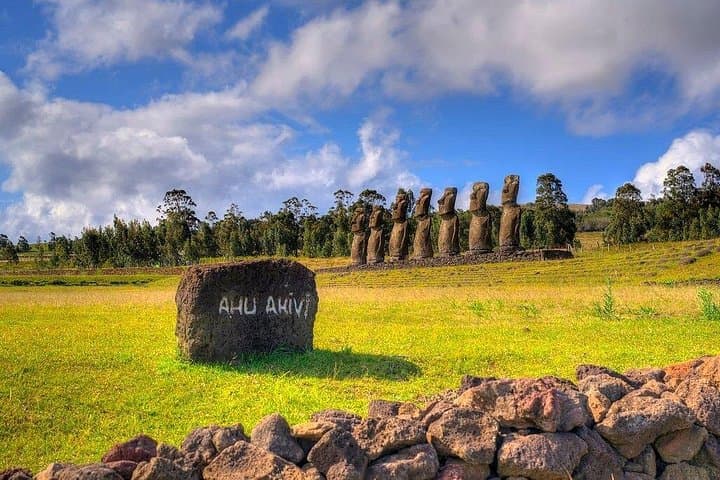
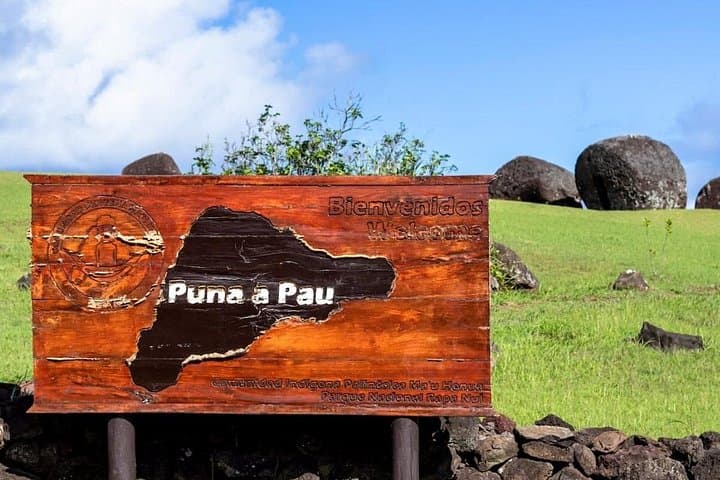
This half-day route stitches together key chapters of Rapa Nui history. Polynesian settlers carved and transported nearly 1,000 moai between roughly AD 1250–1500; the stonework at Puna Pau explains the red scoria “pukao” headdresses while Ahu Akivi’s seven figures face seaward in a modern restoration from 1960. Geology is close at hand: volcanic tuff and red scoria from extinct cones, coastal basalt benches, and the broad silhouette of Terevaka rising inland.
Guides translate oral traditions into practical context — why some platforms face the sea, why quarry scars remain — and point out cultural details like ahu construction and re-erection efforts during the 20th century.
Practical guidance: the tour is largely flat walking with short, uneven stretches and low cliffs at viewpoint edges. Wear sturdy shoes, a windproof layer, and sun protection; bring water and a camera with polarizing filter for the coastal glare. Morning light is best for photography; late afternoons bring stronger winds.
Respect the sites: stay on paths, follow your guide, and limit tripods or large bags at delicate platforms. In three hours you’ll leave with a clearer sense of how geology, history, and human hands shaped some of the island’s most iconic places.
easy.
3–4 hours.
Suitable for most travelers with basic mobility; involves short walks on uneven ground.
The excursion runs about 3–4 hours and covers Ahu Tahai, Ahu Akivi, and Puna Pau with time at each site for interpretation and photos.
This operator lists site admission as included for itinerary stops; confirm booking details and whether national park tickets are handled during reservation.
Yes — the itinerary is low-impact with short walks, but it’s not recommended for travelers with serious spinal, cardiovascular, or pregnancy-related restrictions.
Guides are available in Spanish and English according to the listing; request language preference when booking.
Polynesian settlers carved moai and built ahu between roughly AD 1250–1500; many monuments were later re-erected during 20th-century restorations.
Visitor pressure and erosion threaten fragile sites; staying on marked paths and respecting ahu helps protect archaeological layers while park fees support conservation.
ParaViajantes Tours operates guided outdoor trips and adventures with an emphasis on safety, stewardship, and memorable experiences.
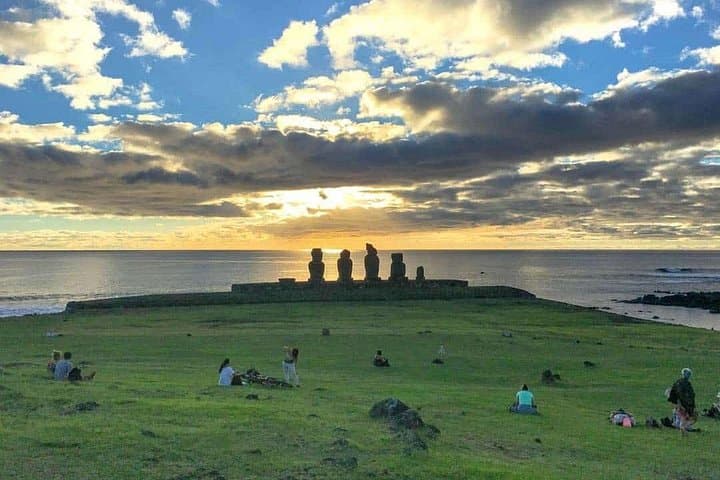
You step off the minibus and the wind on Rapa Nui greets you like an old guide — brisk, insistent, revealing. The shoreline opens with flat grassy platforms where moai stand like weathered sentries; at Tahai one has its white-coralline eyes restored, a rare, almost human gaze that changes with the light.
You step off the minibus and the wind on Rapa Nui greets you like an old guide — brisk, insistent, revealing. The shoreline opens with flat grassy platforms where moai stand like weathered sentries; at Tahai one has its white-coralline eyes restored, a rare, almost human gaze that changes with the light.
This half-day route stitches together key chapters of Rapa Nui history. Polynesian settlers carved and transported nearly 1,000 moai between roughly AD 1250–1500; the stonework at Puna Pau explains the red scoria “pukao” headdresses while Ahu Akivi’s seven figures face seaward in a modern restoration from 1960. Geology is close at hand: volcanic tuff and red scoria from extinct cones, coastal basalt benches, and the broad silhouette of Terevaka rising inland.
Guides translate oral traditions into practical context — why some platforms face the sea, why quarry scars remain — and point out cultural details like ahu construction and re-erection efforts during the 20th century.
Practical guidance: the tour is largely flat walking with short, uneven stretches and low cliffs at viewpoint edges. Wear sturdy shoes, a windproof layer, and sun protection; bring water and a camera with polarizing filter for the coastal glare. Morning light is best for photography; late afternoons bring stronger winds.
Respect the sites: stay on paths, follow your guide, and limit tripods or large bags at delicate platforms. In three hours you’ll leave with a clearer sense of how geology, history, and human hands shaped some of the island’s most iconic places.