THE ADVENTURE COLLECTIVE® · Independent discovery and booking for outdoor travel

Explore three of Absheron’s defining sites on a private half-day loop from Baku: the Gala archaeological reserve, the Ateshgah fire temple and the continually burning slope of Yanar Dag. This concise tour pairs cultural history with geological spectacle and easy, guided walks.
Explore three of Absheron’s defining sites on a private half-day loop from Baku: the Gala archaeological reserve, the Ateshgah fire temple and the continually burning slope of Yanar Dag. This concise tour pairs cultural history with geological spectacle and easy, guided walks.
You pull away from Baku’s glass-and-concrete edge into a low, wind-swept plain where the sky feels wider and the earth smells faintly of gas. The van climbs toward Gala’s sunlit yards and open-air exhibits; later, a pentagonal courtyard of carved stone frames a small altar at Ateshgah, and a hillside at Yanar Dag spits steady blue-orange tongues into the air.
Verified experiences and guided adventures in the surrounding area.
Operated by VLA_tourism · Baku, Absheron District
You pull away from Baku’s glass-and-concrete edge into a low, wind-swept plain where the sky feels wider and the earth smells faintly of gas. The van climbs toward Gala’s sunlit yards and open-air exhibits; later, a pentagonal courtyard of carved stone frames a small altar at Ateshgah, and a hillside at Yanar Dag spits steady blue-orange tongues into the air.
The Absheron Peninsula is defined by fire and trade. Gala’s archaeological reserve preserves settlements and graves spanning millennia — the open-air section covers roughly 1.5 hectares and houses pottery, jewelry and coins that tell of coastal trade routes. Ateshgah reflects a cultural crossroads: Iranian inscriptions and Indian script mark its use by Hindus, Sikhs and Zoroastrians until industrial development in the late 19th century. Yanar Dag is geological theater — a continuous natural-gas seep that flames up through porous sandstone, often burning several meters high.
On a practical note, this private 5–6 hour loop includes roughly 30–50 minutes of driving between sites and short guided walks at each stop (1.5 hours at Gala, 60 minutes at Ateshgah, ~30 minutes at Yanar Dag). Expect uneven ground, low stone steps and open exposure to sun and wind. Bring water, sun protection and sturdy footwear; evenings make the Yanar Dag fire more dramatic and photo-friendly. Hotel pickup and drop-off in Baku are included; admissions may be separate. Move respectfully through museum areas, stick to paths, and pack out any litter — these fragile sites persist because visitors treat them with care.
easy.
5–6 hours.
Suitable for most fitness levels; involves short walks, standing and some steps.
Yes — the tour includes pickup and drop-off from hotels in central Baku as listed when booking.
Admissions are typically not included; bring local currency or check with your guide before arrival.
Sites have uneven terrain and steps; full wheelchair access is limited though transfers can be arranged for short viewpoints.
Early evening or after sunset enhances the visual contrast of the steady flames, though the fire is visible during daylight.
The Absheron Peninsula’s sites reflect trade and religious exchange: Ateshgah hosted Hindu, Sikh and Zoroastrian pilgrims; Gala preserves artifacts from ancient coastal settlements.
Natural gas seeps and historic structures are sensitive; follow marked paths, avoid disturbing geology, and take all trash with you to minimize impact.
VLA_tourism operates guided outdoor trips and adventures with an emphasis on safety, stewardship, and memorable experiences.
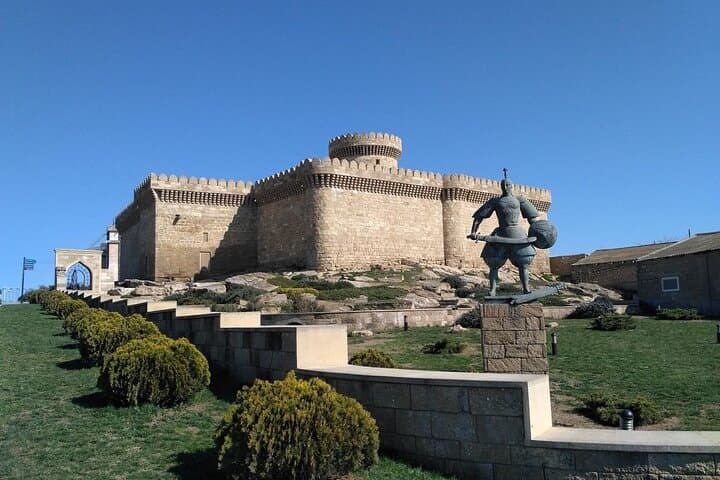
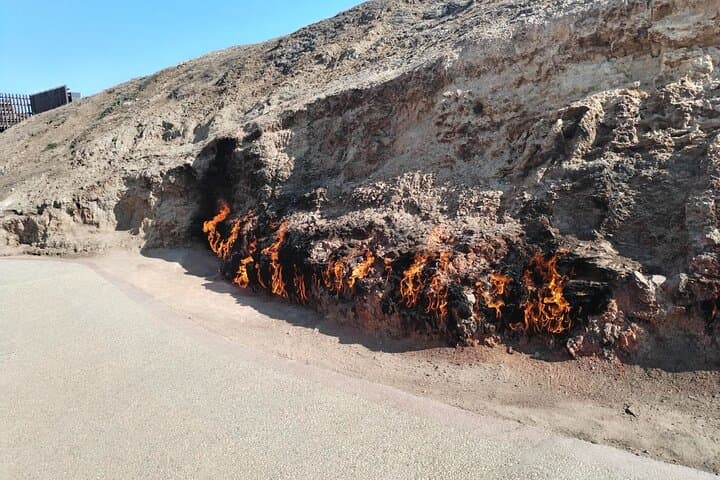
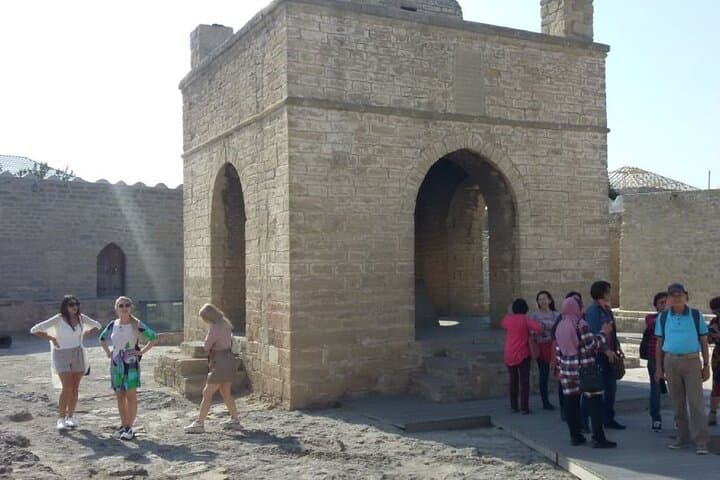
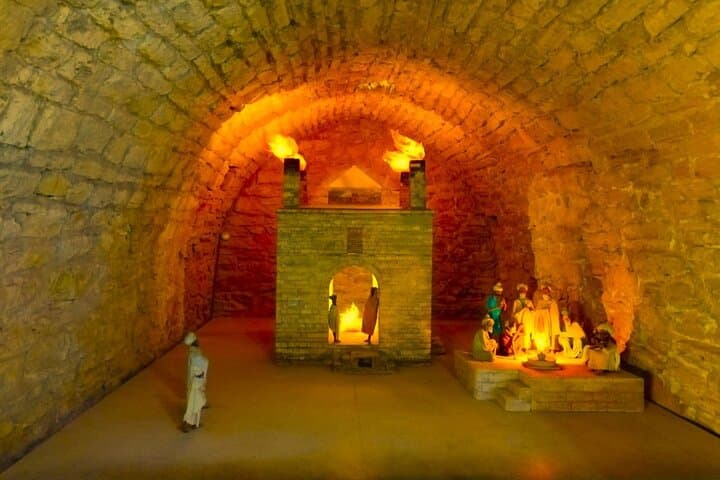
You pull away from Baku’s glass-and-concrete edge into a low, wind-swept plain where the sky feels wider and the earth smells faintly of gas. The van climbs toward Gala’s sunlit yards and open-air exhibits; later, a pentagonal courtyard of carved stone frames a small altar at Ateshgah, and a hillside at Yanar Dag spits steady blue-orange tongues into the air.
You pull away from Baku’s glass-and-concrete edge into a low, wind-swept plain where the sky feels wider and the earth smells faintly of gas. The van climbs toward Gala’s sunlit yards and open-air exhibits; later, a pentagonal courtyard of carved stone frames a small altar at Ateshgah, and a hillside at Yanar Dag spits steady blue-orange tongues into the air.
The Absheron Peninsula is defined by fire and trade. Gala’s archaeological reserve preserves settlements and graves spanning millennia — the open-air section covers roughly 1.5 hectares and houses pottery, jewelry and coins that tell of coastal trade routes. Ateshgah reflects a cultural crossroads: Iranian inscriptions and Indian script mark its use by Hindus, Sikhs and Zoroastrians until industrial development in the late 19th century. Yanar Dag is geological theater — a continuous natural-gas seep that flames up through porous sandstone, often burning several meters high.
On a practical note, this private 5–6 hour loop includes roughly 30–50 minutes of driving between sites and short guided walks at each stop (1.5 hours at Gala, 60 minutes at Ateshgah, ~30 minutes at Yanar Dag). Expect uneven ground, low stone steps and open exposure to sun and wind. Bring water, sun protection and sturdy footwear; evenings make the Yanar Dag fire more dramatic and photo-friendly. Hotel pickup and drop-off in Baku are included; admissions may be separate. Move respectfully through museum areas, stick to paths, and pack out any litter — these fragile sites persist because visitors treat them with care.