THE ADVENTURE COLLECTIVE® · Independent discovery and booking for outdoor travel

Spend an hour on a small Kona coffee farm learning professional cupping protocol and tasting three distinct coffees. This hands-on workshop teaches how origin and roast shape flavor while giving practical tips for buying and brewing better beans.
Spend an hour on a small Kona coffee farm learning professional cupping protocol and tasting three distinct coffees. This hands-on workshop teaches how origin and roast shape flavor while giving practical tips for buying and brewing better beans.
A low stone wall and a narrow private lane open onto a small family coffee farm where the air already smells of roast and wet earth. You step under a canopy of guava and coffee trees; sunlight threads through the leaves and the beans seem to hum with flavor. The workshop begins at a long table where steaming cups and cupping spoons await.
Verified experiences and guided adventures in the surrounding area.
Operated by Hala Tree Coffee · Holualoa, Hawaii
A low stone wall and a narrow private lane open onto a small family coffee farm where the air already smells of roast and wet earth. You step under a canopy of guava and coffee trees; sunlight threads through the leaves and the beans seem to hum with flavor. The workshop begins at a long table where steaming cups and cupping spoons await.
This is Kona coffee country — volcanic slopes, iron-rich soil, and trade winds that shape bean character. Coffee arrived in Hawaiʻi in the 19th century and transformed local economies; many small farms here still process by hand, preserving practices that influence acidity, body, and aromatic notes. Hala Tree sits at roughly 700–900 ft elevation on the Hawaiʻi belt road, where shaded plots and terraced beds slow ripening and concentrate sugars.
Expect a practical, sensory session: professional cupping protocol, sniffing grounds, tasting for acidity, sweetness, body, and finish, and comparing three distinct lots. You’ll learn roast-level effects and origin-driven profiles while trainers explain farm-to-cup choices.
Practical guidance: the workshop is an hour long, small-group, and on a private farm road — wear closed-toe shoes for uneven ground, bring water between slurps, and allow extra time to find the private entrance near the Bible First Mission church at mile marker 109. Mornings are best for freshest aromas; if it’s rained, come prepared for slick paths. Leave room in your luggage — growers often sell beans you’ll want to take home.
easy.
1 hour.
Minimal fitness required — able to stand and walk short uneven distances.
The cupping session runs about 60 minutes and covers three different coffees with guided tasting and discussion.
The farm access is a private lane with some uneven ground; contact the operator in advance to discuss specific accessibility needs.
Yes — most small farms offer bags of the coffees you tasted and can recommend roast levels and brewing methods.
Children are allowed but the experience is best for older kids who can stay attentive and avoid touching hot cups and equipment.
Kona’s coffee industry began in the 19th century when immigrant farmers planted small plots on lava soils; small-lot farms here preserve many traditional processing techniques.
Many Kona growers practice shade-grown methods and small-batch processing to protect soil and water; ask about direct-trade and sustainable practices when buying beans.
Hala Tree Coffee operates guided outdoor trips and adventures with an emphasis on safety, stewardship, and memorable experiences.

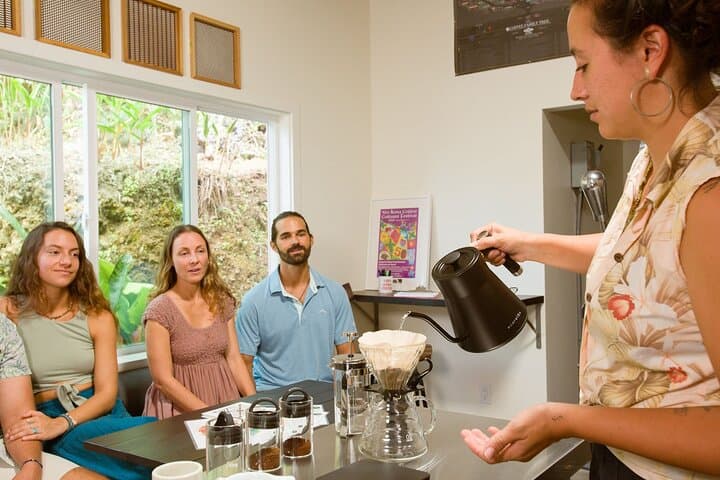
A low stone wall and a narrow private lane open onto a small family coffee farm where the air already smells of roast and wet earth. You step under a canopy of guava and coffee trees; sunlight threads through the leaves and the beans seem to hum with flavor. The workshop begins at a long table where steaming cups and cupping spoons await.
A low stone wall and a narrow private lane open onto a small family coffee farm where the air already smells of roast and wet earth. You step under a canopy of guava and coffee trees; sunlight threads through the leaves and the beans seem to hum with flavor. The workshop begins at a long table where steaming cups and cupping spoons await.
This is Kona coffee country — volcanic slopes, iron-rich soil, and trade winds that shape bean character. Coffee arrived in Hawaiʻi in the 19th century and transformed local economies; many small farms here still process by hand, preserving practices that influence acidity, body, and aromatic notes. Hala Tree sits at roughly 700–900 ft elevation on the Hawaiʻi belt road, where shaded plots and terraced beds slow ripening and concentrate sugars.
Expect a practical, sensory session: professional cupping protocol, sniffing grounds, tasting for acidity, sweetness, body, and finish, and comparing three distinct lots. You’ll learn roast-level effects and origin-driven profiles while trainers explain farm-to-cup choices.
Practical guidance: the workshop is an hour long, small-group, and on a private farm road — wear closed-toe shoes for uneven ground, bring water between slurps, and allow extra time to find the private entrance near the Bible First Mission church at mile marker 109. Mornings are best for freshest aromas; if it’s rained, come prepared for slick paths. Leave room in your luggage — growers often sell beans you’ll want to take home.