THE ADVENTURE COLLECTIVE® · Independent discovery and booking for outdoor travel

A private, full‑day escape from Tokyo into Hakone’s volcanic valleys, cedar forests and glassy lake. Sail Lake Ashi, ride the Hakone Ropeway over steaming vents at Owakudani, and move through art on the Hakone Open‑Air Museum—all with private luxury transport and a professional English‑speaking guide.
A private, full‑day escape from Tokyo into Hakone’s volcanic valleys, cedar forests and glassy lake. Sail Lake Ashi, ride the Hakone Ropeway over steaming vents at Owakudani, and move through art on the Hakone Open‑Air Museum—all with private luxury transport and a professional English‑speaking guide.
You step out of the quiet of a central Tokyo hotel into a waiting executive sedan, and the city loosens its grip—skyscrapers give way to rice fields, then to the thicker green of the Hakone mountains. The road climbs and the air cools; by the time you reach the shore of Lake Ashi the water is a mirror that seems to hold Mount Fuji in reserve, waiting for a break in the cloud. The pirate ship that ferries visitors across the lake rocks with polite enthusiasm, pushing you toward cedar-lined trails and a vermilion torii that stands in the shallows like a gate between worlds.
Verified experiences and guided adventures in the surrounding area.
Operated by Sakura Travel · Hakone, Kanagawa
You step out of the quiet of a central Tokyo hotel into a waiting executive sedan, and the city loosens its grip—skyscrapers give way to rice fields, then to the thicker green of the Hakone mountains. The road climbs and the air cools; by the time you reach the shore of Lake Ashi the water is a mirror that seems to hold Mount Fuji in reserve, waiting for a break in the cloud. The pirate ship that ferries visitors across the lake rocks with polite enthusiasm, pushing you toward cedar-lined trails and a vermilion torii that stands in the shallows like a gate between worlds.
Hakone is a landscape written by fire and water. The lake occupies a volcanic caldera born of an eruption more than three thousand years ago; steaming vents at Owakudani are a visible reminder of subterranean movement. Historically the area grew as a post town along the Tokaido route, and Hakone Shrine—whose origins date to the 8th century—keeps an old, reverent rhythm: pilgrims pause, coins rotate on the wooden slats, the cedar forest exhales. Modern attractions like the Hakone Open-Air Museum and the sail of the Ropeway are contemporary gestures placed against that deeper geology.
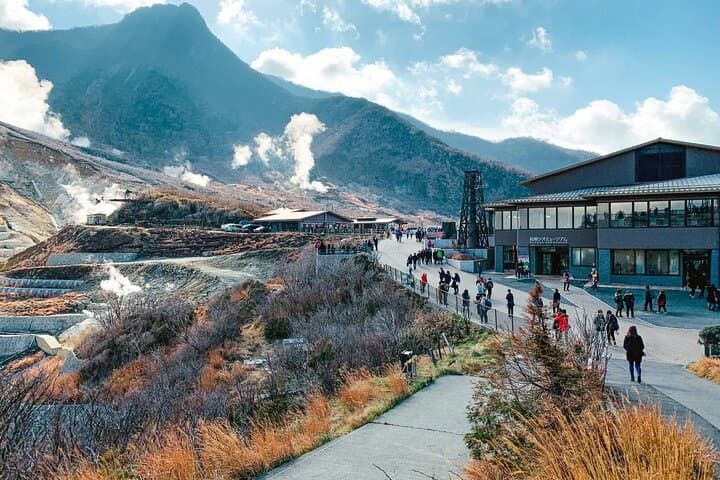
The day tour is curated for comfort: private luxury transport from Tokyo, an English-speaking driver-guide, free Wi‑Fi and bottled water. Expect a full day—roughly nine to ten hours—of short walks, boardings and scenic pauses rather than long multi-hour hikes. The Hakone Ropeway lifts you over sulfurous valleys to Owakudani (about 1,044 m elevation), where vents steam and the air smells of eggs; the black eggs at the stall are a playful local custom, though visitors with health concerns should steer clear. Mishima Skywalk’s 400‑meter span hums underfoot and rewards clear-day views of Fuji. The Open-Air Museum places sculptures on grassy knolls, inviting you to move around art in the same way you move through the landscape.
Practical notes: plan for variable weather—temperatures can drop several degrees between Lake Ashi and Owakudani—so layer up. Bring sensible walking shoes; most stops involve uneven boardwalks, short stairs and cobbled paths. If you choose onsen access or a traditional ryotei, leave room in your schedule and respect local etiquette: small tattoos can be an issue at some baths. The provider handles hotel pickup in Tokyo and drop-off, and private upgrades are available for more intimate onsen or dining experiences.
A private day in Hakone trades the rushed tourist checklist for paced observation: the ropeway that carries you over simmering earth, the defiant red torii, the lake that keeps Mount Fuji in its pocket until the sky opens. It’s an efficient, refined way to read the region in a single day—sensory, informative and quietly restorative.
moderate.
9–10 hours.
Light to moderate fitness—mostly short walks, boarding and brief stair sections; suitable for travelers who can manage repeated short walks and standing.
Standard tour price covers transportation and guide services; most attraction admissions (Ropeway, museums, cruises, some paid onsen) are not included—confirm add‑ons when booking.
Typical one‑way drive is 90–120 minutes depending on traffic; the tour includes hotel pickup and drop‑off in central Tokyo and allows time for scenic stops.
Yes—private onsen access is an optional upgrade; note that some baths restrict visible tattoos and require adherence to local bathing etiquette.
Owakudani emits sulfur gases; visitors with respiratory, cardiovascular conditions or pregnancy should avoid prolonged exposure and follow the guide’s recommendations.
Mount Fuji is visible on clear days; weather in Hakone is variable—your guide will plan viewpoints but cannot guarantee clear views.
Many cruise operators provide step access and assistance, but accessibility varies—inform the operator in advance so arrangements can be made.
Hakone grew as a strategic checkpoint on the Tokaido road connecting Kyoto and Edo; the cedar avenues were planted to guide travelers and protect the route.
Hakone balances heavy visitation with protected forest corridors; stick to marked paths, avoid feeding wildlife, and carry out trash to minimize impact.
Sakura Travel operates guided outdoor trips and adventures with an emphasis on safety, stewardship, and memorable experiences.
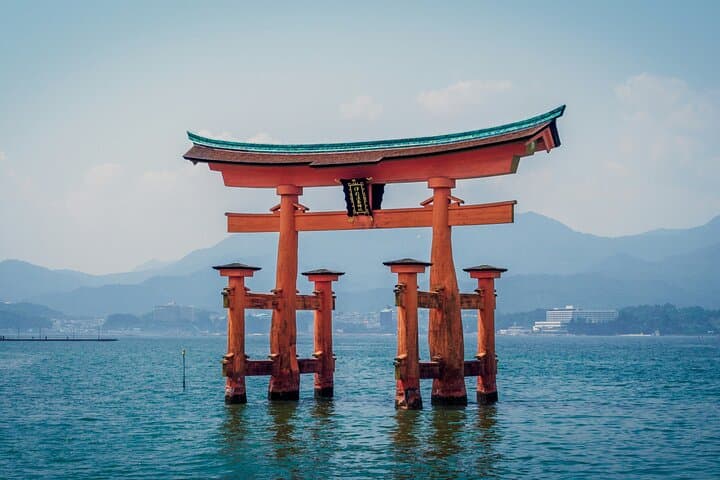
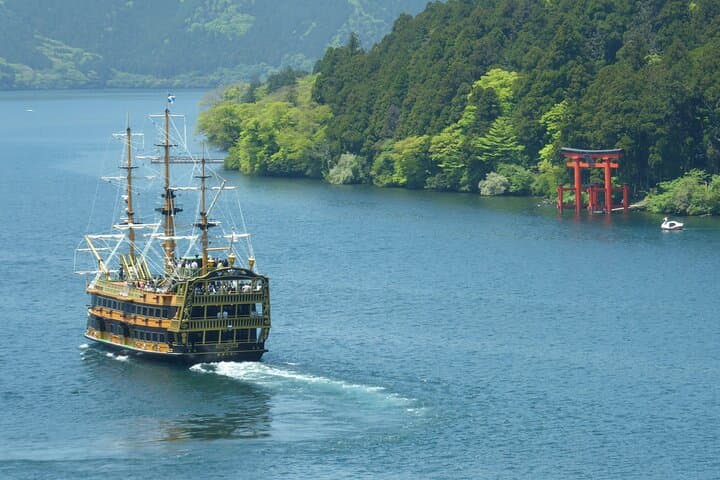
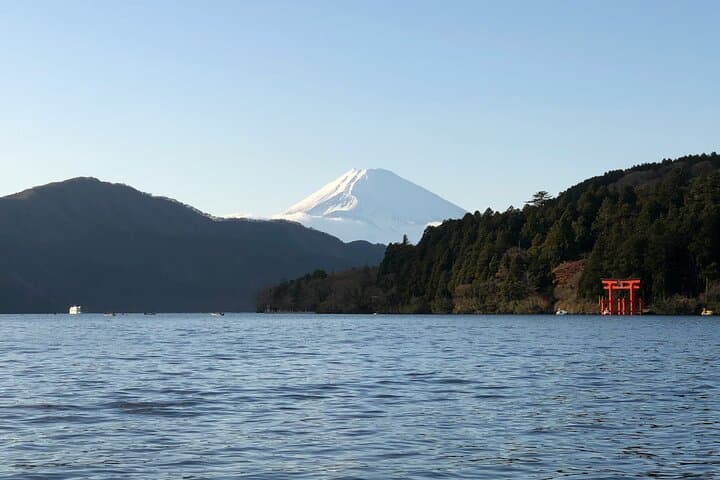
You step out of the quiet of a central Tokyo hotel into a waiting executive sedan, and the city loosens its grip—skyscrapers give way to rice fields, then to the thicker green of the Hakone mountains. The road climbs and the air cools; by the time you reach the shore of Lake Ashi the water is a mirror that seems to hold Mount Fuji in reserve, waiting for a break in the cloud. The pirate ship that ferries visitors across the lake rocks with polite enthusiasm, pushing you toward cedar-lined trails and a vermilion torii that stands in the shallows like a gate between worlds.
You step out of the quiet of a central Tokyo hotel into a waiting executive sedan, and the city loosens its grip—skyscrapers give way to rice fields, then to the thicker green of the Hakone mountains. The road climbs and the air cools; by the time you reach the shore of Lake Ashi the water is a mirror that seems to hold Mount Fuji in reserve, waiting for a break in the cloud. The pirate ship that ferries visitors across the lake rocks with polite enthusiasm, pushing you toward cedar-lined trails and a vermilion torii that stands in the shallows like a gate between worlds.
Hakone is a landscape written by fire and water. The lake occupies a volcanic caldera born of an eruption more than three thousand years ago; steaming vents at Owakudani are a visible reminder of subterranean movement. Historically the area grew as a post town along the Tokaido route, and Hakone Shrine—whose origins date to the 8th century—keeps an old, reverent rhythm: pilgrims pause, coins rotate on the wooden slats, the cedar forest exhales. Modern attractions like the Hakone Open-Air Museum and the sail of the Ropeway are contemporary gestures placed against that deeper geology.
The day tour is curated for comfort: private luxury transport from Tokyo, an English-speaking driver-guide, free Wi‑Fi and bottled water. Expect a full day—roughly nine to ten hours—of short walks, boardings and scenic pauses rather than long multi-hour hikes. The Hakone Ropeway lifts you over sulfurous valleys to Owakudani (about 1,044 m elevation), where vents steam and the air smells of eggs; the black eggs at the stall are a playful local custom, though visitors with health concerns should steer clear. Mishima Skywalk’s 400‑meter span hums underfoot and rewards clear-day views of Fuji. The Open-Air Museum places sculptures on grassy knolls, inviting you to move around art in the same way you move through the landscape.
Practical notes: plan for variable weather—temperatures can drop several degrees between Lake Ashi and Owakudani—so layer up. Bring sensible walking shoes; most stops involve uneven boardwalks, short stairs and cobbled paths. If you choose onsen access or a traditional ryotei, leave room in your schedule and respect local etiquette: small tattoos can be an issue at some baths. The provider handles hotel pickup in Tokyo and drop-off, and private upgrades are available for more intimate onsen or dining experiences.
A private day in Hakone trades the rushed tourist checklist for paced observation: the ropeway that carries you over simmering earth, the defiant red torii, the lake that keeps Mount Fuji in its pocket until the sky opens. It’s an efficient, refined way to read the region in a single day—sensory, informative and quietly restorative.