THE ADVENTURE COLLECTIVE® · Independent discovery and booking for outdoor travel

Ride a mountain railway, ascend by cable car and ropeway above steaming volcanic vents, then glide across Lake Ashi beneath the silhouette of Mt. Fuji. This 5.5-hour guided circuit through Hakone pairs accessible transport with dramatic geology and iconic cultural sites.
Ride a mountain railway, ascend by cable car and ropeway above steaming volcanic vents, then glide across Lake Ashi beneath the silhouette of Mt. Fuji. This 5.5-hour guided circuit through Hakone pairs accessible transport with dramatic geology and iconic cultural sites.
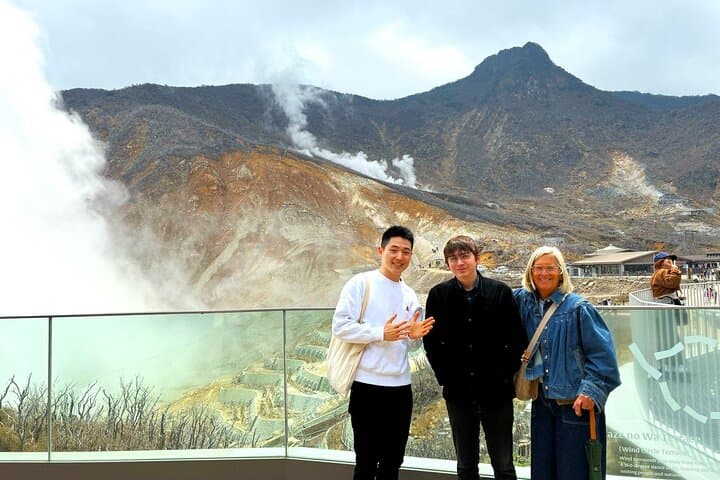
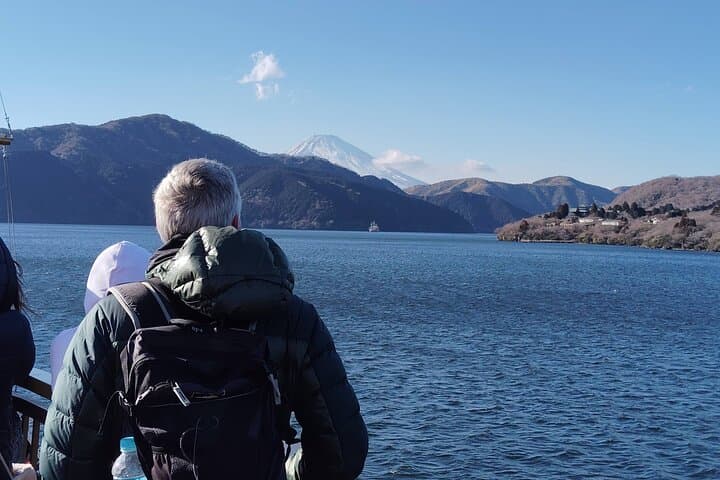
The rattling of the Hakone Tozan Railway is the first chord of the day: wooden seats, low tunnels and a gradual climb through moss-damp forests as the valley opens toward higher ridgelines. By midmorning the cable car lifts you above cedar crowns and the ropeway cuts across a volcanic valley where white steam pushes skyward from fumaroles. Later, a sightseeing boat pushes a clean wake across Lake Ashi and, if the air is clear, Mt. Fuji pins the horizon like a sharp, snow-bright triangle.
Verified experiences and guided adventures in the surrounding area.
Operated by DeepExperience · Hakone, Kanagawa
The rattling of the Hakone Tozan Railway is the first chord of the day: wooden seats, low tunnels and a gradual climb through moss-damp forests as the valley opens toward higher ridgelines. By midmorning the cable car lifts you above cedar crowns and the ropeway cuts across a volcanic valley where white steam pushes skyward from fumaroles. Later, a sightseeing boat pushes a clean wake across Lake Ashi and, if the air is clear, Mt. Fuji pins the horizon like a sharp, snow-bright triangle.
Hakone’s geography reads like geology class in motion. The area sits on the flank of the Mount Hakone caldera—a collapsed volcanic complex whose hot springs and sulfur vents are visible at Owakudani. Centuries before tourism, Hakone was a critical post station on the Tōkaidō road linking Edo (Tokyo) and Kyoto; shrines and lakeside torii recall that route’s religious and strategic importance.
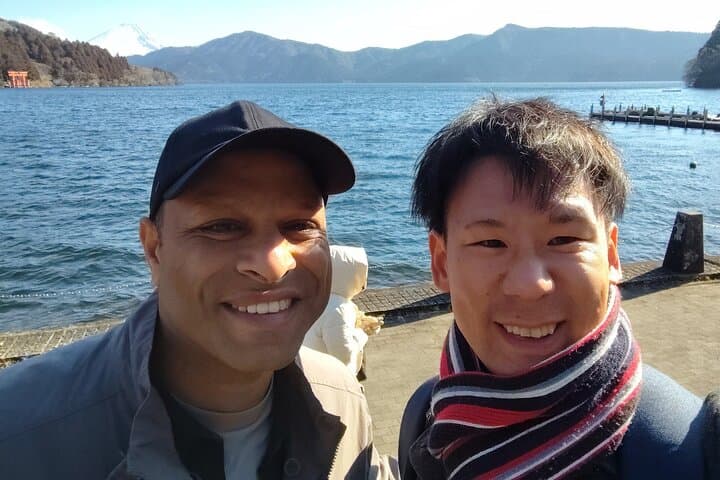
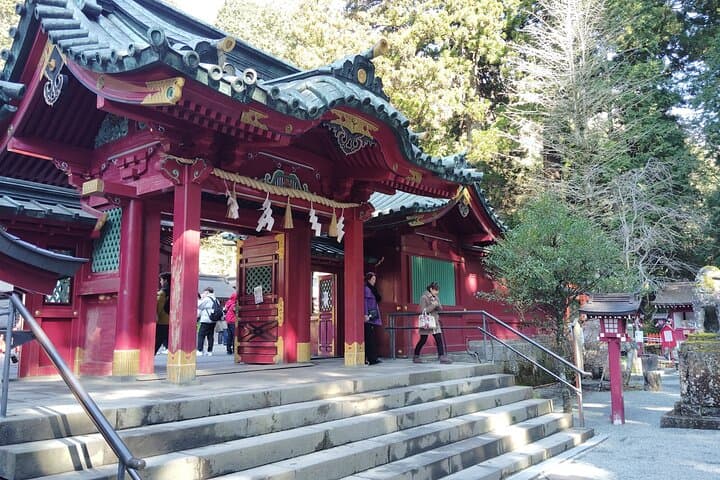
Cultural notes arrive in small details: the lacquered red of Hakone Shrine’s torii, the smoky scent of eggs cooked in volcanic steam and the clean cadence of station announcements in the Tozan line. Local guides frequently point out how the landscape shaped travel and peace of mind—hot springs to ease the journey, boat crossings to shorten it.
Practical side: the tour runs about 5.5 hours and moves by train, cable car, ropeway and boat—so expect a lot of gentle vertical travel rather than hiking. From Hakone-Yumoto (roughly 100 m elevation) up to Owakudani (about 1,044 m), you’ll experience roughly 900 meters of net ascent across the day, handled by transport. Walks between viewpoints are short but can be uneven and icy in winter. The itinerary includes stops at Owakudani fumaroles, Togendai, a Lake Ashi cruise and a lakeside shrine with its iconic torii.
Timing and tips: start early to catch clearer skies for Fuji and thinner crowds at Owakudani. Bring layered clothing—wind at the ropeway summit can feel several degrees colder—and a mask if you’re sensitive to sulfur fumes. Cash is still useful for small food stalls and the famed black eggs. Note that the tour visits major sights but may not include transport fares or attraction admission; confirm what’s covered when you book.
This is a day for slow panoramas: the train’s switchbacks, the ropeway’s exposed drop, the boat’s measured glide. Each mode of travel shapes the view differently—sit near the window and let the valley do the guiding.
easy.
5–6 hours.
Suitable for most fitness levels; minimal walking but expect stairs and short uneven paths
Confirm at booking—this tour visits landmarks and is guided, but public-transport fares or attraction admissions may not be included.
Yes—on clear days the tour offers several viewpoints of Mt. Fuji, especially from Lake Ashi and the ropeway; winter mornings are often clearest.
Be cautious: fumaroles emit sulfur gas and some areas are restricted; pregnant travelers or those with respiratory issues should consult guides and avoid close exposure.
Yes—stations, Togendai and lakeside areas have restrooms and restaurants, but small vendors may be cash-only.
Parts of the route are stroller-accessible, but ropeway and some viewpoints have steps or uneven ground—check with the operator about specific accessibility needs.
Owakudani can be busy, especially midday and on weekends; arriving early reduces wait times and improves visibility.
Hakone prospered as a post station on the historic Tōkaidō route; lakeside shrines marked safe crossings and pilgrim stops for travelers between Edo and Kyoto.
Owakudani’s geothermal features are fragile—stay on marked paths and heed closure notices; local parks promote reusable bottles and discouraged feeding wildlife to minimize impact.
DeepExperience operates guided outdoor trips and adventures with an emphasis on safety, stewardship, and memorable experiences.
The rattling of the Hakone Tozan Railway is the first chord of the day: wooden seats, low tunnels and a gradual climb through moss-damp forests as the valley opens toward higher ridgelines. By midmorning the cable car lifts you above cedar crowns and the ropeway cuts across a volcanic valley where white steam pushes skyward from fumaroles. Later, a sightseeing boat pushes a clean wake across Lake Ashi and, if the air is clear, Mt. Fuji pins the horizon like a sharp, snow-bright triangle.
The rattling of the Hakone Tozan Railway is the first chord of the day: wooden seats, low tunnels and a gradual climb through moss-damp forests as the valley opens toward higher ridgelines. By midmorning the cable car lifts you above cedar crowns and the ropeway cuts across a volcanic valley where white steam pushes skyward from fumaroles. Later, a sightseeing boat pushes a clean wake across Lake Ashi and, if the air is clear, Mt. Fuji pins the horizon like a sharp, snow-bright triangle.
Hakone’s geography reads like geology class in motion. The area sits on the flank of the Mount Hakone caldera—a collapsed volcanic complex whose hot springs and sulfur vents are visible at Owakudani. Centuries before tourism, Hakone was a critical post station on the Tōkaidō road linking Edo (Tokyo) and Kyoto; shrines and lakeside torii recall that route’s religious and strategic importance.
Cultural notes arrive in small details: the lacquered red of Hakone Shrine’s torii, the smoky scent of eggs cooked in volcanic steam and the clean cadence of station announcements in the Tozan line. Local guides frequently point out how the landscape shaped travel and peace of mind—hot springs to ease the journey, boat crossings to shorten it.
Practical side: the tour runs about 5.5 hours and moves by train, cable car, ropeway and boat—so expect a lot of gentle vertical travel rather than hiking. From Hakone-Yumoto (roughly 100 m elevation) up to Owakudani (about 1,044 m), you’ll experience roughly 900 meters of net ascent across the day, handled by transport. Walks between viewpoints are short but can be uneven and icy in winter. The itinerary includes stops at Owakudani fumaroles, Togendai, a Lake Ashi cruise and a lakeside shrine with its iconic torii.
Timing and tips: start early to catch clearer skies for Fuji and thinner crowds at Owakudani. Bring layered clothing—wind at the ropeway summit can feel several degrees colder—and a mask if you’re sensitive to sulfur fumes. Cash is still useful for small food stalls and the famed black eggs. Note that the tour visits major sights but may not include transport fares or attraction admission; confirm what’s covered when you book.
This is a day for slow panoramas: the train’s switchbacks, the ropeway’s exposed drop, the boat’s measured glide. Each mode of travel shapes the view differently—sit near the window and let the valley do the guiding.