THE ADVENTURE COLLECTIVE® · Independent discovery and booking for outdoor travel

Spend half a day moving like a local through Ohori Park, Fukuoka Castle ruins, and the mirror-sheathed Fukuoka Tower—with a stop for coffee in a nostalgic kissaten. This small-group tour blends history, city views, and public-transport rhythm into a compact introduction to Hakata.
Spend half a day moving like a local through Ohori Park, Fukuoka Castle ruins, and the mirror-sheathed Fukuoka Tower—with a stop for coffee in a nostalgic kissaten. This small-group tour blends history, city views, and public-transport rhythm into a compact introduction to Hakata.
Morning light spills across Ohori Park’s wide pond as participants gather at Exit 3 of Ohori Park Station. The walk begins like a local’s commute—public subway, a short bus hop, and pockets of city green that open into ruins and viewpoints. Trees shade paths where ducks slice the reflections; the river seems to dare you to slow down and watch.
Verified experiences and guided adventures in the surrounding area.
Operated by H.I.S.Co., Ltd. · Fukuoka, Fukuoka Prefecture
Morning light spills across Ohori Park’s wide pond as participants gather at Exit 3 of Ohori Park Station. The walk begins like a local’s commute—public subway, a short bus hop, and pockets of city green that open into ruins and viewpoints. Trees shade paths where ducks slice the reflections; the river seems to dare you to slow down and watch.
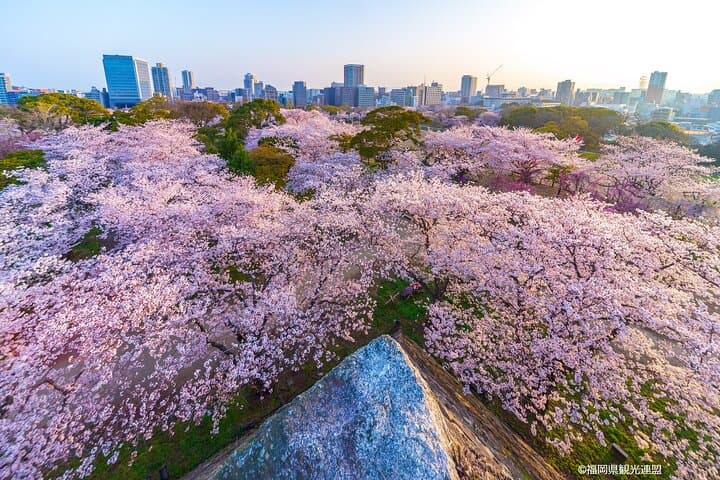
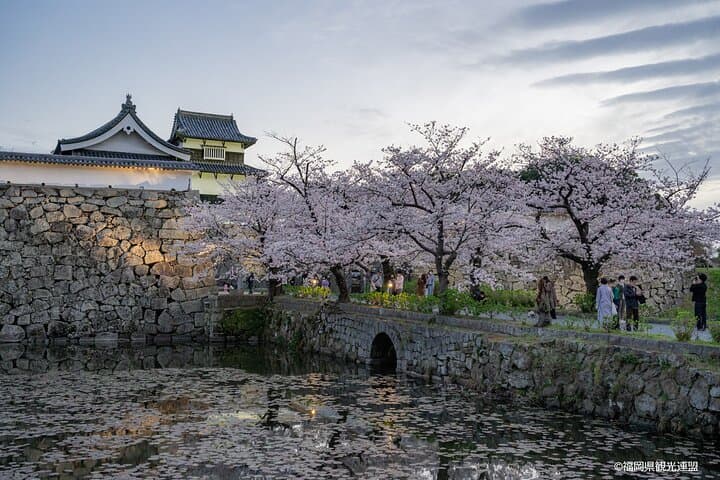
The route threads through Maizuru Park and the remnants of Fukuoka Castle, built by Kuroda Nagamasa in the early 1600s and now preserved as historic stonework and low walls. The geology of northern Kyushu—soft coastal plains carved by rivers—explains why the castle was a flatland stronghold rather than a mountaintop keep. Culture appears in small details: a neighborhood kissaten (old-style coffee shop) for a slow cup, paper lanterns along riverside alleys, and the efficient pulse of public transit that shapes daily life here.
The tour ends at Fukuoka Tower’s observation deck, a mirror-finished spire with sweeping city-and-sea panoramas. Practical notes: the itinerary runs about 4–5 hours using subway and bus; entrances and a coffee tasting at a nostalgic shop are included. Wear comfortable walking shoes, carry a small daypack and a charged phone for the compact but active course through mixed urban and park terrain. Guide commentary is in English, and group sizes remain small to keep the pace relaxed.
This half-day mixes heritage, seaside skyline, and local routine—ideal for travelers who want an orienting stroll through Hakata’s living history without the logistics of planning every transfer.
easy.
4–5 hours.
Suitable for most fitness levels; requires standing and walking up to a few miles with short stair sections.
Meet at ground level, Exit 3 of Ohori Park Station (Fukuoka City Subway Airport Line). Guides will identify themselves there.
Yes—entrance to Fukuoka Tower’s observation deck is included in the tour price.
The itinerary notes stroller access for short sections; some areas near castle ruins include steps where an infant must be carried.
An English-speaking professional guide from Fukuoka accompanies the tour and provides cultural and historical context.
Fukuoka Castle was begun in 1601 by Kuroda Nagamasa and served as a lowland stronghold; today its ruins form Maizuru Park’s historic core.
The parks are managed for both recreation and historical preservation—avoid trampling grass, dispose of waste in bins, and refrain from feeding wildlife to protect local ecosystems.
H.I.S.Co., Ltd. operates guided outdoor trips and adventures with an emphasis on safety, stewardship, and memorable experiences.

Morning light spills across Ohori Park’s wide pond as participants gather at Exit 3 of Ohori Park Station. The walk begins like a local’s commute—public subway, a short bus hop, and pockets of city green that open into ruins and viewpoints. Trees shade paths where ducks slice the reflections; the river seems to dare you to slow down and watch.
Morning light spills across Ohori Park’s wide pond as participants gather at Exit 3 of Ohori Park Station. The walk begins like a local’s commute—public subway, a short bus hop, and pockets of city green that open into ruins and viewpoints. Trees shade paths where ducks slice the reflections; the river seems to dare you to slow down and watch.
The route threads through Maizuru Park and the remnants of Fukuoka Castle, built by Kuroda Nagamasa in the early 1600s and now preserved as historic stonework and low walls. The geology of northern Kyushu—soft coastal plains carved by rivers—explains why the castle was a flatland stronghold rather than a mountaintop keep. Culture appears in small details: a neighborhood kissaten (old-style coffee shop) for a slow cup, paper lanterns along riverside alleys, and the efficient pulse of public transit that shapes daily life here.
The tour ends at Fukuoka Tower’s observation deck, a mirror-finished spire with sweeping city-and-sea panoramas. Practical notes: the itinerary runs about 4–5 hours using subway and bus; entrances and a coffee tasting at a nostalgic shop are included. Wear comfortable walking shoes, carry a small daypack and a charged phone for the compact but active course through mixed urban and park terrain. Guide commentary is in English, and group sizes remain small to keep the pace relaxed.
This half-day mixes heritage, seaside skyline, and local routine—ideal for travelers who want an orienting stroll through Hakata’s living history without the logistics of planning every transfer.