THE ADVENTURE COLLECTIVE® · Independent discovery and booking for outdoor travel

Drive the dramatic Hai Van Pass, explore Hue’s Imperial Citadel, cruise the Perfume River to Thien Mu Pagoda, and visit Khai Dinh’s ornate tomb in a single, well-paced day trip from Da Nang. This tour pairs coastal panoramas with imperial history and practical logistics for first-time visitors.
Drive the dramatic Hai Van Pass, explore Hue’s Imperial Citadel, cruise the Perfume River to Thien Mu Pagoda, and visit Khai Dinh’s ornate tomb in a single, well-paced day trip from Da Nang. This tour pairs coastal panoramas with imperial history and practical logistics for first-time visitors.
Morning light slices across the South China Sea as the road curls up and over Hai Van Pass, the salt air daring you to look — and to go higher. Drivers pause at concrete bunkers where shells of war tell quieter stories today; beyond them, a ribbon of coastline drops toward Da Nang while inland karst foothills rise in layered green.
Verified experiences and guided adventures in the surrounding area.
Operated by Hoi An Express Travel · Hue, Thua Thien-Hue
Morning light slices across the South China Sea as the road curls up and over Hai Van Pass, the salt air daring you to look — and to go higher. Drivers pause at concrete bunkers where shells of war tell quieter stories today; beyond them, a ribbon of coastline drops toward Da Nang while inland karst foothills rise in layered green.
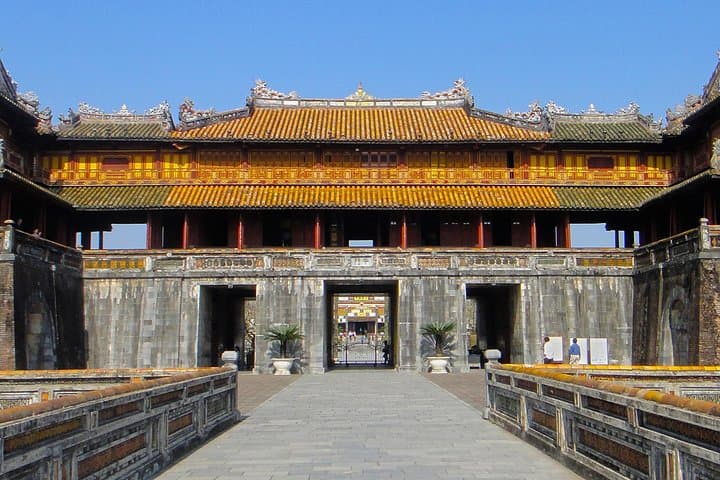
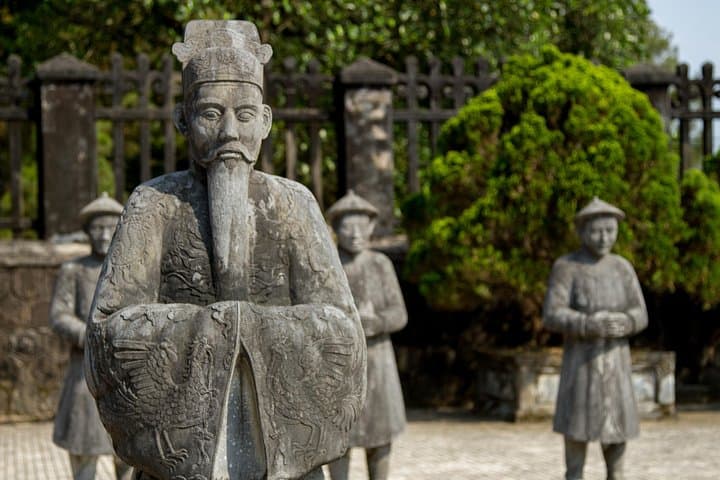
The route arrives in Hue, a city shaped by the Nguyen dynasty and the slow, deliberate geometry of imperial planning. The Citadel's ramparts—two kilometers strong—guard the Imperial City and the Purple Forbidden City, where lacquered gates and tiled pavilions recall court ritual and Confucian order. A short boat ride on the Perfume River leads to Thien Mu Pagoda, its teak tower leaning over the water and carrying a century of local devotion. The day closes at Khai Dinh's tomb, a late imperial hybrid of concrete, ceramic mosaic, and feng shui placement that looks out over terraced slopes.
Geologically, the Hai Van spine is limestone and shale pushed by tectonics; culturally, Hue is a city of rites and artisans—conical hats, royal cuisine, and careful stonework. Expect temple incense, river breeze, and the occasional motorbike choir passing the Citadel walls.
Practical guidance: this is a full-day, mostly low-impact tour with periods of walking on uneven surfaces; bring sun protection, modest clothing for sacred sites (sleeves and knee-covering pants required in the Citadel), comfortable shoes, and a small daypack. Timing matters—early departures cut traffic at the pass, and late afternoons thin the heat.
easy.
9–10 hours.
Suitable for most fitness levels; involves several short walks on uneven ground and steps at historic sites
Expect about 1.5 to 2 hours of driving each way depending on traffic and stops; the pass itself takes 30–45 minutes to traverse with viewpoint pauses.
Yes; entrance to the Imperial City, Thien Mu Pagoda boat visit, and Khai Dinh Tomb are included in the tour price as listed by the operator.
Families are welcome; infants 0–5 travel free and children 6–10 receive a reduced rate, but the day is long and involves walking so plan accordingly.
Visitors must wear shirts with sleeves and pants covering the knees; avoid sleeveless tops and short skirts when entering the Citadel and many royal sites.
Hue was Vietnam’s imperial capital under the Nguyễn dynasty (1802–1945); the Citadel’s walls and ceremonial layout reflect Confucian court order and French-influenced restoration.
The Perfume River and surrounding hills face pressures from tourism and urban runoff; visitors can reduce impact by staying on paths, avoiding single-use plastics, and supporting local guide services.
Hoi An Express Travel operates guided outdoor trips and adventures with an emphasis on safety, stewardship, and memorable experiences.


Morning light slices across the South China Sea as the road curls up and over Hai Van Pass, the salt air daring you to look — and to go higher. Drivers pause at concrete bunkers where shells of war tell quieter stories today; beyond them, a ribbon of coastline drops toward Da Nang while inland karst foothills rise in layered green.
Morning light slices across the South China Sea as the road curls up and over Hai Van Pass, the salt air daring you to look — and to go higher. Drivers pause at concrete bunkers where shells of war tell quieter stories today; beyond them, a ribbon of coastline drops toward Da Nang while inland karst foothills rise in layered green.
The route arrives in Hue, a city shaped by the Nguyen dynasty and the slow, deliberate geometry of imperial planning. The Citadel's ramparts—two kilometers strong—guard the Imperial City and the Purple Forbidden City, where lacquered gates and tiled pavilions recall court ritual and Confucian order. A short boat ride on the Perfume River leads to Thien Mu Pagoda, its teak tower leaning over the water and carrying a century of local devotion. The day closes at Khai Dinh's tomb, a late imperial hybrid of concrete, ceramic mosaic, and feng shui placement that looks out over terraced slopes.
Geologically, the Hai Van spine is limestone and shale pushed by tectonics; culturally, Hue is a city of rites and artisans—conical hats, royal cuisine, and careful stonework. Expect temple incense, river breeze, and the occasional motorbike choir passing the Citadel walls.
Practical guidance: this is a full-day, mostly low-impact tour with periods of walking on uneven surfaces; bring sun protection, modest clothing for sacred sites (sleeves and knee-covering pants required in the Citadel), comfortable shoes, and a small daypack. Timing matters—early departures cut traffic at the pass, and late afternoons thin the heat.