THE ADVENTURE COLLECTIVE® · Independent discovery and booking for outdoor travel

A private Jeep transfer from Hoi An to Hue that turns a routine drive into a seven-to-eight-hour coastal expedition along the Hai Van Pass. Expect panoramic viewpoints, Marble Mountains caves, a lagoon-side lunch, and a waterfall swim—plus practical tips for timing and gear.
A private Jeep transfer from Hoi An to Hue that turns a routine drive into a seven-to-eight-hour coastal expedition along the Hai Van Pass. Expect panoramic viewpoints, Marble Mountains caves, a lagoon-side lunch, and a waterfall swim—plus practical tips for timing and gear.
Morning light breaks over An Bang rice paddies as a US Army Jeep rumbles out of Hoi An, hugging a coastline that alternates between sugar-sand beaches and steep, jungle-carpeted slopes. The road climbs; the sea drops away, and the Hai Van Pass opens like a lived-in map—wind carving switchbacks, waves beating the shore below.
Verified experiences and guided adventures in the surrounding area.
Operated by Authentic Travel Ho Chi Minh · Hoi An, Quang Nam Province
Morning light breaks over An Bang rice paddies as a US Army Jeep rumbles out of Hoi An, hugging a coastline that alternates between sugar-sand beaches and steep, jungle-carpeted slopes. The road climbs; the sea drops away, and the Hai Van Pass opens like a lived-in map—wind carving switchbacks, waves beating the shore below.
This route threads together Central Vietnam’s geology and human history: limestone outcrops at the Marble Mountains carved by millennia of weather, Lang Co’s lagoon formed by coastal sedimentation, and strategic fortifications along Hai Van used in wars that shaped modern Vietnam. Villages such as Thanh Toan reveal tile-roofed bridges and slow-market rhythms where fishing and farming persist.
Expect short hikes up stair-cut paths at the Marble Mountains, a cooling dip at Nhị Hồ waterfall, and panoramic photo stops on the pass. The transfer is private and paced for photography and local stops—guides cover entrance fees and a simple regional lunch; petrol and tolls are included.
Practically: bring layered clothing—sea breezes on the pass can be cool while valley floors remain hot; carry sun protection and a refillable water bottle; wear shoes good for wet rock at the waterfall and uneven temple steps. Start early to avoid mid-day traffic and heat; the pass is busiest mid-morning. Mobility limitations may make some temple caves or steep viewpoints difficult.
This is a drive-first adventure: low physical demand but high sensory payoff—coastal exposure, sudden mountain views, and tangible cultural stops that make the seven-to-eight-hour transfer an expedition rather than a commute.
easy.
7–8 hours.
Suitable for travelers in average fitness; involves short walks, steps, and optional swims.
The private Jeep itinerary runs about 7–8 hours including stops for Marble Mountains, Hai Van Pass viewpoints, Lap An Lagoon, Nhị Hồ Waterfall and lunch.
No—most of the day is spent in the Jeep with short walks and some steps at temples and viewpoints; basic mobility is sufficient.
Yes, the tour includes all entrance fees and a simple local lunch, plus two bottles of water per person.
Yes—both spots offer swimming, but check local conditions and take care on slippery rocks; bring swimwear and quick-dry towels.
Hai Van Pass has long been a strategic frontier between northern and southern kingdoms; its roads and fortifications played roles in colonial and modern conflicts.
Coastal development and tourism pressure affect lagoons and beaches—stick to marked paths, avoid single-use plastics, and support local guides who practice low-impact visits.
Authentic Travel Ho Chi Minh operates guided outdoor trips and adventures with an emphasis on safety, stewardship, and memorable experiences.
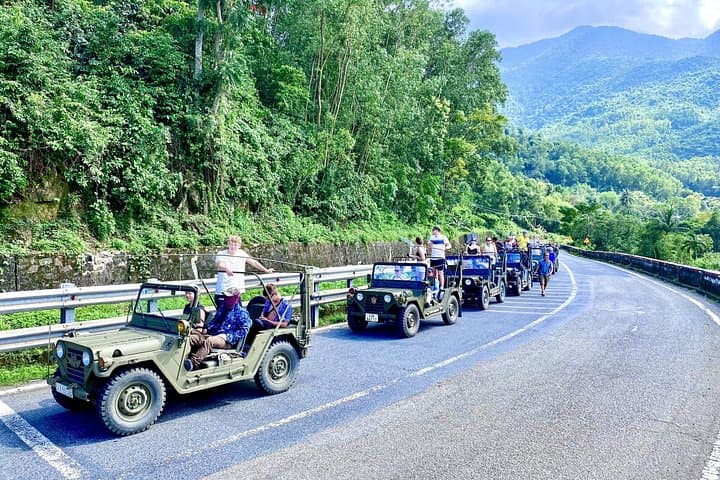
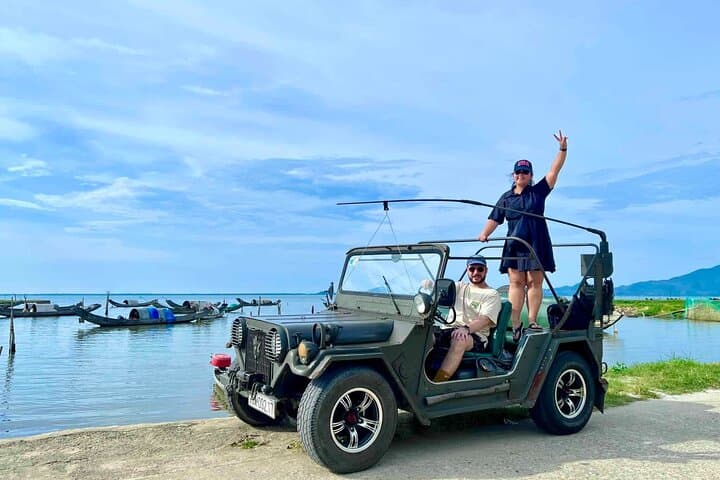

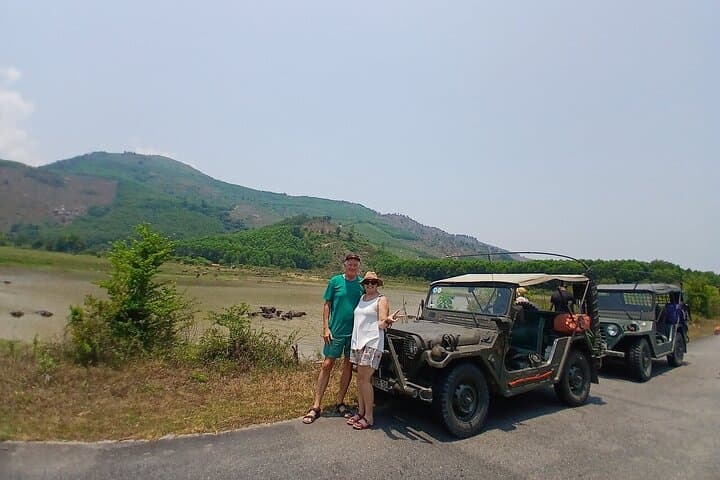
Morning light breaks over An Bang rice paddies as a US Army Jeep rumbles out of Hoi An, hugging a coastline that alternates between sugar-sand beaches and steep, jungle-carpeted slopes. The road climbs; the sea drops away, and the Hai Van Pass opens like a lived-in map—wind carving switchbacks, waves beating the shore below.
Morning light breaks over An Bang rice paddies as a US Army Jeep rumbles out of Hoi An, hugging a coastline that alternates between sugar-sand beaches and steep, jungle-carpeted slopes. The road climbs; the sea drops away, and the Hai Van Pass opens like a lived-in map—wind carving switchbacks, waves beating the shore below.
This route threads together Central Vietnam’s geology and human history: limestone outcrops at the Marble Mountains carved by millennia of weather, Lang Co’s lagoon formed by coastal sedimentation, and strategic fortifications along Hai Van used in wars that shaped modern Vietnam. Villages such as Thanh Toan reveal tile-roofed bridges and slow-market rhythms where fishing and farming persist.
Expect short hikes up stair-cut paths at the Marble Mountains, a cooling dip at Nhị Hồ waterfall, and panoramic photo stops on the pass. The transfer is private and paced for photography and local stops—guides cover entrance fees and a simple regional lunch; petrol and tolls are included.
Practically: bring layered clothing—sea breezes on the pass can be cool while valley floors remain hot; carry sun protection and a refillable water bottle; wear shoes good for wet rock at the waterfall and uneven temple steps. Start early to avoid mid-day traffic and heat; the pass is busiest mid-morning. Mobility limitations may make some temple caves or steep viewpoints difficult.
This is a drive-first adventure: low physical demand but high sensory payoff—coastal exposure, sudden mountain views, and tangible cultural stops that make the seven-to-eight-hour transfer an expedition rather than a commute.