THE ADVENTURE COLLECTIVE® · Independent discovery and booking for outdoor travel

Visit Starbucks’ working coffee farm for a 90-minute behind-the-scenes look at nursery beds, wet-milling, drying patios and small-batch roasting. Learn sustainable farming practices, taste straight-from-the-farm coffee, and see how beans move from plant to cup.
Visit Starbucks’ working coffee farm for a 90-minute behind-the-scenes look at nursery beds, wet-milling, drying patios and small-batch roasting. Learn sustainable farming practices, taste straight-from-the-farm coffee, and see how beans move from plant to cup.
The tour opens on a sun-warmed terrace where the smell of fresh beans hangs like a promise and the valley below unfolds in bands of green. Visitors move from nursery beds to the wet mill and drying patios, listening as equipment hums and leaves whisper. The farm’s roaster pings occasionally, a practical counterpoint to the landscape’s quieter sounds.
Verified experiences and guided adventures in the surrounding area.
Operated by Hacienda Alsacia Starbucks Coffee Farm · Alajuela, Alajuela
The tour opens on a sun-warmed terrace where the smell of fresh beans hangs like a promise and the valley below unfolds in bands of green. Visitors move from nursery beds to the wet mill and drying patios, listening as equipment hums and leaves whisper. The farm’s roaster pings occasionally, a practical counterpoint to the landscape’s quieter sounds.
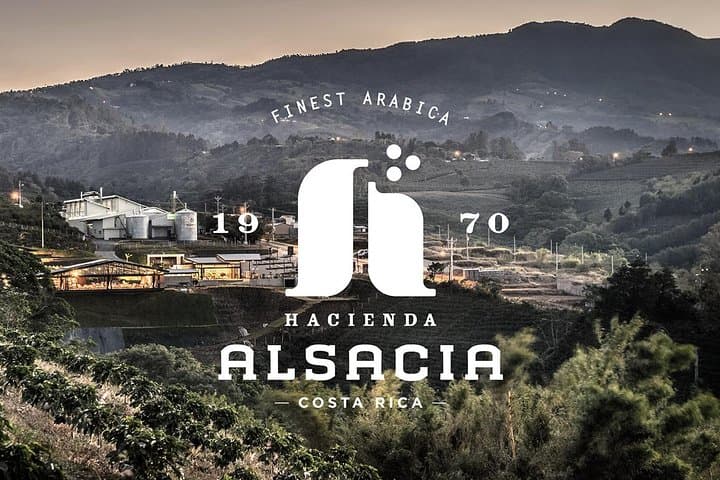
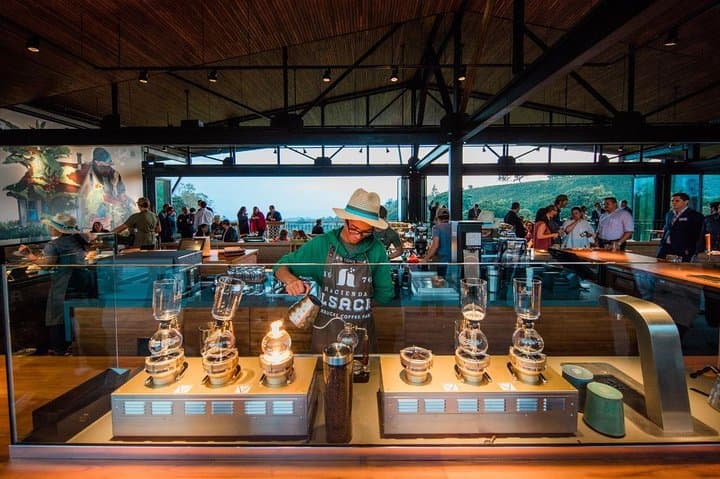
Hacienda Alsacia sits in Costa Rica’s Central Valley near Alajuela, on volcanic soils that push nutrients up into coffee roots and shape the cup’s bright acidity. Founded as Starbucks’ first coffee farm and visitor center, the estate serves as a working research site for sustainable farming practices and farmer training—local culture and global coffee science intersect here. Guides explain processing stages, show varietal plots, and demonstrate a cupping, placing the beans into a chain of human hands that connect mountain harvesters to urban cafés.
Expect a compact, accessible experience: about 90 minutes on mostly paved paths with some shade and light slopes. The visit blends interpretation—soil and plant science, local farming narratives—with sensory moments: the snap of a dry bean, citrus and floral tasting notes, and the heat of the roaster. Practical tips: arrive with water, wear closed-toe shoes for the mill area, and bring a light rain layer during the wet season. Photography is welcome, but follow staff directions near machinery.
For travelers curious about how coffee is grown, processed, and assessed, Hacienda Alsacia is a short, revealing immersion into modern farm-level coffee stewardship and a useful primer before exploring Costa Rica’s broader coffee regions.
easy.
1.5 hours.
Suitable for all fitness levels; requires standing and short walks on gentle slopes
The tour lasts approximately 90 minutes and covers the nursery, wet mill, drying patios and roaster with a cupping session.
Yes, Hacienda Alsacia lists wheelchair accessibility for the visitor center; check with the operator for specific assistance needs.
Guided tours and interpretation are typically available in English and Spanish; confirm language options when booking.
Yes—families are allowed, but children should be supervised near equipment and during tasting sessions; suitability for very young children varies by group.
Hacienda Alsacia is Starbucks’ first owned coffee farm, developed to support research, farmer training and sustainable practices while offering public education about coffee production.
The farm emphasizes regenerative practices, shade-grown plots and farmer training programs to reduce chemical inputs and improve soil health across the region.
Hacienda Alsacia Starbucks Coffee Farm operates guided outdoor trips and adventures with an emphasis on safety, stewardship, and memorable experiences.
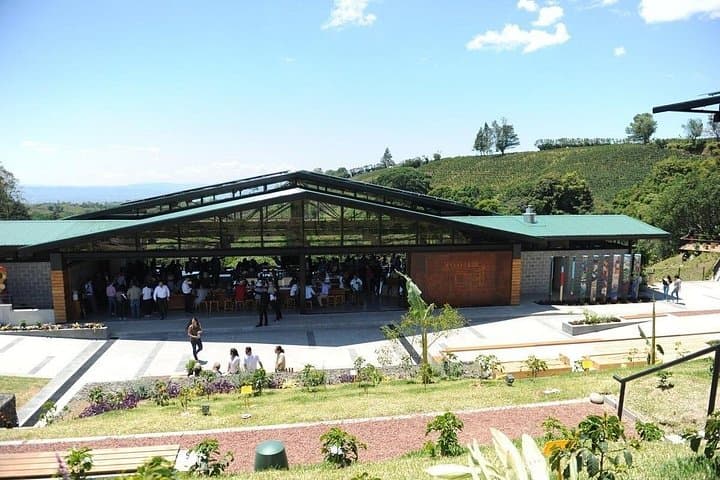
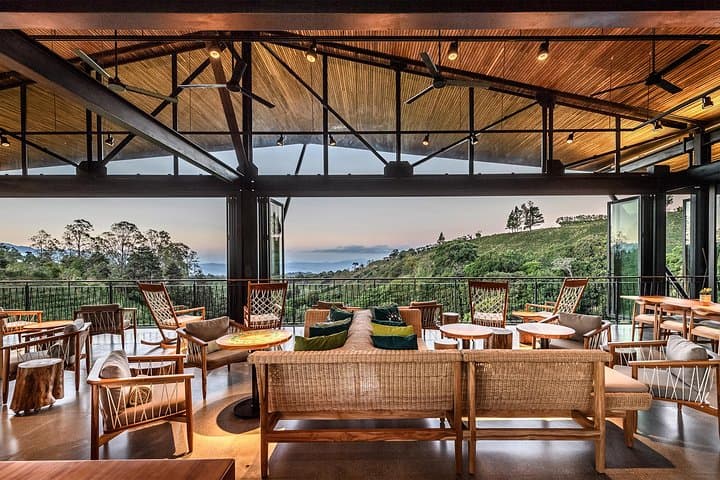
The tour opens on a sun-warmed terrace where the smell of fresh beans hangs like a promise and the valley below unfolds in bands of green. Visitors move from nursery beds to the wet mill and drying patios, listening as equipment hums and leaves whisper. The farm’s roaster pings occasionally, a practical counterpoint to the landscape’s quieter sounds.
The tour opens on a sun-warmed terrace where the smell of fresh beans hangs like a promise and the valley below unfolds in bands of green. Visitors move from nursery beds to the wet mill and drying patios, listening as equipment hums and leaves whisper. The farm’s roaster pings occasionally, a practical counterpoint to the landscape’s quieter sounds.
Hacienda Alsacia sits in Costa Rica’s Central Valley near Alajuela, on volcanic soils that push nutrients up into coffee roots and shape the cup’s bright acidity. Founded as Starbucks’ first coffee farm and visitor center, the estate serves as a working research site for sustainable farming practices and farmer training—local culture and global coffee science intersect here. Guides explain processing stages, show varietal plots, and demonstrate a cupping, placing the beans into a chain of human hands that connect mountain harvesters to urban cafés.
Expect a compact, accessible experience: about 90 minutes on mostly paved paths with some shade and light slopes. The visit blends interpretation—soil and plant science, local farming narratives—with sensory moments: the snap of a dry bean, citrus and floral tasting notes, and the heat of the roaster. Practical tips: arrive with water, wear closed-toe shoes for the mill area, and bring a light rain layer during the wet season. Photography is welcome, but follow staff directions near machinery.
For travelers curious about how coffee is grown, processed, and assessed, Hacienda Alsacia is a short, revealing immersion into modern farm-level coffee stewardship and a useful primer before exploring Costa Rica’s broader coffee regions.