THE ADVENTURE COLLECTIVE® · Independent discovery and booking for outdoor travel

This four-day climb from Lijiang to Haba Snow Mountain pairs a dramatic gorge approach with a non-technical summit at 5,396 m. Expect long days, yak-supported loads, and a pre-dawn summit push where altitude, not difficulty, is the main challenge.
This four-day climb from Lijiang to Haba Snow Mountain pairs a dramatic gorge approach with a non-technical summit at 5,396 m. Expect long days, yak-supported loads, and a pre-dawn summit push where altitude, not difficulty, is the main challenge.
At first light the trail smells of wood-smoke and wet earth as your minivan unspools through rice terraces toward a ridge that pins the sky. By midday the walls of Tiger Leaping Gorge are already daring you with their drop; by evening Haba Village’s clustered stone houses press close to the forestline beneath the white crown of Haba Snow Mountain.
Verified experiences and guided adventures in the surrounding area.
Operated by Yunnan Exploration · Lijiang, Yunnan
At first light the trail smells of wood-smoke and wet earth as your minivan unspools through rice terraces toward a ridge that pins the sky. By midday the walls of Tiger Leaping Gorge are already daring you with their drop; by evening Haba Village’s clustered stone houses press close to the forestline beneath the white crown of Haba Snow Mountain.
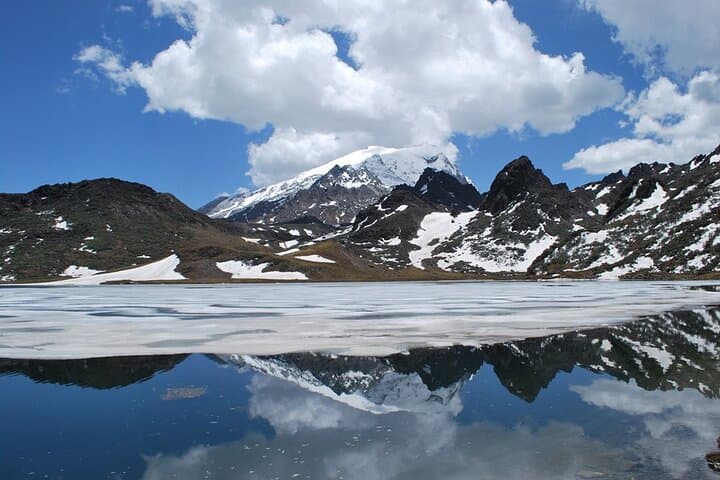
The four-day itinerary threads culture and geology: Naxi villages at the mountain’s base reflect a hybrid of Tibetan and southwestern Chinese traditions, while the gorge is carved by the Jinsha (upper Yangtze) slicing through ancient granite and schist. Haba’s eastern faces sit just above the permanent snow line at 5,396 m—enough altitude to demand respect even on a technically moderate route.
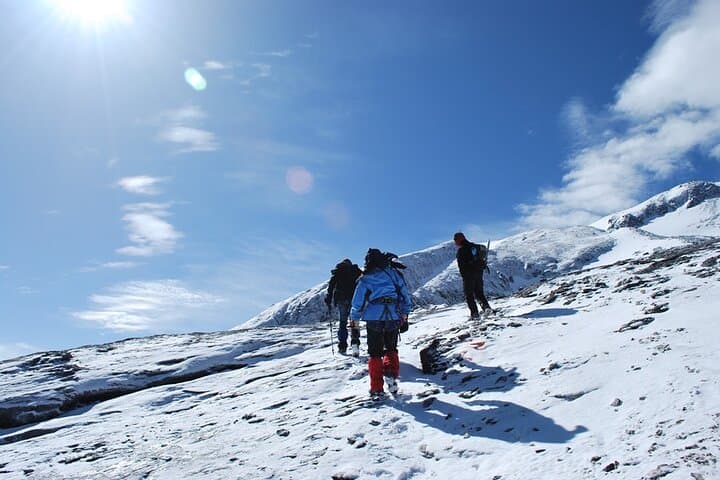
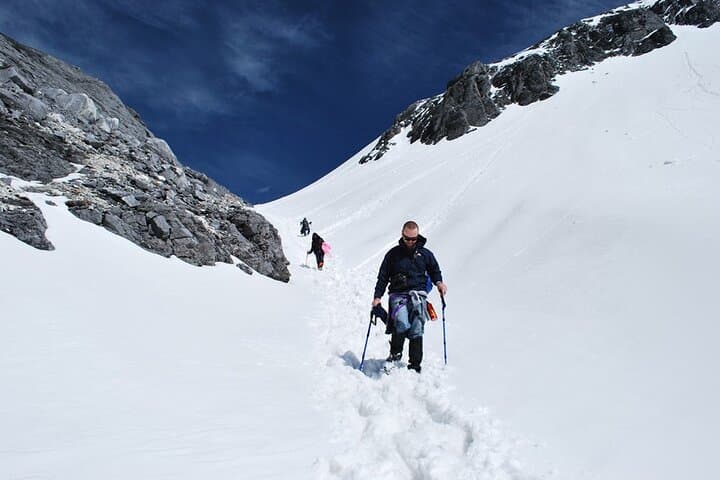
Expect long approach days, yak-supported luggage, and one alpine-style summit push starting before dawn. The climb is not heavily technical, but crests, icy steps, and shifting weather make crampons and an ice axe standard. Guides monitor heart rate and blood oxygen; acclimatization is treated as integral, not optional.
Practical guidance: plan for early starts and cold nights, hydrate often, and keep layers accessible for rapid temperature swings. Footwear should be stiff and supportive for moraine, scree, and icy slopes. Time your trip for late spring to early autumn for the best balance of stable weather and trail access, but be ready for snow at any hour. Respect the fragile alpine environment—pack out waste, follow your guide’s routing, and give altitude the time it asks for.
challenging.
4 days.
High-level aerobic fitness and prior multi-day trekking experience recommended; must tolerate prolonged altitude exposure.
The route is largely non-technical but includes icy sections where crampons and ice-axe skills are required; the main obstacle is altitude rather than technical climbing.
Late spring through early autumn offers the most stable access, though snow can appear year-round—expect colder, more hazardous conditions in winter.
Yes—previous experience above 3,000–4,000 m is strongly recommended, and you should be familiar with symptoms and basic management of altitude sickness.
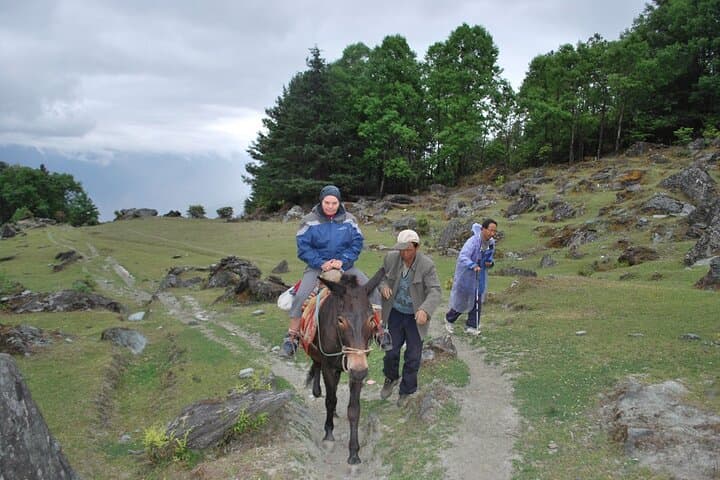
Yes; the itinerary typically uses yaks or horses to carry main luggage to Base Camp so climbers carry only essentials on approach and summit day.
The region blends Naxi cultural heritage with historic trade routes along the upper Yangtze; Tiger Leaping Gorge was long a natural corridor and local source of legend.
Alpine vegetation and water sources are fragile—stick to trails, pack out waste, and use established camps to limit impact.
Yunnan Exploration operates guided outdoor trips and adventures with an emphasis on safety, stewardship, and memorable experiences.
At first light the trail smells of wood-smoke and wet earth as your minivan unspools through rice terraces toward a ridge that pins the sky. By midday the walls of Tiger Leaping Gorge are already daring you with their drop; by evening Haba Village’s clustered stone houses press close to the forestline beneath the white crown of Haba Snow Mountain.
At first light the trail smells of wood-smoke and wet earth as your minivan unspools through rice terraces toward a ridge that pins the sky. By midday the walls of Tiger Leaping Gorge are already daring you with their drop; by evening Haba Village’s clustered stone houses press close to the forestline beneath the white crown of Haba Snow Mountain.
The four-day itinerary threads culture and geology: Naxi villages at the mountain’s base reflect a hybrid of Tibetan and southwestern Chinese traditions, while the gorge is carved by the Jinsha (upper Yangtze) slicing through ancient granite and schist. Haba’s eastern faces sit just above the permanent snow line at 5,396 m—enough altitude to demand respect even on a technically moderate route.
Expect long approach days, yak-supported luggage, and one alpine-style summit push starting before dawn. The climb is not heavily technical, but crests, icy steps, and shifting weather make crampons and an ice axe standard. Guides monitor heart rate and blood oxygen; acclimatization is treated as integral, not optional.
Practical guidance: plan for early starts and cold nights, hydrate often, and keep layers accessible for rapid temperature swings. Footwear should be stiff and supportive for moraine, scree, and icy slopes. Time your trip for late spring to early autumn for the best balance of stable weather and trail access, but be ready for snow at any hour. Respect the fragile alpine environment—pack out waste, follow your guide’s routing, and give altitude the time it asks for.