THE ADVENTURE COLLECTIVE® · Independent discovery and booking for outdoor travel

Four days on a motorbike through Vietnam’s northern karst plateau — from Ha Giang city to Lung Cu Flag and Ma Pi Leng — offers dramatic passes, remote villages and intimate cultural encounters. This guide covers what to expect, key stops and practical advice to prepare.
Four days on a motorbike through Vietnam’s northern karst plateau — from Ha Giang city to Lung Cu Flag and Ma Pi Leng — offers dramatic passes, remote villages and intimate cultural encounters. This guide covers what to expect, key stops and practical advice to prepare.
You awake on the back of a motorbike as the road peels away beneath you — hairpin after hairpin, a jagged skyline of limestone teeth and terraced fields rolling out like pages. Morning mist lifts from the valleys and the motor hums steady; your guide points to a distant flag on Dragon Mountain. This is the Ha Giang Loop in motion: raw, high-altitude country where the pavement narrows and villages huddle against wind.
Verified experiences and guided adventures in the surrounding area.
Operated by Authentic SAPA · Ha Giang, Ha Giang
You awake on the back of a motorbike as the road peels away beneath you — hairpin after hairpin, a jagged skyline of limestone teeth and terraced fields rolling out like pages. Morning mist lifts from the valleys and the motor hums steady; your guide points to a distant flag on Dragon Mountain. This is the Ha Giang Loop in motion: raw, high-altitude country where the pavement narrows and villages huddle against wind.
Geologically the region is a karst plateau carved over millennia into cliffs, gorges and steep passes. Culturally it’s a mosaic of Hmong, Tay and Lo Lo communities whose stilt houses and market days punctuate the route. Lung Cu Flag marks Vietnam’s northernmost point; Ma Pi Leng Pass drops to the emerald Nho Que River. The Hmong King’s Palace offers a rare look at early 20th-century local power and Sino-Vietnamese architectural influence.
Practically, this four-day, three-night itinerary balances long riding days with time to walk village lanes and photograph buckwheat fields (blooming in autumn). Expect mixed road surfaces — smooth asphalt, patched concrete and occasional rough sections — and long stretches between fuel stops.
Bring layered clothing for wide temperature swings, a reliable helmet and a basic tool kit; hydrate frequently and plan for early starts to avoid afternoon fog and traffic on popular overlooks. If you don’t ride, this tour typically provides a guided pillion option and luggage transfers, making it possible to experience the loop’s most dramatic highlights without committing to long solo riding days.
challenging.
4 days (approx. 10–12 hours ride time total).
No special fitness needed, but riders should be comfortable on long days with twisty, uneven roads and occasional standing on pegs.
Yes — participants are expected to handle a 125–250cc bike on mountain roads; many operators offer a pillion or driver-for-hire option if you prefer not to ride.
Roads vary from smooth asphalt to patched concrete and occasional gravel; some passes are narrow with steep drop-offs, so cautious riding is required.
Coverage is patchy across the plateau; Ha Giang city and larger towns have service, but many stretches and valleys have limited or no signal.
Autumn (September–November) and spring (March–May) are most comfortable — autumn offers buckwheat blooms and clearer skies; winter can be cold, summer brings heavy rains.
The Dong Van Karst Plateau has long been home to diverse highland ethnicities; the Hmong King’s Palace reflects the region’s semi‑autonomous chieftain history under French colonial influence.
Tourism impacts include erosion and waste on narrow passes; support local homestays and follow Leave No Trace practices to reduce footprint.
Authentic SAPA operates guided outdoor trips and adventures with an emphasis on safety, stewardship, and memorable experiences.
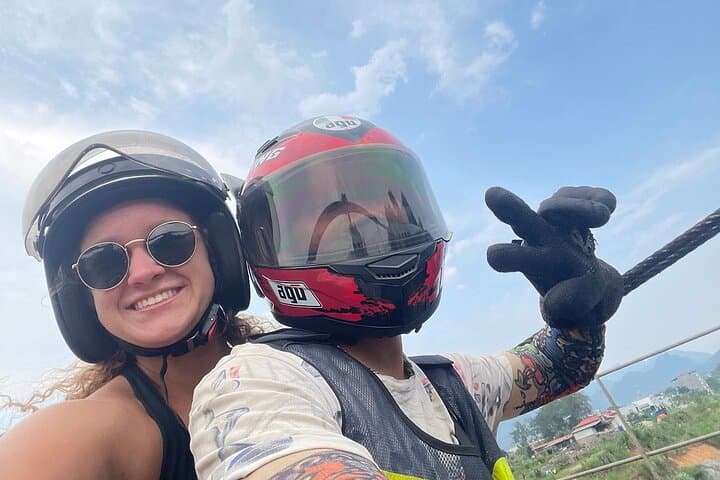
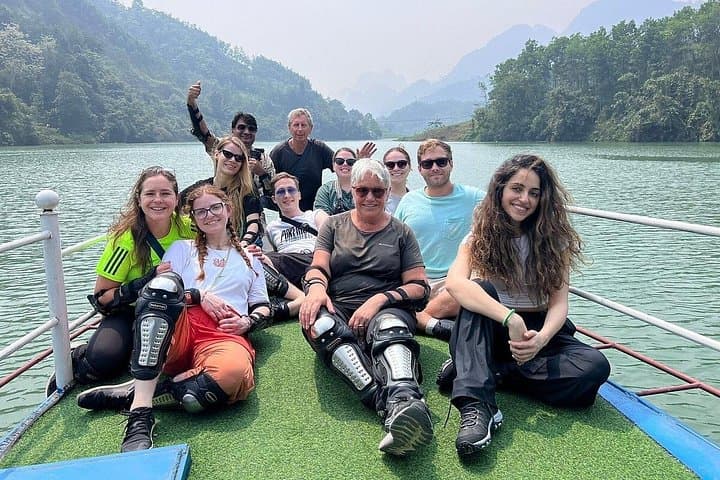
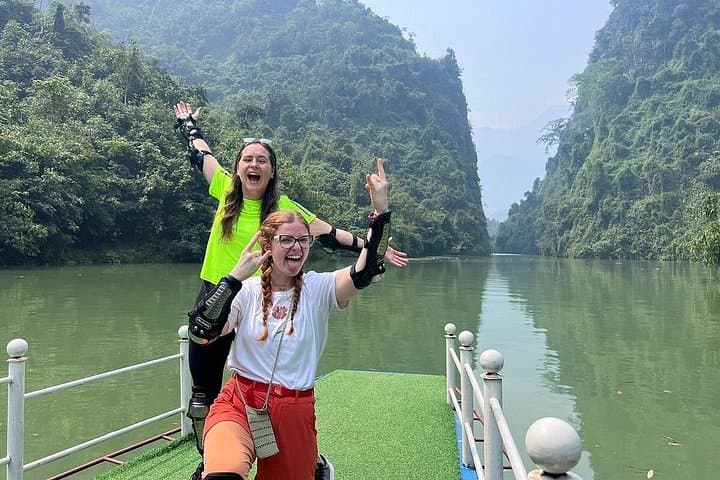
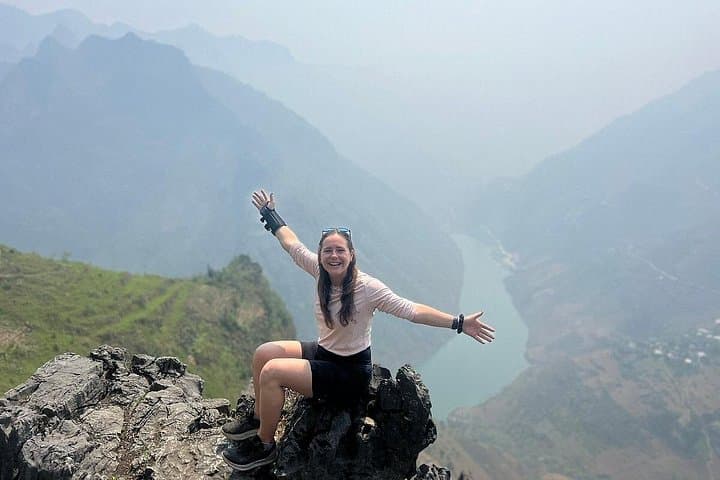
You awake on the back of a motorbike as the road peels away beneath you — hairpin after hairpin, a jagged skyline of limestone teeth and terraced fields rolling out like pages. Morning mist lifts from the valleys and the motor hums steady; your guide points to a distant flag on Dragon Mountain. This is the Ha Giang Loop in motion: raw, high-altitude country where the pavement narrows and villages huddle against wind.
You awake on the back of a motorbike as the road peels away beneath you — hairpin after hairpin, a jagged skyline of limestone teeth and terraced fields rolling out like pages. Morning mist lifts from the valleys and the motor hums steady; your guide points to a distant flag on Dragon Mountain. This is the Ha Giang Loop in motion: raw, high-altitude country where the pavement narrows and villages huddle against wind.
Geologically the region is a karst plateau carved over millennia into cliffs, gorges and steep passes. Culturally it’s a mosaic of Hmong, Tay and Lo Lo communities whose stilt houses and market days punctuate the route. Lung Cu Flag marks Vietnam’s northernmost point; Ma Pi Leng Pass drops to the emerald Nho Que River. The Hmong King’s Palace offers a rare look at early 20th-century local power and Sino-Vietnamese architectural influence.
Practically, this four-day, three-night itinerary balances long riding days with time to walk village lanes and photograph buckwheat fields (blooming in autumn). Expect mixed road surfaces — smooth asphalt, patched concrete and occasional rough sections — and long stretches between fuel stops.
Bring layered clothing for wide temperature swings, a reliable helmet and a basic tool kit; hydrate frequently and plan for early starts to avoid afternoon fog and traffic on popular overlooks. If you don’t ride, this tour typically provides a guided pillion option and luggage transfers, making it possible to experience the loop’s most dramatic highlights without committing to long solo riding days.