THE ADVENTURE COLLECTIVE® · Independent discovery and booking for outdoor travel

A five-day motorbike route through Ha Giang and Cao Bang that mixes high mountain passes, ethnic minority villages, and the thunderous Ban Gioc waterfall. Expect long riding days, dramatic karst landscapes, and homestays with local hospitality.
A five-day motorbike route through Ha Giang and Cao Bang that mixes high mountain passes, ethnic minority villages, and the thunderous Ban Gioc waterfall. Expect long riding days, dramatic karst landscapes, and homestays with local hospitality.
Dawn breaks over a shoulder of limestone and the bus exhales its last sips of sleep in Ha Giang city. Riders mount up beneath a sky the color of crushed jade and push into hairpin passes where wind and altitude test your focus; the Nho Que River dares you from the valley floor and the road responds with one more curve.
Verified experiences and guided adventures in the surrounding area.
Operated by Authenitc Travel DA NANG · Ha Giang, Ha Giang Province
Dawn breaks over a shoulder of limestone and the bus exhales its last sips of sleep in Ha Giang city. Riders mount up beneath a sky the color of crushed jade and push into hairpin passes where wind and altitude test your focus; the Nho Que River dares you from the valley floor and the road responds with one more curve.
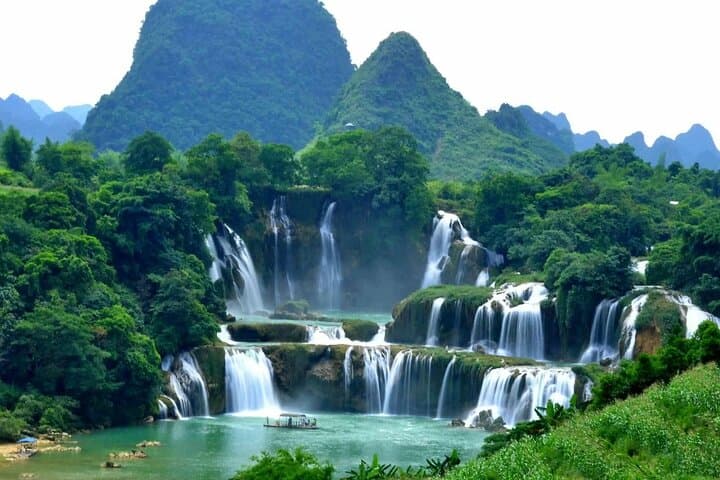
This loop threads the Dong Van Karst Plateau, a geological mosaic sculpted from ancient limestone and intermittent uplift, where karst towers and terraced fields record centuries of human adaptation. The Vuong Palace and Lung Cam village speak to H’mong and Lô Lô histories; Pac Bo recalls Ho Chi Minh’s revolutionary return through misty forests. Ban Gioc waterfall, on the Vietnam–China border, pours across travertine steps, an elemental landmark that anchors Cao Bang’s local culture and livelihoods.
Expect daily riding of varied length on paved but often narrow, exposed mountain roads, plus homestays and small hotels. Terrain shifts from steep passes—Ma Pi Leng and Me Pia—to river valleys and cave systems like Nguom Ngao. Weather can flip quickly: sun, fog, rain and cool nights above 1,200–2,000 m.
Practical guidance: bring a certified helmet and layered, abrasion-resistant outerwear; carry cash for rural markets; start early to avoid afternoon fog and complete long passes by midafternoon; hydrate and pace yourself—altitude and long saddle hours compound fatigue. Local guides handle logistics and entrance fees, but riders should be confident on winding mountain roads. With preparation, this five-day route delivers one of Vietnam’s most concentrated stretches of dramatic geology, living culture and open-road riding.
challenging.
5 days.
Basic endurance for long saddle hours and the ability to walk short uneven trails during village visits; not highly physical but requires good stamina.
No—many tours provide options to ride or to be a pillion passenger; confirm when booking and disclose your riding experience.
The itinerary mixes two hotel nights and two homestays with basic private rooms; expect simple facilities and strong local hospitality.
Most elevations are between 1,200–2,000 m; mild symptoms can occur—stay hydrated, avoid alcohol the first day, and rest if you feel unwell.
Ban Gioc sits on the Vietnam–China border but is fully visitable from the Vietnamese side; follow guide instructions and carry ID for checkpoints.
The route crosses territories long inhabited by H’mong, Tay and Dao groups and includes Vuong Palace (H’Mong chieftain’s residence) and Pac Bo, a site tied to Ho Chi Minh’s revolutionary activities.
The Dong Van karst plateau is ecologically fragile; stick to trails, avoid single-use plastics, and support homestays and local guides to spread tourism benefits.
Authenitc Travel DA NANG operates guided outdoor trips and adventures with an emphasis on safety, stewardship, and memorable experiences.
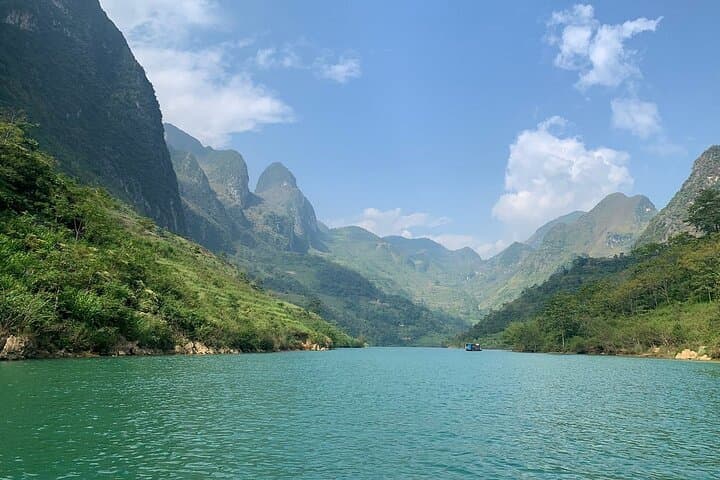
Dawn breaks over a shoulder of limestone and the bus exhales its last sips of sleep in Ha Giang city. Riders mount up beneath a sky the color of crushed jade and push into hairpin passes where wind and altitude test your focus; the Nho Que River dares you from the valley floor and the road responds with one more curve.
Dawn breaks over a shoulder of limestone and the bus exhales its last sips of sleep in Ha Giang city. Riders mount up beneath a sky the color of crushed jade and push into hairpin passes where wind and altitude test your focus; the Nho Que River dares you from the valley floor and the road responds with one more curve.
This loop threads the Dong Van Karst Plateau, a geological mosaic sculpted from ancient limestone and intermittent uplift, where karst towers and terraced fields record centuries of human adaptation. The Vuong Palace and Lung Cam village speak to H’mong and Lô Lô histories; Pac Bo recalls Ho Chi Minh’s revolutionary return through misty forests. Ban Gioc waterfall, on the Vietnam–China border, pours across travertine steps, an elemental landmark that anchors Cao Bang’s local culture and livelihoods.
Expect daily riding of varied length on paved but often narrow, exposed mountain roads, plus homestays and small hotels. Terrain shifts from steep passes—Ma Pi Leng and Me Pia—to river valleys and cave systems like Nguom Ngao. Weather can flip quickly: sun, fog, rain and cool nights above 1,200–2,000 m.
Practical guidance: bring a certified helmet and layered, abrasion-resistant outerwear; carry cash for rural markets; start early to avoid afternoon fog and complete long passes by midafternoon; hydrate and pace yourself—altitude and long saddle hours compound fatigue. Local guides handle logistics and entrance fees, but riders should be confident on winding mountain roads. With preparation, this five-day route delivers one of Vietnam’s most concentrated stretches of dramatic geology, living culture and open-road riding.