THE ADVENTURE COLLECTIVE® · Independent discovery and booking for outdoor travel

Eight days of remote mountain roads, limestone panoramas and living tribal culture—this cycling loop across Vietnam’s Dong Van karst plateau is equal parts physical challenge and cultural immersion. Read on for terrain details, daily demands, and practical tips.
Eight days of remote mountain roads, limestone panoramas and living tribal culture—this cycling loop across Vietnam’s Dong Van karst plateau is equal parts physical challenge and cultural immersion. Read on for terrain details, daily demands, and practical tips.
On the first morning riders push off from a lowland road and the mountains take them—the air sharpening, terraces stepping down like green stairs, and limestone towers rising to meet the sky.
Verified experiences and guided adventures in the surrounding area.
Operated by Asia Motorbike Adventures · Ha Giang, Ha Giang Province
On the first morning riders push off from a lowland road and the mountains take them—the air sharpening, terraces stepping down like green stairs, and limestone towers rising to meet the sky.
This eight-day loop moves through Ha Giang Province’s dramatic karst plateaus and deep river gorges. Centuries of human habitation are visible in terraced rice fields and clustered minority villages—Red Dao, H'mong, Tay and Lo Lo communities maintain traditional houses and markets. Geologically the region is part of the Dong Van Karst Plateau Global Geopark; sediments and fossils here record 400–600 million years of marine history uplifted into perpendicular cliffs and rugged passes such as the Ma Pi Leng (around 1,500 m elevation).
Culture and road meet on market mornings and at homestays where local crafts and woven textiles are common. The ride alternates long rolling kilometers, steep 800–1,025 m climbs, and technical descents on mixed paved and dirt surfaces. Expect daily riding from ~50–88 km with several sustained climbs and sweeping passes that expose the Nho Que River daring you to look over the edge.
Practical guidance: plan for variable weather—sun can be fierce on exposed ridgelines and sudden drizzle in valleys. Hydrate, use quality brakes for long descents, and pack layered clothing for temperature swings between valley and pass. Start early to avoid midday heat and to catch market life in villages. Even if bicycles are provided, bring padded shorts, a reliable rain shell, and a small repair kit. The route rewards steady effort with remote scenery and rare cultural encounters.
challenging.
8 days.
Good endurance and cycling fitness recommended; comfortable with repeated long days (50–88 km) and sustained climbs.
Bicycles are included in the tour package; many operators also provide helmets—confirm helmet availability beforehand and bring personal gear if preferred.
Daily distances vary from about 50–88 km with several sustained climbs; riders should expect full days in the saddle and plan pacing and nutrition accordingly.
September–November and March–May are generally best for clear weather and comfortable temperatures; summer brings heavy rains and winter can be cold on high passes.
Elevations reach around 1,500 m at passes—most riders do not experience severe altitude sickness, but those sensitive to altitude should monitor symptoms and pace activity.
The Dong Van Karst Plateau hosts ancient marine fossils and has been a crossroads for ethnic minority communities and trade between Vietnam and China for centuries.
The area is part of a UNESCO Global Geopark; visitors should stick to trails, avoid leaving waste, and support local homestays to benefit community conservation.
Asia Motorbike Adventures operates guided outdoor trips and adventures with an emphasis on safety, stewardship, and memorable experiences.

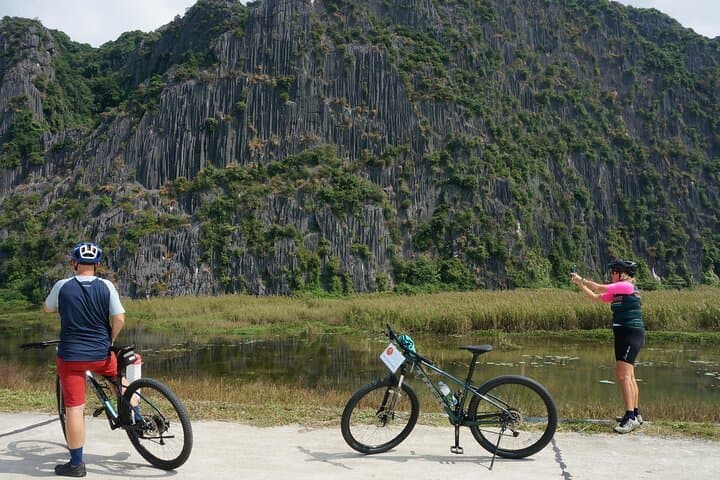
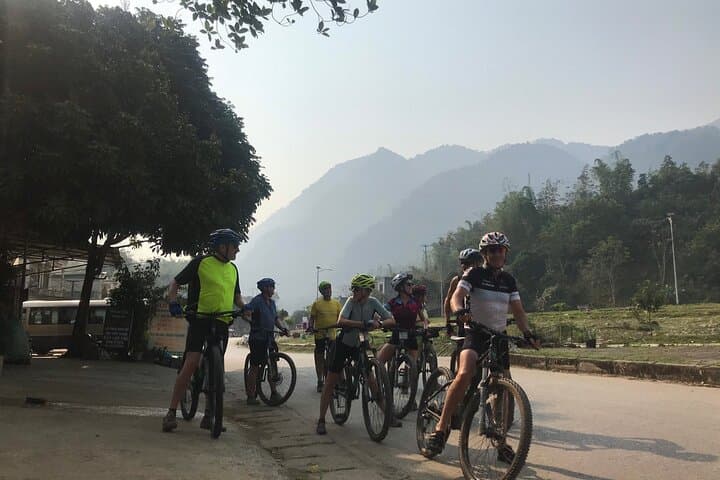
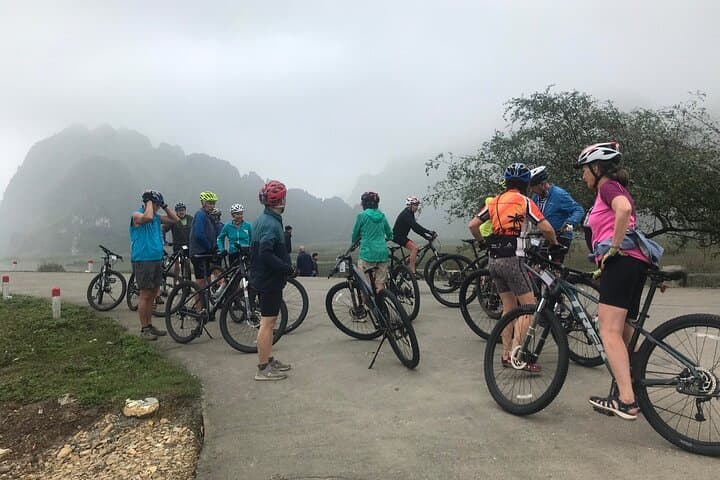
On the first morning riders push off from a lowland road and the mountains take them—the air sharpening, terraces stepping down like green stairs, and limestone towers rising to meet the sky.
On the first morning riders push off from a lowland road and the mountains take them—the air sharpening, terraces stepping down like green stairs, and limestone towers rising to meet the sky.
This eight-day loop moves through Ha Giang Province’s dramatic karst plateaus and deep river gorges. Centuries of human habitation are visible in terraced rice fields and clustered minority villages—Red Dao, H'mong, Tay and Lo Lo communities maintain traditional houses and markets. Geologically the region is part of the Dong Van Karst Plateau Global Geopark; sediments and fossils here record 400–600 million years of marine history uplifted into perpendicular cliffs and rugged passes such as the Ma Pi Leng (around 1,500 m elevation).
Culture and road meet on market mornings and at homestays where local crafts and woven textiles are common. The ride alternates long rolling kilometers, steep 800–1,025 m climbs, and technical descents on mixed paved and dirt surfaces. Expect daily riding from ~50–88 km with several sustained climbs and sweeping passes that expose the Nho Que River daring you to look over the edge.
Practical guidance: plan for variable weather—sun can be fierce on exposed ridgelines and sudden drizzle in valleys. Hydrate, use quality brakes for long descents, and pack layered clothing for temperature swings between valley and pass. Start early to avoid midday heat and to catch market life in villages. Even if bicycles are provided, bring padded shorts, a reliable rain shell, and a small repair kit. The route rewards steady effort with remote scenery and rare cultural encounters.