THE ADVENTURE COLLECTIVE® · Independent discovery and booking for outdoor travel

Drive Vietnam’s Ha Giang Loop over five days through the Dong Van Karst Plateau, Ma Pi Leng Pass and Lung Cu flagpole. Expect dramatic karst ridges, ethnic villages and homestays paired with long scenic drives.
Drive Vietnam’s Ha Giang Loop over five days through the Dong Van Karst Plateau, Ma Pi Leng Pass and Lung Cu flagpole. Expect dramatic karst ridges, ethnic villages and homestays paired with long scenic drives.
You step out onto a narrow mountain road and the world rearranges itself: limestone towers rise like old sentries, terraced fields cut the slopes into green steps, and the Nho Que River dares you from a ribbon far below.
Verified experiences and guided adventures in the surrounding area.
Operated by Authentic Travel VIETNAM · Ha Giang, Ha Giang
You step out onto a narrow mountain road and the world rearranges itself: limestone towers rise like old sentries, terraced fields cut the slopes into green steps, and the Nho Que River dares you from a ribbon far below.
This five-day loop follows the Dong Van Karst Plateau across Ha Giang province, a region shaped by uplifted limestone and millennia of erosion. The route threads through Quan Ba’s Heaven Gate and the Twin Mountains, passes Tham Ma and Ma Pi Leng—stretches of road known for steep hairpins—and leads to Lung Cu flagpole at Vietnam’s northern edge. Cultural threads run equally deep: Hmong, Tay, Lo Lo and Dao communities maintain stilt houses, textile arts and local markets that have anchored highland life for generations.
Expect dramatic geology—exposed karst, narrow passes and steep valleys—and a climate that favors cool nights and brisk mornings. Accommodation alternates between simple two-star hotels and family-run homestays; meals highlight local rice, mountain herbs and salted meats.
Practical guidance: pace your days around light hiking and scenic stops rather than long treks; bring layered clothing for rapid temperature swings, waterproofs for sudden rain, and a good pair of shoes for uneven village trails. Roads are narrow with frequent hairpins—eyes on the driver, camera ready at overlooks. Respect local customs: ask before photographing, remove shoes in homes, and carry small-denomination cash for markets and tips.
The Ha Giang Loop is equal parts landscape and living culture—rough-edged, elemental, and rewarding for travelers willing to slow down and listen to a landscape that still moves at its own pace.
moderate.
5 days.
Suitable for travelers in average fitness; involves short walks, some steps and long vehicle transfers—expect intermittent mobility each day.
Pickup is typically in Hanoi with long-distance transfers; the loop itself centers on Ha Giang city and returns guests to Hanoi at the end of day five.
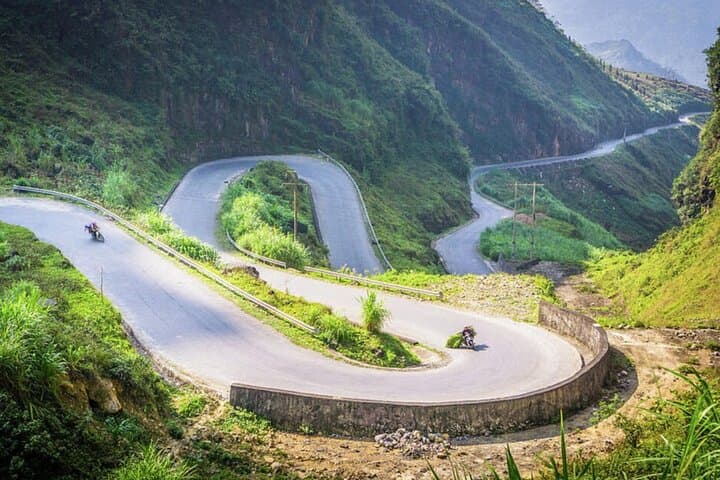
Roads include long switchbacks and narrow mountain sections; choose a seat near the front, move slowly, and bring motion-sickness remedies if needed.
Accommodations alternate between basic two‑star hotels and family-run homestays—expect modest rooms, shared facilities in some homestays, and local-style meals.
Not recommended—roads and village trails include steps and uneven ground; long vehicle transfers also require getting on and off the bus frequently.
The region has long been a crossroads of ethnic groups and trade, with the Meo (Hmong) king’s palace in Sa Phin reflecting early 20th-century local power and Chinese architectural influence.
Tourism is increasing pressure on water resources and waste management; favor local homestays that practice proper waste disposal and avoid single-use plastics.
Authentic Travel VIETNAM operates guided outdoor trips and adventures with an emphasis on safety, stewardship, and memorable experiences.
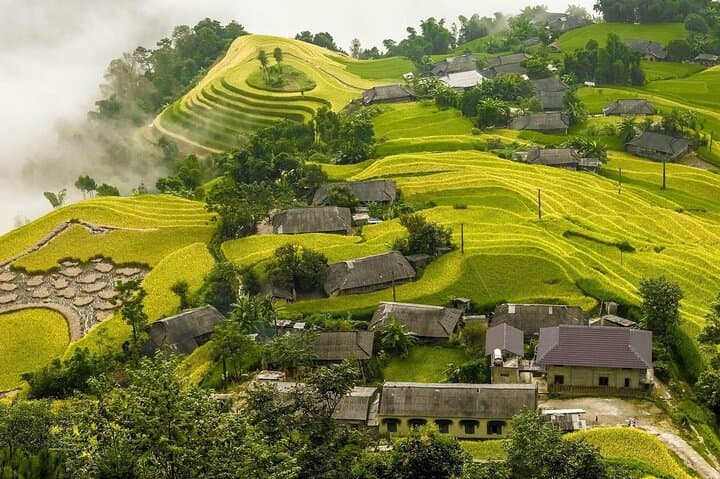


You step out onto a narrow mountain road and the world rearranges itself: limestone towers rise like old sentries, terraced fields cut the slopes into green steps, and the Nho Que River dares you from a ribbon far below.
You step out onto a narrow mountain road and the world rearranges itself: limestone towers rise like old sentries, terraced fields cut the slopes into green steps, and the Nho Que River dares you from a ribbon far below.
This five-day loop follows the Dong Van Karst Plateau across Ha Giang province, a region shaped by uplifted limestone and millennia of erosion. The route threads through Quan Ba’s Heaven Gate and the Twin Mountains, passes Tham Ma and Ma Pi Leng—stretches of road known for steep hairpins—and leads to Lung Cu flagpole at Vietnam’s northern edge. Cultural threads run equally deep: Hmong, Tay, Lo Lo and Dao communities maintain stilt houses, textile arts and local markets that have anchored highland life for generations.
Expect dramatic geology—exposed karst, narrow passes and steep valleys—and a climate that favors cool nights and brisk mornings. Accommodation alternates between simple two-star hotels and family-run homestays; meals highlight local rice, mountain herbs and salted meats.
Practical guidance: pace your days around light hiking and scenic stops rather than long treks; bring layered clothing for rapid temperature swings, waterproofs for sudden rain, and a good pair of shoes for uneven village trails. Roads are narrow with frequent hairpins—eyes on the driver, camera ready at overlooks. Respect local customs: ask before photographing, remove shoes in homes, and carry small-denomination cash for markets and tips.
The Ha Giang Loop is equal parts landscape and living culture—rough-edged, elemental, and rewarding for travelers willing to slow down and listen to a landscape that still moves at its own pace.