THE ADVENTURE COLLECTIVE® · Independent discovery and booking for outdoor travel

Three days across the Dong Van Karst Plateau — hairpin passes, remote hill‑tribe villages and the dramatic Ma Pi Leng viewpoint. This guided loop from Hanoi bundles permits, transport and local insight into a compact mountain adventure.
Three days across the Dong Van Karst Plateau — hairpin passes, remote hill‑tribe villages and the dramatic Ma Pi Leng viewpoint. This guided loop from Hanoi bundles permits, transport and local insight into a compact mountain adventure.
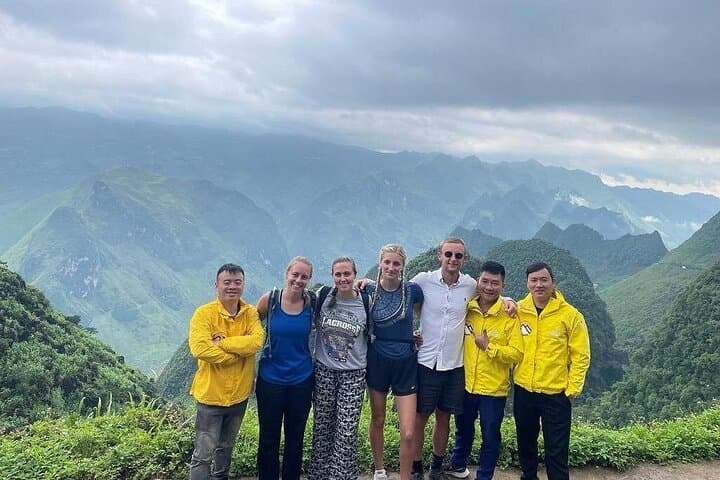
Morning light fractures across hairpin turns as the van peels out of Hanoi and the lowlands fall away. By late afternoon the road climbs into a stripped, limestone world — cliffs cut like pages and villages perched on terraces — where the Ha Giang Loop reveals itself in stages: steep passes, narrow ridgelines and the sudden expanse of the Dong Van Karst Plateau.
Verified experiences and guided adventures in the surrounding area.
Operated by Elegance Tourist · Ha Giang, Ha Giang Province
Morning light fractures across hairpin turns as the van peels out of Hanoi and the lowlands fall away. By late afternoon the road climbs into a stripped, limestone world — cliffs cut like pages and villages perched on terraces — where the Ha Giang Loop reveals itself in stages: steep passes, narrow ridgelines and the sudden expanse of the Dong Van Karst Plateau.
The route traces ancient trade corridors and the modern footprint of hill‑tribe life. Geologically the area is a weathered karst plateau — limestone towers, fissured pavements and the deep Nho Que canyon chiseled over millennia. Culturally, H’Mong, Dao and Tay communities still farm steep fields and maintain distinct dress and craft traditions; the H’Mong King’s Palace offers a 20th‑century window into local aristocracy.
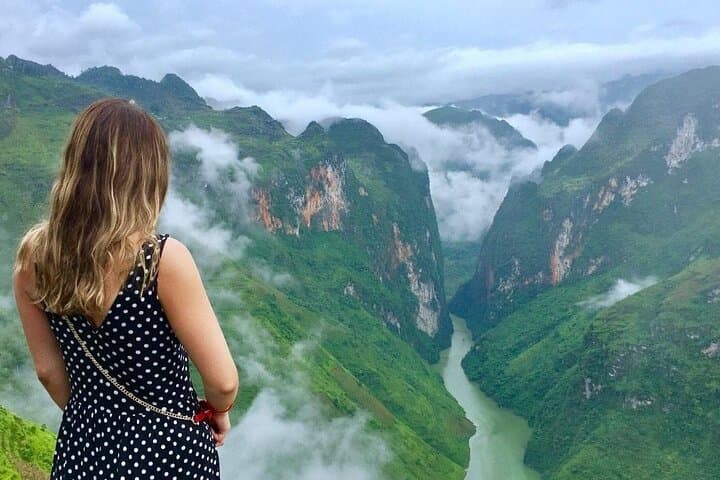
Expect about 300 km of mountain roads over three days with elevation swings from roughly 300 m in river valleys to 1,200–1,500 m on the plateau. Terrain is narrow asphalt with occasional gravel shoulders and tight switchbacks; Ma Pi Leng pass provides the most vertiginous overlooks where the Nho Que River dares the canyon floor.
Practicalities: the tour includes permits, VIP van transfers (≈6 hours each way to Hanoi), and accommodation choices between hotels or homestays. Pace yourself for long drives, plan for sudden weather changes, carry cash for remote markets, and be ready to ride briefly on a local motorbike. Footwear for short walks, layered clothing, sun and rain protection, and a basic first‑aid kit will keep the trip smooth. The Loop rewards patience: quiet villages, wide sky and landscapes that insist you slow down and look closely.
moderate.
3 days.
Moderate — able to handle multiple hours in a vehicle daily, short hikes, and some altitude-related exertion.
The tour is moderate: most travel is by vehicle with short walks and viewpoint stops; basic mobility and comfort with winding roads are required.
Yes — this package includes necessary local permits for travel through restricted and border-adjacent zones like parts of the Dong Van Karst Plateau.
Yes — the operator offers either hotel accommodation or authentic homestays so travelers can opt for a closer cultural experience.
Riding with a local easy rider is common and generally safe if you wear a helmet and follow the rider’s instructions; be cautious if you have mobility or balance concerns.
Ha Giang’s roads follow historic mountain trade and seasonal migration routes; the H’Mong King’s Palace (early 20th century) reflects a local ruling family’s legacy during the French colonial era.
The Dong Van Karst Plateau is a designated geopark; visitors should stick to trails, avoid removing fossils or stones, and limit single‑use plastics to reduce impact on fragile karst ecosystems.
Elegance Tourist operates guided outdoor trips and adventures with an emphasis on safety, stewardship, and memorable experiences.

Morning light fractures across hairpin turns as the van peels out of Hanoi and the lowlands fall away. By late afternoon the road climbs into a stripped, limestone world — cliffs cut like pages and villages perched on terraces — where the Ha Giang Loop reveals itself in stages: steep passes, narrow ridgelines and the sudden expanse of the Dong Van Karst Plateau.
Morning light fractures across hairpin turns as the van peels out of Hanoi and the lowlands fall away. By late afternoon the road climbs into a stripped, limestone world — cliffs cut like pages and villages perched on terraces — where the Ha Giang Loop reveals itself in stages: steep passes, narrow ridgelines and the sudden expanse of the Dong Van Karst Plateau.
The route traces ancient trade corridors and the modern footprint of hill‑tribe life. Geologically the area is a weathered karst plateau — limestone towers, fissured pavements and the deep Nho Que canyon chiseled over millennia. Culturally, H’Mong, Dao and Tay communities still farm steep fields and maintain distinct dress and craft traditions; the H’Mong King’s Palace offers a 20th‑century window into local aristocracy.
Expect about 300 km of mountain roads over three days with elevation swings from roughly 300 m in river valleys to 1,200–1,500 m on the plateau. Terrain is narrow asphalt with occasional gravel shoulders and tight switchbacks; Ma Pi Leng pass provides the most vertiginous overlooks where the Nho Que River dares the canyon floor.
Practicalities: the tour includes permits, VIP van transfers (≈6 hours each way to Hanoi), and accommodation choices between hotels or homestays. Pace yourself for long drives, plan for sudden weather changes, carry cash for remote markets, and be ready to ride briefly on a local motorbike. Footwear for short walks, layered clothing, sun and rain protection, and a basic first‑aid kit will keep the trip smooth. The Loop rewards patience: quiet villages, wide sky and landscapes that insist you slow down and look closely.