THE ADVENTURE COLLECTIVE® · Independent discovery and booking for outdoor travel

Three days through Ha Giang’s limestone plateaus, high passes and minority homestays—this tour pairs dramatic viewpoints like Ma Pi Leng with authentic village stays. Expect long scenic drives, short walks, and simple dorm-style accommodation.
Three days through Ha Giang’s limestone plateaus, high passes and minority homestays—this tour pairs dramatic viewpoints like Ma Pi Leng with authentic village stays. Expect long scenic drives, short walks, and simple dorm-style accommodation.
A cold wind climbs the switchbacks as the minivan peels away from Ha Giang town and the road drops into a valley carved by a stubborn river. For three days the landscape alternates between jagged limestone ridges, stepped rice terraces, and remote hamlets where minority languages thread conversations across courtyard fires.
Verified experiences and guided adventures in the surrounding area.
Operated by ADVENTURE INDOCHINA TRAVEL COMPANY LIMITED · Ha Giang, Ha Giang
A cold wind climbs the switchbacks as the minivan peels away from Ha Giang town and the road drops into a valley carved by a stubborn river. For three days the landscape alternates between jagged limestone ridges, stepped rice terraces, and remote hamlets where minority languages thread conversations across courtyard fires.
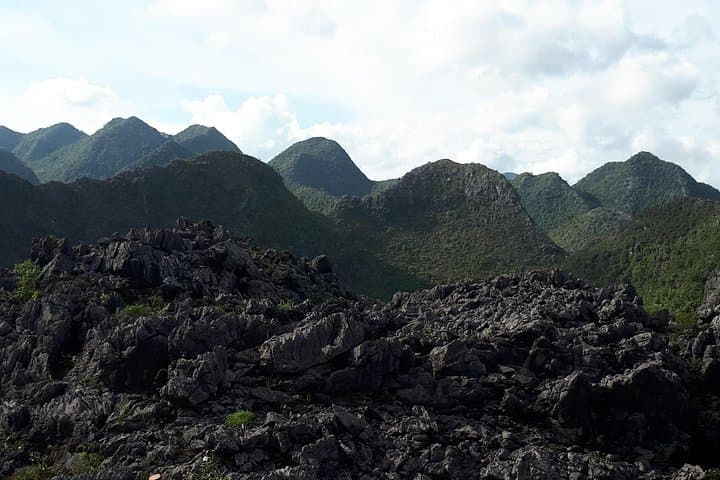
The route runs through Dong Van Karst Plateau, a UNESCO-recognized geopark whose Ordovician limestone has been sculpted into cliffs and pinnacles for hundreds of millions of years. Ethnically diverse communities—Hmong, Tày, Yao and Nùng—keep living traditions visible in dress, rooflines and festivals; Vuong Palace in Sa Phin recalls the region’s semi-feudal local leaders of the early 20th century.
Expect long drives on narrow mountain roads punctuated by short walks: the Heaven’s Gate viewpoint at Quan Ba (about 1,500 m elevation), the dizzying Ma Pi Leng Pass and the hand-cut Happiness Road. Homestays in Dong Van and Du Gia are simple dorm-style lodgings that prioritize local hospitality over luxury; meals are local fare—hearty noodles, mountain vegetables and stewed meats.
Practical notes: bring good traction footwear for wet stone paths, a compact rain shell for rapid weather shifts, and earplugs for dorm homestays. The trip is accessible to most fitness levels but requires tolerance for bumpy travel and altitude swings. Plan for limited cell signal outside towns, carry cash for small purchases, and allow extra time for photo stops—the landscape often insists you pause.
moderate.
3 days (approx. 72 hours).
Light to moderate fitness—able to handle short uphill walks and long vehicle transfers without difficulty.
The tour is suitable for most fitness levels; expect short walks up to an hour and long periods in a vehicle on winding roads.
Yes—three breakfasts, three lunches and two dinners are included, with dorm-style homestay accommodation on nights two and three.
Signal is intermittent outside Ha Giang and Dong Van; download maps and bring cash for remote areas.
Swimming is possible when conditions allow; guides will advise based on flow and safety at the time.
Dong Van Geopark is part of an ancient karst landscape and the area has long been a cultural crossroads for Hmong, Tày, Yao and Nùng communities; Vuong Palace reflects the region’s 20th-century local leadership.
The karst plateaus and fragile terraces are sensitive to erosion—stay on paths, avoid trampling young rice terraces and support local homestays to keep tourism benefits local.
ADVENTURE INDOCHINA TRAVEL COMPANY LIMITED operates guided outdoor trips and adventures with an emphasis on safety, stewardship, and memorable experiences.
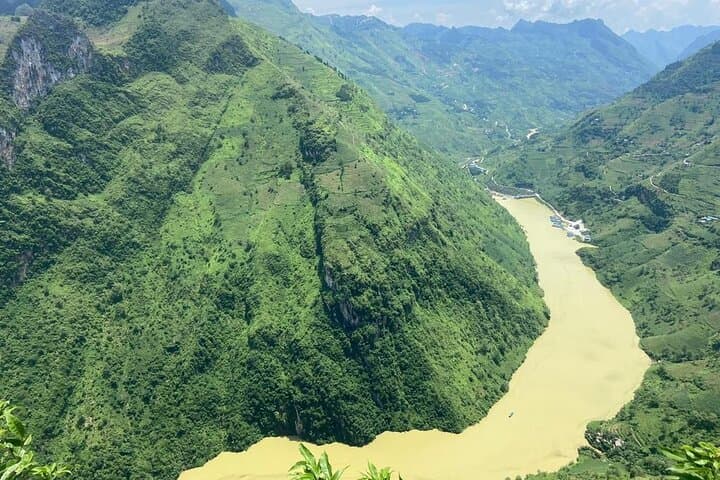
A cold wind climbs the switchbacks as the minivan peels away from Ha Giang town and the road drops into a valley carved by a stubborn river. For three days the landscape alternates between jagged limestone ridges, stepped rice terraces, and remote hamlets where minority languages thread conversations across courtyard fires.
A cold wind climbs the switchbacks as the minivan peels away from Ha Giang town and the road drops into a valley carved by a stubborn river. For three days the landscape alternates between jagged limestone ridges, stepped rice terraces, and remote hamlets where minority languages thread conversations across courtyard fires.
The route runs through Dong Van Karst Plateau, a UNESCO-recognized geopark whose Ordovician limestone has been sculpted into cliffs and pinnacles for hundreds of millions of years. Ethnically diverse communities—Hmong, Tày, Yao and Nùng—keep living traditions visible in dress, rooflines and festivals; Vuong Palace in Sa Phin recalls the region’s semi-feudal local leaders of the early 20th century.
Expect long drives on narrow mountain roads punctuated by short walks: the Heaven’s Gate viewpoint at Quan Ba (about 1,500 m elevation), the dizzying Ma Pi Leng Pass and the hand-cut Happiness Road. Homestays in Dong Van and Du Gia are simple dorm-style lodgings that prioritize local hospitality over luxury; meals are local fare—hearty noodles, mountain vegetables and stewed meats.
Practical notes: bring good traction footwear for wet stone paths, a compact rain shell for rapid weather shifts, and earplugs for dorm homestays. The trip is accessible to most fitness levels but requires tolerance for bumpy travel and altitude swings. Plan for limited cell signal outside towns, carry cash for small purchases, and allow extra time for photo stops—the landscape often insists you pause.