THE ADVENTURE COLLECTIVE® · Independent discovery and booking for outdoor travel

Descend into Gyokusendo at Okinawa World and discover red-and-white stalactites, Heart Rock, and a history of refuge. This concise guide covers what to expect during the 30-minute cave visit, plus practical tips for timing, gear, and conservation.
Descend into Gyokusendo at Okinawa World and discover red-and-white stalactites, Heart Rock, and a history of refuge. This concise guide covers what to expect during the 30-minute cave visit, plus practical tips for timing, gear, and conservation.
You step off the humid island air into a shaded park and follow a carved concrete path toward an entrance that feels like a throat into the earth. Light falls differently here: the cave swallows streetsound and returns only slow drips, cool breaths of air, and the occasional crunch of footing under a visitor's shoes.
Verified experiences and guided adventures in the surrounding area.
Operated by TREVOPEDIA · Nanjo, Okinawa Prefecture
You step off the humid island air into a shaded park and follow a carved concrete path toward an entrance that feels like a throat into the earth. Light falls differently here: the cave swallows streetsound and returns only slow drips, cool breaths of air, and the occasional crunch of footing under a visitor's shoes.
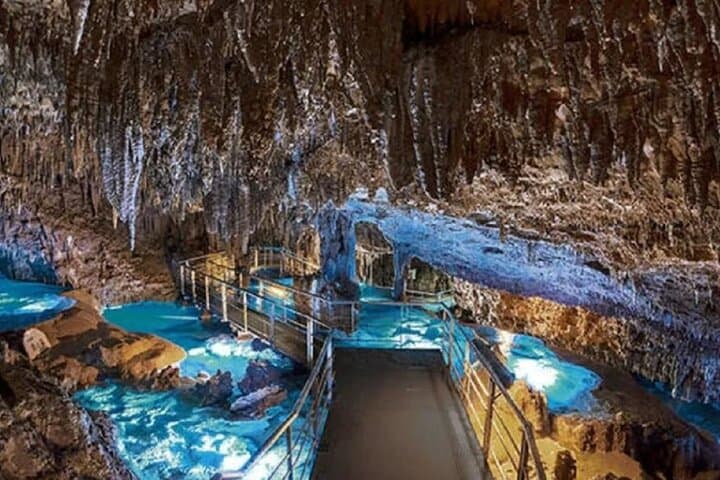
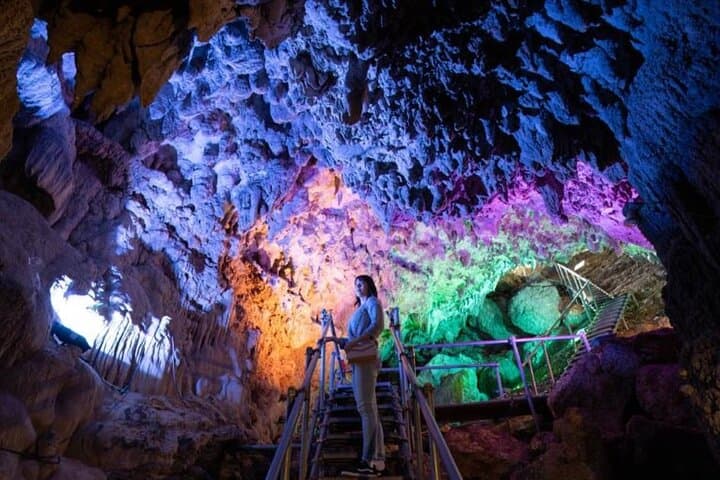
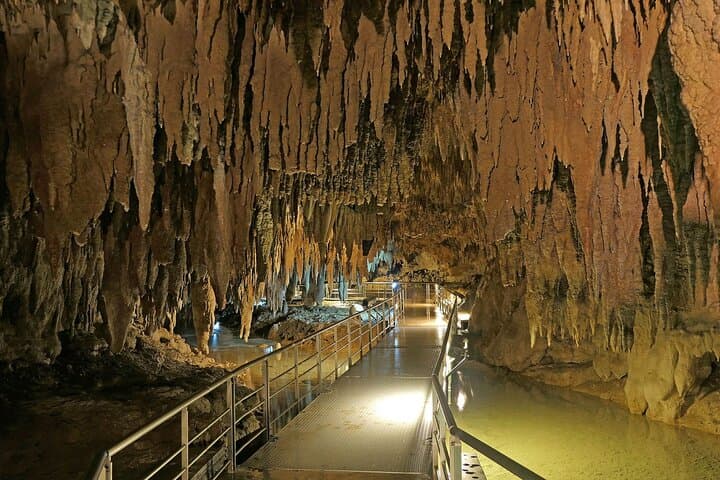
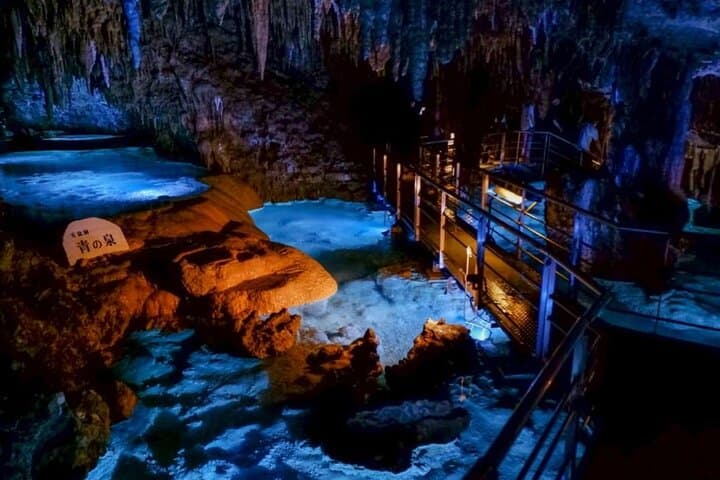
This is Gyokusendo—often sold as Cave Okinawa or Nuchishinujigama—one of Okinawa’s signature limestone caves and the centerpiece of Okinawa World. Its chambers preserve slow geological work: stalactites and stalagmites layered over millennia, sections of red-and-white mineral banding locals read as auspicious, and formations nicknamed Heart Rock, Golden Rocks, Sparkling Rocks and Countless Icicle Stone. The site carries cultural weight too: oral histories record people taking refuge here during Ryukyu-period conflicts and again during the Battle of Okinawa, lending the cave a reputation as a local “power spot.”
The public route is designed for a short, roughly 30-minute walk through illuminated passages with renovated lighting and improved footing since 2018. Expect constant cool air and elevated humidity; photo opportunities abound but frames often demand a steady hand and slower shutter. The interpretive signs and nearby craft village add cultural context—traditional Ryukyuan crafts, glassblowing, and occasional performances.
Practical guidance: wear sturdy, closed shoes for uneven surfaces, bring a light layer for the cave’s coolness, and allow about 30–60 minutes for the visit including exhibits. Food and drink are not allowed inside—respect barriers and avoid touching formations to help conserve them. Arrive earlier in the day to avoid peak crowds and use public transit or a taxi from Naha for the simplest access.
easy.
30–60 minutes.
Minimal fitness required; short, flat-to-moderate walking with some stairs and uneven surfaces
The public route through Gyokusendo is designed as a short walk of roughly 30 minutes; plan 30–60 minutes total including exhibits and exit shops.
Yes—paths are relatively gentle, but there are some stairs and uneven areas so supervision and steady footwear are recommended.
Photography is allowed but avoid flash on delicate formations and respect any restricted areas; use steady, low-light settings instead.
Most visitors take a bus or taxi from Naha; public transportation options are available near the park, and parking is provided for drivers.
Local tradition holds the cave as a refuge during Ryukyu-period conflicts and the Battle of Okinawa; those events helped give it a reputation as a place of safety and blessing.
Stay on marked paths, avoid touching formations, and follow site rules—cave micro-environments are fragile and lighting, humidity, and oils from skin accelerate damage.
TREVOPEDIA operates guided outdoor trips and adventures with an emphasis on safety, stewardship, and memorable experiences.
You step off the humid island air into a shaded park and follow a carved concrete path toward an entrance that feels like a throat into the earth. Light falls differently here: the cave swallows streetsound and returns only slow drips, cool breaths of air, and the occasional crunch of footing under a visitor's shoes.
You step off the humid island air into a shaded park and follow a carved concrete path toward an entrance that feels like a throat into the earth. Light falls differently here: the cave swallows streetsound and returns only slow drips, cool breaths of air, and the occasional crunch of footing under a visitor's shoes.
This is Gyokusendo—often sold as Cave Okinawa or Nuchishinujigama—one of Okinawa’s signature limestone caves and the centerpiece of Okinawa World. Its chambers preserve slow geological work: stalactites and stalagmites layered over millennia, sections of red-and-white mineral banding locals read as auspicious, and formations nicknamed Heart Rock, Golden Rocks, Sparkling Rocks and Countless Icicle Stone. The site carries cultural weight too: oral histories record people taking refuge here during Ryukyu-period conflicts and again during the Battle of Okinawa, lending the cave a reputation as a local “power spot.”
The public route is designed for a short, roughly 30-minute walk through illuminated passages with renovated lighting and improved footing since 2018. Expect constant cool air and elevated humidity; photo opportunities abound but frames often demand a steady hand and slower shutter. The interpretive signs and nearby craft village add cultural context—traditional Ryukyuan crafts, glassblowing, and occasional performances.
Practical guidance: wear sturdy, closed shoes for uneven surfaces, bring a light layer for the cave’s coolness, and allow about 30–60 minutes for the visit including exhibits. Food and drink are not allowed inside—respect barriers and avoid touching formations to help conserve them. Arrive earlier in the day to avoid peak crowds and use public transit or a taxi from Naha for the simplest access.