THE ADVENTURE COLLECTIVE® · Independent discovery and booking for outdoor travel

Spend a day photographing Gyeongju’s UNESCO temple, royal tombs, hanok village and reflective Wolji Pond with a local guide. Small-group size keeps the pace flexible for portraits and landscape shots.
Spend a day photographing Gyeongju’s UNESCO temple, royal tombs, hanok village and reflective Wolji Pond with a local guide. Small-group size keeps the pace flexible for portraits and landscape shots.
Morning light slides across ancient stone stairways as a small group threads through Bulguksa’s courtyard—camera straps click and the guide points out carved pagodas worn smooth by centuries.
Verified experiences and guided adventures in the surrounding area.
Operated by triends · Gyeongju, Gyeongsangbuk-do
Morning light slides across ancient stone stairways as a small group threads through Bulguksa’s courtyard—camera straps click and the guide points out carved pagodas worn smooth by centuries.
Gyeongju was the capital of the Silla kingdom (57 BCE–935 CE), and the city still wears its history in broad, low shapes: funerary mounds, temple terraces, and palace ponds. Geologically the area sits on gentle hills of Jurassic-age sediments that cradle sunken tombs; culturally, hanok neighborhoods and café-lined Hwangridan-gil show how old forms meet modern life.
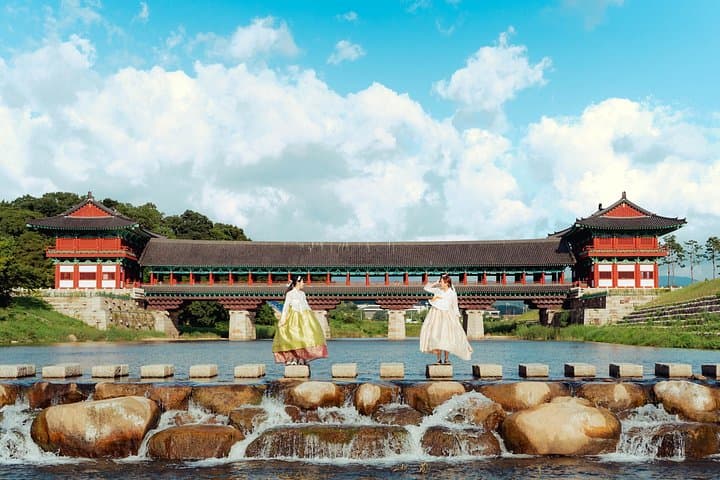
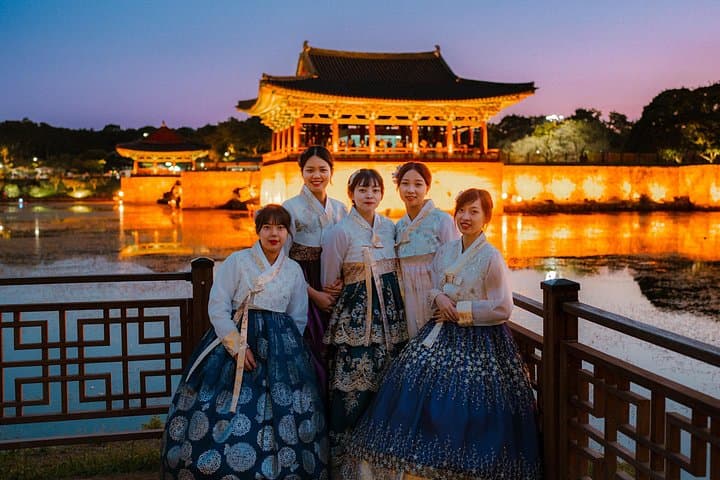
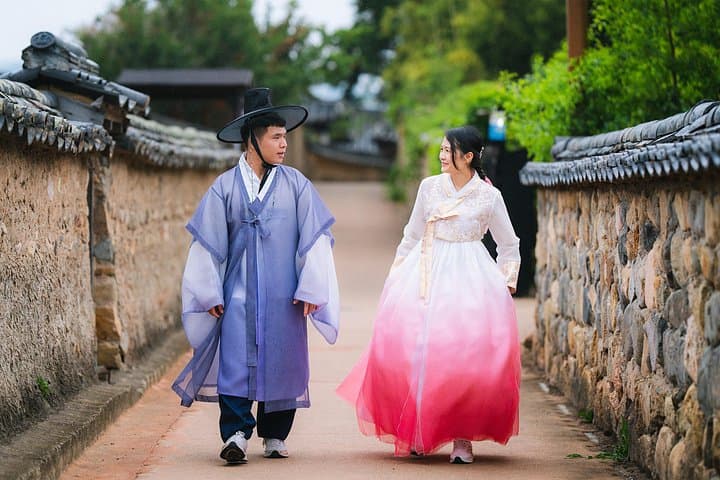
The itinerary moves at an unhurried pace—Bulguksa’s UNESCO wood-and-stone architecture, the living Millennium Forest, the rolling green domes of Daereungwon tombs, Gyochon’s hanok alleys, and Wolji Pond where lantern-lit pavilions reflect at dusk. Guides emphasize composition and timing for photos; small-group size (max six) keeps movement efficient and flexible.
Expect roughly a full day of walking on paved and compacted dirt surfaces with short uphill sections; wear grippy shoes, carry water, and keep cameras accessible. Hanbok rental is available locally for staged portraits but is optional and extra. The operator provides air-conditioned transport and returns to Busan on the same day.
Plan for seasonal shifts: spring cherry blossoms alter stops, autumn’s ginkgo window shortens time at Gyochon, and winter evenings bring earlier reflections at Wolji. For photographers and history-minded travelers who prefer measured pacing, this tour packages Gyeongju’s essentials into a single, practical day.
easy.
12 hours.
Suitable for those who can walk 4–6 miles spread across a day with short uphill sections; no special fitness required
The tour lasts about 12 hours with moderate walking between sites; stops include Bulguksa, Millennium Forest, Hwangridan-gil, Daereungwon tombs, Gyochon Village and Wolji Pond.
Yes—guides offer composition tips and will help stage portraits; you also receive all raw photo files and limited retouching as described in the booking details.
Hanbok rental is available at your own expense and can be used for photos, but you should plan extra time for dressing if you choose to rent.
The operator notes wheelchair-accessible transport and surfaces at several sites, but some temple stairs and tomb areas contain uneven ground—check accessibility specifics when booking.
Gyeongju served as Silla’s capital for nearly a millennium, leaving a dense concentration of royal tombs and Buddhist sites that map the kingdom’s social and religious priorities.
Sites are managed to balance visitor access with preservation—stay on paths, avoid touching carvings, and follow guidelines for hanbok and tripod use to limit wear on historic surfaces.
triends operates guided outdoor trips and adventures with an emphasis on safety, stewardship, and memorable experiences.

Morning light slides across ancient stone stairways as a small group threads through Bulguksa’s courtyard—camera straps click and the guide points out carved pagodas worn smooth by centuries.
Morning light slides across ancient stone stairways as a small group threads through Bulguksa’s courtyard—camera straps click and the guide points out carved pagodas worn smooth by centuries.
Gyeongju was the capital of the Silla kingdom (57 BCE–935 CE), and the city still wears its history in broad, low shapes: funerary mounds, temple terraces, and palace ponds. Geologically the area sits on gentle hills of Jurassic-age sediments that cradle sunken tombs; culturally, hanok neighborhoods and café-lined Hwangridan-gil show how old forms meet modern life.
The itinerary moves at an unhurried pace—Bulguksa’s UNESCO wood-and-stone architecture, the living Millennium Forest, the rolling green domes of Daereungwon tombs, Gyochon’s hanok alleys, and Wolji Pond where lantern-lit pavilions reflect at dusk. Guides emphasize composition and timing for photos; small-group size (max six) keeps movement efficient and flexible.
Expect roughly a full day of walking on paved and compacted dirt surfaces with short uphill sections; wear grippy shoes, carry water, and keep cameras accessible. Hanbok rental is available locally for staged portraits but is optional and extra. The operator provides air-conditioned transport and returns to Busan on the same day.
Plan for seasonal shifts: spring cherry blossoms alter stops, autumn’s ginkgo window shortens time at Gyochon, and winter evenings bring earlier reflections at Wolji. For photographers and history-minded travelers who prefer measured pacing, this tour packages Gyeongju’s essentials into a single, practical day.