THE ADVENTURE COLLECTIVE® · Independent discovery and booking for outdoor travel

Drive the newly mapped Tea Route through subtropical Guria, stay with a farming family at Komli, then climb to the misty Gomismta plateau for azalea meadows, a 12th‑century monastery and a mountain river plunge. Practical, cultural, and scenic in two days.
Drive the newly mapped Tea Route through subtropical Guria, stay with a farming family at Komli, then climb to the misty Gomismta plateau for azalea meadows, a 12th‑century monastery and a mountain river plunge. Practical, cultural, and scenic in two days.
The road narrows and the air acquires a green, humid weight as you drive into Guria—tea plantations slipping past like stitched fields, cows wandering across the asphalt, and small Orthodox chapels perching on low ridgelines. On day one the tour drops you at Komli, a working farmstay where the kitchen opens to the garden and three generations gather to tell stories over steaming khachapuri and locally grown tea.
Verified experiences and guided adventures in the surrounding area.
Operated by Meri Chanukvadze · Ozurgeti, Guria
The road narrows and the air acquires a green, humid weight as you drive into Guria—tea plantations slipping past like stitched fields, cows wandering across the asphalt, and small Orthodox chapels perching on low ridgelines. On day one the tour drops you at Komli, a working farmstay where the kitchen opens to the garden and three generations gather to tell stories over steaming khachapuri and locally grown tea.
Guria’s hills are geologically young folds of the Lesser Caucasus; weathered volcanic and sedimentary beds create steep valleys and fast-moving streams that carve gorges beneath summer pastures. Tea arrived here in the 19th century and thrived in the subtropical, humid microclimate—today the Tea Route threads through family plots and small factories, preserving a living agricultural craft.
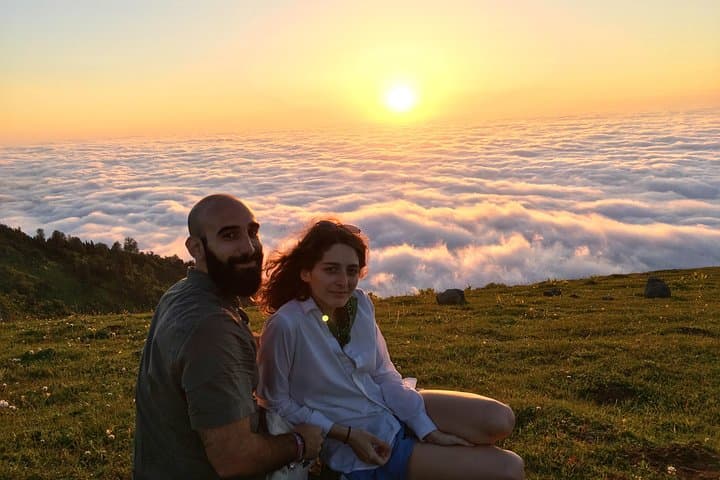
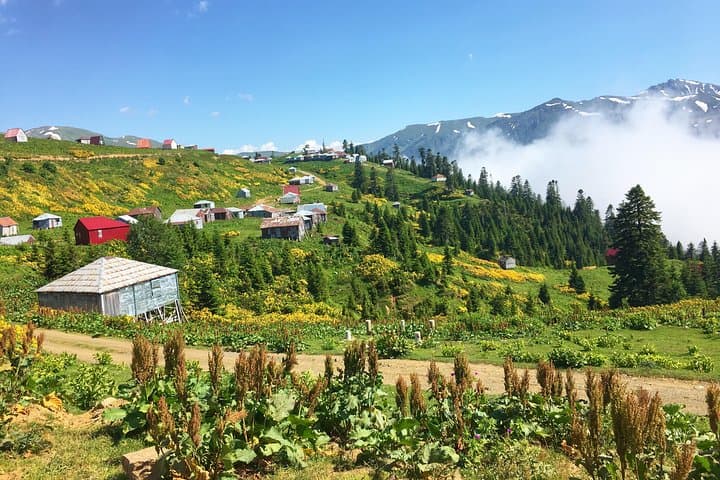
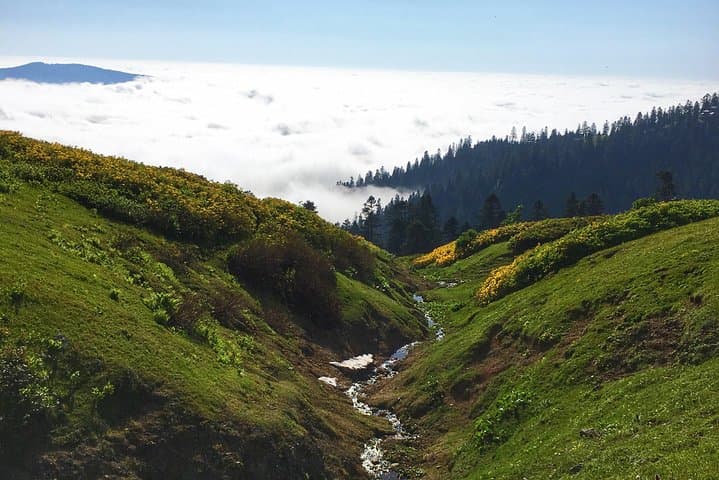
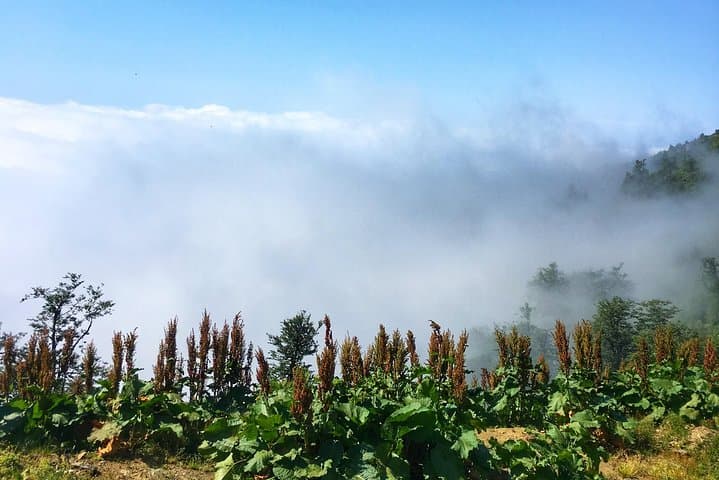
The second day climbs to Gomismta (Gomi Mountain), a fog-prone summer resort of improvised wooden cabins, azalea meadows and a dozen-strong skyline of rustic homesteads. The drive is rough but spectacular; higher up the view opens above the clouds and a 12th-century monastery crowns the ridge. There’s time to cool off in a mountain river gorge and to read the lowland villages for traces of Soviet mosaics and local viticulture.
Practical: footwear with good grip, layered clothing, and a willingness to accept bumpy gravel roads are essential. Expect minimal cell coverage, family-run guesthouses rather than hotels, and meals centered on farm-to-table produce. The experience is as much about slowing down—tea, stories, and high-mountain air—as it is about sightseeing.
moderate.
2 days.
Light-to-moderate fitness; able to walk on uneven paths and tolerate short hikes and steps
Ozurgeti is roughly a 4–5 hour drive west of Tbilisi depending on traffic and road conditions; organized transfers are common.
The ascent includes rough gravel; a high-clearance vehicle is recommended and drivers should be comfortable on mountain roads—many tours provide suitable transport.
Expect intermittent or no cellular coverage on parts of the mountain; plan accordingly for navigation and communication needs.
Meals (breakfast, lunch, dinner) are listed as included; inform the operator of dietary restrictions in advance so hosts can prepare alternatives.
Guria’s tea culture expanded under 19th-century agricultural initiatives and developed through the Soviet era into smallholder plantations that persist today.
Visitors should avoid leaving litter in river gorges, support family-run farmstays, and respect grazing lands to minimize impact on fragile mountain meadows.
Meri Chanukvadze operates guided outdoor trips and adventures with an emphasis on safety, stewardship, and memorable experiences.
The road narrows and the air acquires a green, humid weight as you drive into Guria—tea plantations slipping past like stitched fields, cows wandering across the asphalt, and small Orthodox chapels perching on low ridgelines. On day one the tour drops you at Komli, a working farmstay where the kitchen opens to the garden and three generations gather to tell stories over steaming khachapuri and locally grown tea.
The road narrows and the air acquires a green, humid weight as you drive into Guria—tea plantations slipping past like stitched fields, cows wandering across the asphalt, and small Orthodox chapels perching on low ridgelines. On day one the tour drops you at Komli, a working farmstay where the kitchen opens to the garden and three generations gather to tell stories over steaming khachapuri and locally grown tea.
Guria’s hills are geologically young folds of the Lesser Caucasus; weathered volcanic and sedimentary beds create steep valleys and fast-moving streams that carve gorges beneath summer pastures. Tea arrived here in the 19th century and thrived in the subtropical, humid microclimate—today the Tea Route threads through family plots and small factories, preserving a living agricultural craft.
The second day climbs to Gomismta (Gomi Mountain), a fog-prone summer resort of improvised wooden cabins, azalea meadows and a dozen-strong skyline of rustic homesteads. The drive is rough but spectacular; higher up the view opens above the clouds and a 12th-century monastery crowns the ridge. There’s time to cool off in a mountain river gorge and to read the lowland villages for traces of Soviet mosaics and local viticulture.
Practical: footwear with good grip, layered clothing, and a willingness to accept bumpy gravel roads are essential. Expect minimal cell coverage, family-run guesthouses rather than hotels, and meals centered on farm-to-table produce. The experience is as much about slowing down—tea, stories, and high-mountain air—as it is about sightseeing.