THE ADVENTURE COLLECTIVE® · Independent discovery and booking for outdoor travel

Traverse Gujarat from the salt plains of the Little Rann to the ruins of Dholavira on a seven-day extension that pairs archaeology with stark natural beauty. Expect long drives, vivid cultural exchanges, and dramatic light across the White Rann.
Traverse Gujarat from the salt plains of the Little Rann to the ruins of Dholavira on a seven-day extension that pairs archaeology with stark natural beauty. Expect long drives, vivid cultural exchanges, and dramatic light across the White Rann.
The road unfurls east from Ahmedabad into a sunlit plain, villages sliding by like frames in a slow film. By afternoon the Little Rann of Kutchh opens—salt flats and scrub that hum with wind and the distant bray of the Indian wild ass. Over seven days the landscape shifts from engineered stepwells and carved stone to a white, mirror-flat desert where the horizon dares you to find its edge.
Verified experiences and guided adventures in the surrounding area.
Operated by Agora Voyages Pvt. Ltd. · Ahmedabad, Gujarat
The road unfurls east from Ahmedabad into a sunlit plain, villages sliding by like frames in a slow film. By afternoon the Little Rann of Kutchh opens—salt flats and scrub that hum with wind and the distant bray of the Indian wild ass. Over seven days the landscape shifts from engineered stepwells and carved stone to a white, mirror-flat desert where the horizon dares you to find its edge.
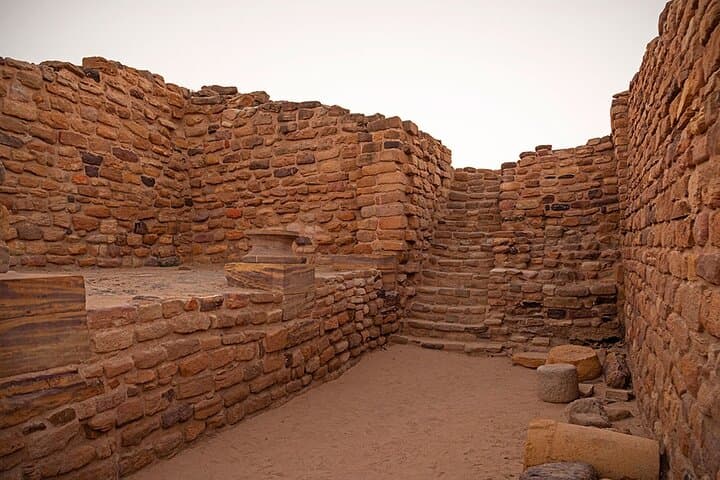
This route threads together deep history and stark geology: Modhera's 11th-century Sun Temple and Patan's Rani ki Vav reveal medieval temple architecture and ritual water engineering, while Dholavira exposes planned streets, reservoirs, and the water-management sophistication of the Indus Valley Civilization. The White Rann is a salt plain formed by an ancient lagoon; its seasonal crust reflects sky and light in ways that have long shaped local livelihoods.
Culture here is material and loud—Banni embroidery, Rogan painting, and Bhujodi weaving are living crafts tied to clan histories and arid ecology. Local guides translate those patterns into context: monsoon cycles, cattle grazing, and salt-harvesting rhythms.
Practical guidance: plan for strong sun and wind, wide temperature swings between day and night, and uneven walking surfaces at archaeological sites. Expect long drives—daily transfers of up to 300 km—and basic rural accommodations in Hodka and Dasada. Carry water, sun protection, and comfortable walking shoes; stagger site visits to avoid midday heat. Book jeep safaris early; they are subject to availability. Respect private artisan workshops and ask before photographing people. With modest fitness, patience for dust, and curiosity, this extension offers an immersive, layered encounter with Gujarat's past and its resilient present.
easy.
7 days.
Light-to-moderate fitness: able to handle several hours of walking on uneven ground and multi-hour drives.
October to March is ideal: cooler days, dryer conditions, and clear light for the White Rann and archaeological sites.
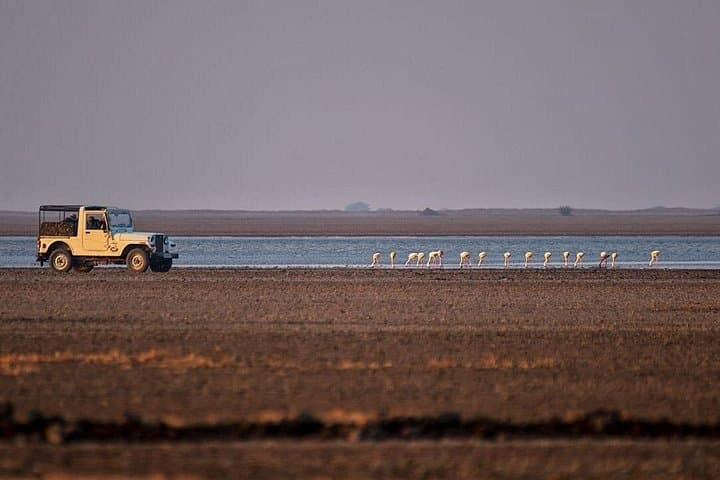
Jeep safaris are included once but are subject to availability and may be limited by weather or sanctuary rules; book early to secure a seat.
Yes—this itinerary is suitable for a wide range of ages, though long drives and uneven walking may be tiring; plan for slower pacing if needed.
Most sites require standard monument or sanctuary entry fees, but no special permits for foreign visitors; entry is managed locally and included where noted in the itinerary.
The itinerary traces millennia: from Indus Valley urban planning at Dholavira to medieval temples and stepwells that illustrate regional adaptations to water scarcity.
The salt desert and wetland habitats are fragile—stay on designated routes, avoid littering, and support community-based craft economies to sustain local conservation efforts.
Agora Voyages Pvt. Ltd. operates guided outdoor trips and adventures with an emphasis on safety, stewardship, and memorable experiences.
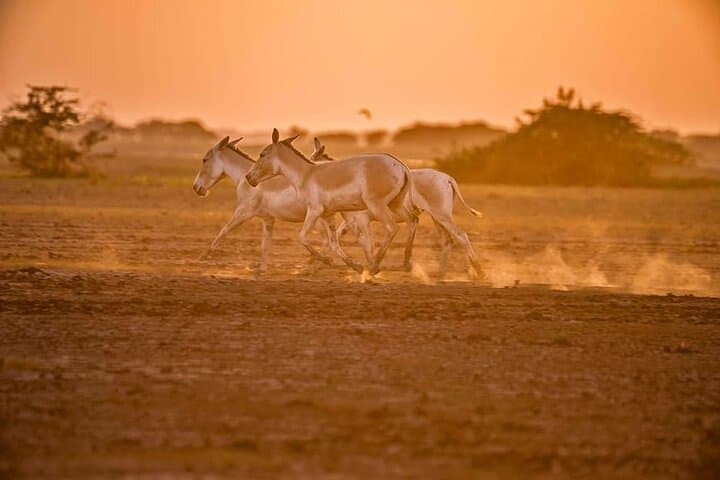
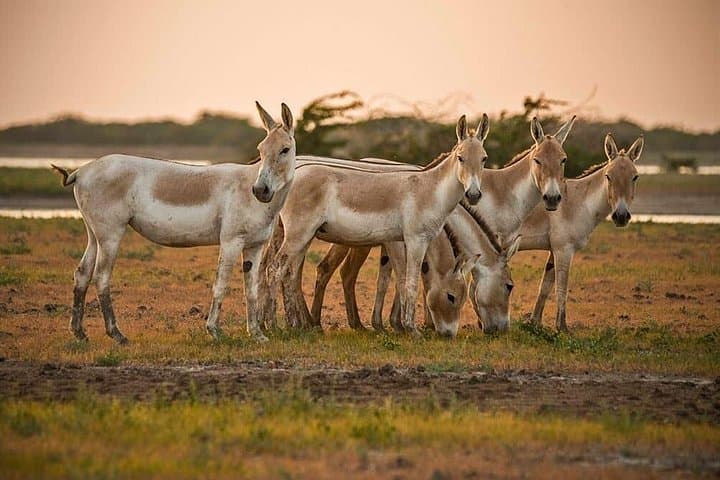
The road unfurls east from Ahmedabad into a sunlit plain, villages sliding by like frames in a slow film. By afternoon the Little Rann of Kutchh opens—salt flats and scrub that hum with wind and the distant bray of the Indian wild ass. Over seven days the landscape shifts from engineered stepwells and carved stone to a white, mirror-flat desert where the horizon dares you to find its edge.
The road unfurls east from Ahmedabad into a sunlit plain, villages sliding by like frames in a slow film. By afternoon the Little Rann of Kutchh opens—salt flats and scrub that hum with wind and the distant bray of the Indian wild ass. Over seven days the landscape shifts from engineered stepwells and carved stone to a white, mirror-flat desert where the horizon dares you to find its edge.
This route threads together deep history and stark geology: Modhera's 11th-century Sun Temple and Patan's Rani ki Vav reveal medieval temple architecture and ritual water engineering, while Dholavira exposes planned streets, reservoirs, and the water-management sophistication of the Indus Valley Civilization. The White Rann is a salt plain formed by an ancient lagoon; its seasonal crust reflects sky and light in ways that have long shaped local livelihoods.
Culture here is material and loud—Banni embroidery, Rogan painting, and Bhujodi weaving are living crafts tied to clan histories and arid ecology. Local guides translate those patterns into context: monsoon cycles, cattle grazing, and salt-harvesting rhythms.
Practical guidance: plan for strong sun and wind, wide temperature swings between day and night, and uneven walking surfaces at archaeological sites. Expect long drives—daily transfers of up to 300 km—and basic rural accommodations in Hodka and Dasada. Carry water, sun protection, and comfortable walking shoes; stagger site visits to avoid midday heat. Book jeep safaris early; they are subject to availability. Respect private artisan workshops and ask before photographing people. With modest fitness, patience for dust, and curiosity, this extension offers an immersive, layered encounter with Gujarat's past and its resilient present.