THE ADVENTURE COLLECTIVE® · Independent discovery and booking for outdoor travel

Two days of Guilin’s highlights: hike the sculpted Longji rice terraces with Yao and Zhuang villages, then drift the Li River on a bamboo-powered boat, climb Xianggong Hill for the classic bend view and finish with Yangshuo’s West Street and Yulong River scenery. Practical timing, transport and terrain notes to help you plan.
Two days of Guilin’s highlights: hike the sculpted Longji rice terraces with Yao and Zhuang villages, then drift the Li River on a bamboo-powered boat, climb Xianggong Hill for the classic bend view and finish with Yangshuo’s West Street and Yulong River scenery. Practical timing, transport and terrain notes to help you plan.
You step from an air-conditioned minivan into a wash of thin mountain air and the stepped contours of the Longji terraces rise like carved contours in green. Terraced paddies curve around ribs of limestone; small stilt houses of Yao and Zhuang villages huddle along narrow paths. The next morning the Li River unfurls like a ribbon through karst peaks, and an electric bamboo raft slides under bamboo shade while mist clings to limestone towers.
Verified experiences and guided adventures in the surrounding area.
Operated by Jerry's Guide & Driver Service · Guilin, Guangxi
You step from an air-conditioned minivan into a wash of thin mountain air and the stepped contours of the Longji terraces rise like carved contours in green. Terraced paddies curve around ribs of limestone; small stilt houses of Yao and Zhuang villages huddle along narrow paths. The next morning the Li River unfurls like a ribbon through karst peaks, and an electric bamboo raft slides under bamboo shade while mist clings to limestone towers.
The Longji (Dragon’s Backbone) terraces were cut into slopes over centuries by local minority communities to harvest high-elevation rice; the engineering reflects a long human relationship with steep terrain. Guilin and Yangshuo sit on karst topography—soluble limestone eroded into cones, caves and sheer cliffs that create the region’s iconic silhouettes. Yangshuo’s West Street echoes with trade history and modern tourism; the Yulong and Li rivers still feed the rice fields and villages downstream.
Practically: the first day includes roughly a 2-hour drive from Guilin to Longji, a short 3-hour walking loop through Ping’an and Huang Luo villages on uneven stone steps and dirt trails, then a return drive. Day two runs Guilin→Yangdi (≈1.5 hours), a ~1-hour electric bamboo-raft section to the Nine Horses area, a short drive to Xianggong Hill for panoramic views, then Yulong River scenes and West Street time. Expect steep steps, variable weather, and lots of photography stops. Bring sturdy shoes, sun and rain protection, water and a small daypack—start early to avoid buses and midday heat.
moderate.
2 days.
Moderate fitness: able to manage several hours of walking on uneven steps and short hikes with elevation change.
Yes — the itinerary includes hotel pick-up in Guilin city center; confirm your pickup point when booking.
Yes — the operator can switch you to a 4-hour luxury cruise if you prefer a larger boat experience (advance request recommended).
Transport is wheelchair accessible, but terraces and some viewpoints involve steps and uneven paths that are not suitable for full wheelchair access.
Expect moderate exertion: several kilometers over stone steps with short elevation changes during a roughly 3-hour walking loop.
Longji terraces were shaped over centuries by Yao and Zhuang communities practicing high-altitude rice agriculture; Guilin’s karst landscape formed from collapsed limestone over millions of years.
Stick to marked trails to prevent erosion on fragile terrace edges; local tourism supports village economies, so favor community-run stalls and guides.
Jerry's Guide & Driver Service operates guided outdoor trips and adventures with an emphasis on safety, stewardship, and memorable experiences.
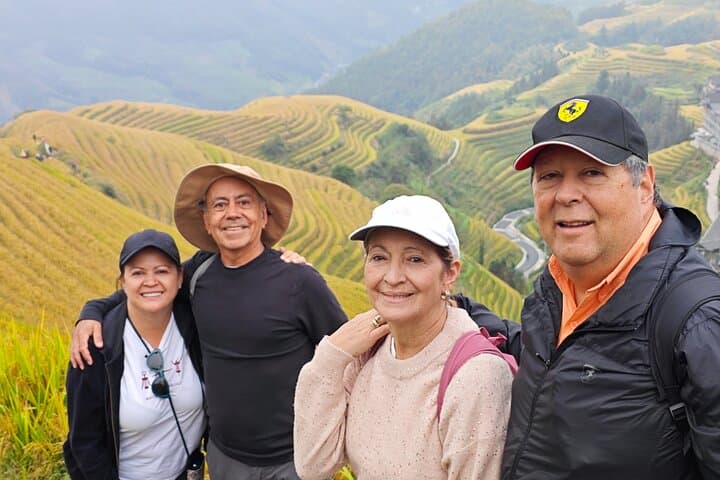
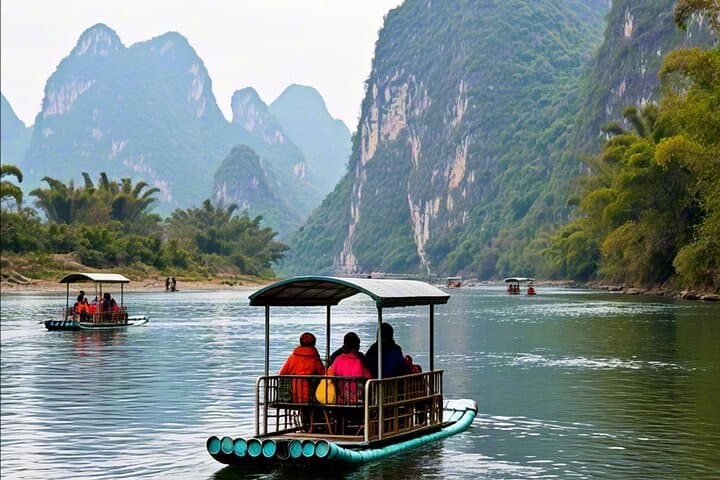
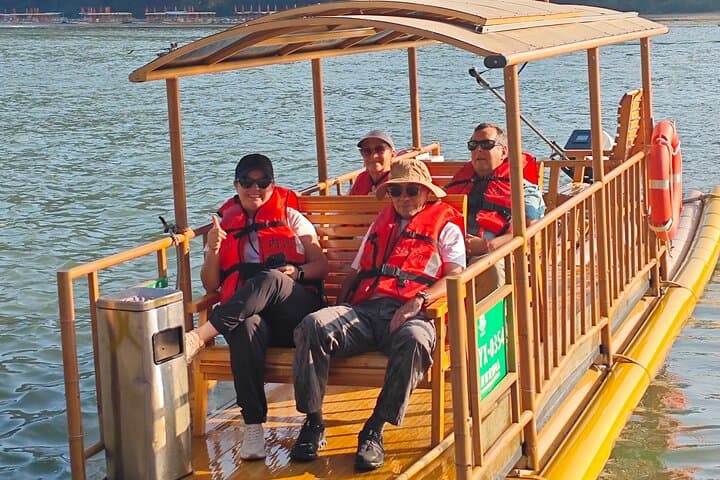
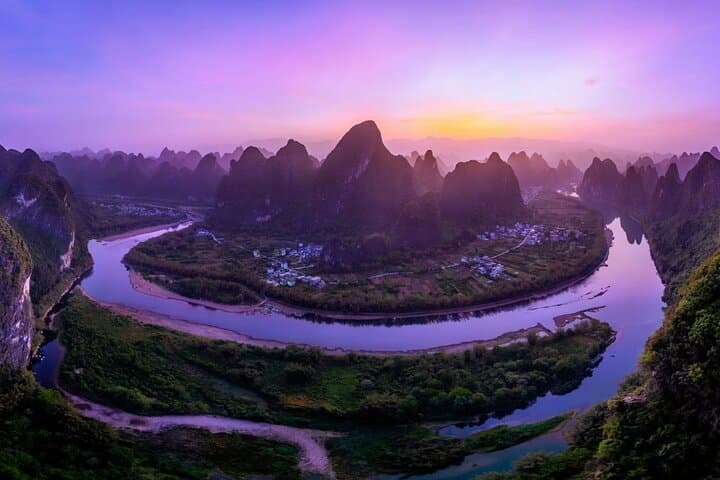
You step from an air-conditioned minivan into a wash of thin mountain air and the stepped contours of the Longji terraces rise like carved contours in green. Terraced paddies curve around ribs of limestone; small stilt houses of Yao and Zhuang villages huddle along narrow paths. The next morning the Li River unfurls like a ribbon through karst peaks, and an electric bamboo raft slides under bamboo shade while mist clings to limestone towers.
You step from an air-conditioned minivan into a wash of thin mountain air and the stepped contours of the Longji terraces rise like carved contours in green. Terraced paddies curve around ribs of limestone; small stilt houses of Yao and Zhuang villages huddle along narrow paths. The next morning the Li River unfurls like a ribbon through karst peaks, and an electric bamboo raft slides under bamboo shade while mist clings to limestone towers.
The Longji (Dragon’s Backbone) terraces were cut into slopes over centuries by local minority communities to harvest high-elevation rice; the engineering reflects a long human relationship with steep terrain. Guilin and Yangshuo sit on karst topography—soluble limestone eroded into cones, caves and sheer cliffs that create the region’s iconic silhouettes. Yangshuo’s West Street echoes with trade history and modern tourism; the Yulong and Li rivers still feed the rice fields and villages downstream.
Practically: the first day includes roughly a 2-hour drive from Guilin to Longji, a short 3-hour walking loop through Ping’an and Huang Luo villages on uneven stone steps and dirt trails, then a return drive. Day two runs Guilin→Yangdi (≈1.5 hours), a ~1-hour electric bamboo-raft section to the Nine Horses area, a short drive to Xianggong Hill for panoramic views, then Yulong River scenes and West Street time. Expect steep steps, variable weather, and lots of photography stops. Bring sturdy shoes, sun and rain protection, water and a small daypack—start early to avoid buses and midday heat.