THE ADVENTURE COLLECTIVE® · Independent discovery and booking for outdoor travel

Spend a winter day hiking to Preikestolen (Pulpit Rock) with a local guide from Stavanger. Expect icy granite, wide Lysefjord views, and a full-day outing that demands traction, layers, and steady pace.
Spend a winter day hiking to Preikestolen (Pulpit Rock) with a local guide from Stavanger. Expect icy granite, wide Lysefjord views, and a full-day outing that demands traction, layers, and steady pace.
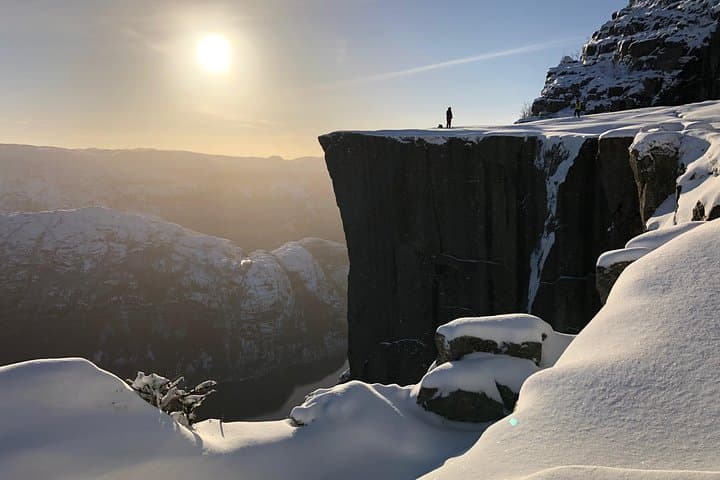
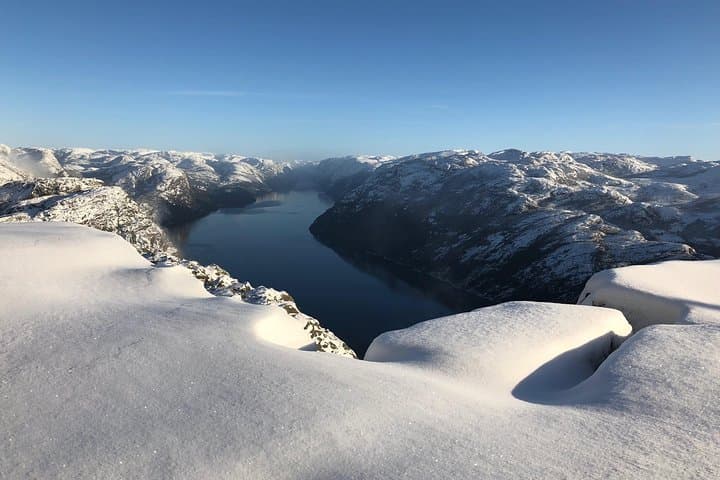
You crest a last snow-scoured rise and the world opens: a flat, squared slab of rock standing like a doorstep to the void. The wind here has a voice, pushing and pulling at your jacket, and below the fjord threads a steady blue, carved deep by ice long gone. On a crisp winter day the hike to Pulpit Rock is less a crowded postcard and more an elemental encounter—each step a measured conversation with the mountain.
Verified experiences and guided adventures in the surrounding area.
Operated by Lysefjorden Adventure · Stavanger, Rogaland
You crest a last snow-scoured rise and the world opens: a flat, squared slab of rock standing like a doorstep to the void. The wind here has a voice, pushing and pulling at your jacket, and below the fjord threads a steady blue, carved deep by ice long gone. On a crisp winter day the hike to Pulpit Rock is less a crowded postcard and more an elemental encounter—each step a measured conversation with the mountain.
Preikestolen sits on the north side of Lysefjorden, about a 1–1.5 hour drive east of Stavanger. The fjord itself is a geological record—glaciers gouged this channel during the last Ice Age, leaving steep cliffs that plunge to the water. Locals have long treated the plateau as a dramatic meeting place between sea and stone; in recent decades it has become Norway’s must-see for hikers, photographers, and anyone who wants a sharp fjord-side perspective.
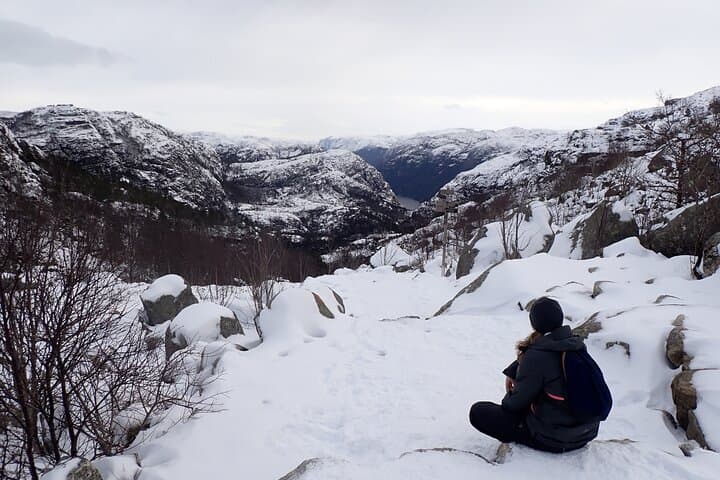
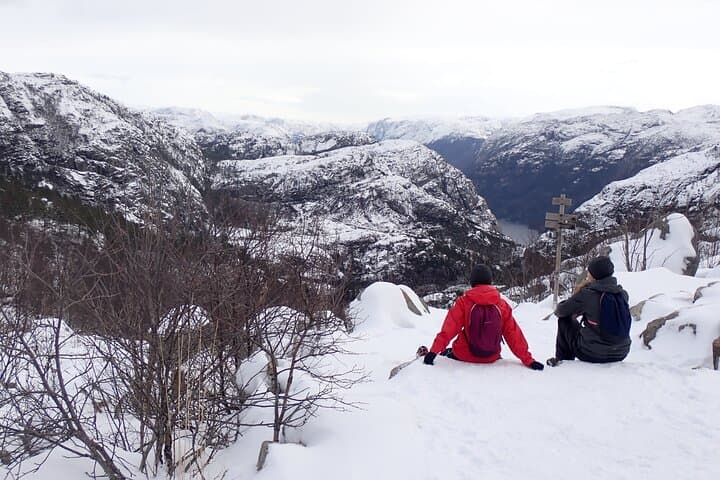
The route begins through low mountain birch and rocky steps, switching back across exposed ledges before giving way to the wide granite plateau. In winter the trail is harder: snow patches hide roots and ice can glaze the granite, so the day is governed by layers, traction, and the steady leadership of an experienced guide. Culturally the region is spare and practical—the towns around Stavanger owe their wealth to fishing and oil, but the fjord economy still moves at the pace of tide and weather.
On the summit, people cluster close to the lip, cameras out, breath condensing in the cold. The view is uncompromising: Lysefjorden curls south and west, tiny boats reduced to specs on a deep ribbon of water. If the sun drops low, the cliffs burn with subtle color—the kind that photographs best with a patient eye.
Practicalities matter here. The full experience with transfer from Stavanger runs roughly nine hours; allow for early starts, cold hands, and slow descents. Dress in windproof layers, bring microspikes or crampons, and expect your guide to choose the safest line across icy sections. Food and hydration are simple—high-energy snacks and insulated bottles—and be prepared to move steadily; winter terrain turns a normal 3–4 hour hike into a demanding day.
For travelers who want a winter version of a Norwegian classic, the guided hike to Preikestolen delivers focused exposure and safety without diluting the raw scenery. It’s the kind of outing that rewards preparation: respect the wind, respect the edge, and the fjord will open up spectacularly.
challenging.
9 hours (including transfers).
Good cardiovascular fitness and steady uphill stamina for sustained winter hiking; ability to hike 6–8 miles with elevation changes.
The guided experience is about 9 hours total including round-trip transfer from Stavanger and the hike itself; expect several hours of on-trail time depending on conditions.
Participants should have at least a moderate-to-good fitness level; winter conditions make the route more demanding than a summer hike.
Not recommended for people with serious heart conditions or limited mobility; booking requires age and health information to ensure safety.
Guides can advise and may carry spare traction, but guests should bring their own microspikes/crampons when possible for proper fit and comfort.
Bring high-energy snacks, a warm lunch, and an insulated water bottle—cold weather favors insulated containers to keep liquids from freezing.
Many people do, but conditions vary—follow your guide’s instructions, avoid slippery areas, and respect rope or boundary markers if present.
Lysefjorden was carved by glaciers; Preikestolen’s sheer profile has stood as a notable landmark for centuries and became an international hiking destination in the 20th century.
Stick to marked trails to limit erosion on fragile alpine tundra; guided groups help concentrate use and reduce off-trail impact.
Lysefjorden Adventure operates guided outdoor trips and adventures with an emphasis on safety, stewardship, and memorable experiences.
You crest a last snow-scoured rise and the world opens: a flat, squared slab of rock standing like a doorstep to the void. The wind here has a voice, pushing and pulling at your jacket, and below the fjord threads a steady blue, carved deep by ice long gone. On a crisp winter day the hike to Pulpit Rock is less a crowded postcard and more an elemental encounter—each step a measured conversation with the mountain.
You crest a last snow-scoured rise and the world opens: a flat, squared slab of rock standing like a doorstep to the void. The wind here has a voice, pushing and pulling at your jacket, and below the fjord threads a steady blue, carved deep by ice long gone. On a crisp winter day the hike to Pulpit Rock is less a crowded postcard and more an elemental encounter—each step a measured conversation with the mountain.
Preikestolen sits on the north side of Lysefjorden, about a 1–1.5 hour drive east of Stavanger. The fjord itself is a geological record—glaciers gouged this channel during the last Ice Age, leaving steep cliffs that plunge to the water. Locals have long treated the plateau as a dramatic meeting place between sea and stone; in recent decades it has become Norway’s must-see for hikers, photographers, and anyone who wants a sharp fjord-side perspective.
The route begins through low mountain birch and rocky steps, switching back across exposed ledges before giving way to the wide granite plateau. In winter the trail is harder: snow patches hide roots and ice can glaze the granite, so the day is governed by layers, traction, and the steady leadership of an experienced guide. Culturally the region is spare and practical—the towns around Stavanger owe their wealth to fishing and oil, but the fjord economy still moves at the pace of tide and weather.
On the summit, people cluster close to the lip, cameras out, breath condensing in the cold. The view is uncompromising: Lysefjorden curls south and west, tiny boats reduced to specs on a deep ribbon of water. If the sun drops low, the cliffs burn with subtle color—the kind that photographs best with a patient eye.
Practicalities matter here. The full experience with transfer from Stavanger runs roughly nine hours; allow for early starts, cold hands, and slow descents. Dress in windproof layers, bring microspikes or crampons, and expect your guide to choose the safest line across icy sections. Food and hydration are simple—high-energy snacks and insulated bottles—and be prepared to move steadily; winter terrain turns a normal 3–4 hour hike into a demanding day.
For travelers who want a winter version of a Norwegian classic, the guided hike to Preikestolen delivers focused exposure and safety without diluting the raw scenery. It’s the kind of outing that rewards preparation: respect the wind, respect the edge, and the fjord will open up spectacularly.