THE ADVENTURE COLLECTIVE® · Independent discovery and booking for outdoor travel

Walk a gentle 1.4 km path with a conservationist on the Great Ocean Road to spot koalas, lyrebirds and other Otways wildlife. This 75-minute tour includes a stop at the Conservation Ecology Centre research hub and supports local species recovery.
Walk a gentle 1.4 km path with a conservationist on the Great Ocean Road to spot koalas, lyrebirds and other Otways wildlife. This 75-minute tour includes a stop at the Conservation Ecology Centre research hub and supports local species recovery.
A salt-scented breeze pushes through tall eucalypts as a small group gathers at the Conservation Ecology Centre on the Great Ocean Road. The guide fits headsets and passes around binoculars; the path ahead is a 1.4 km, all-abilities track that curves through grassland, fern gullies and open forest with the ocean visible in the distance. The walk moves deliberately—quiet, observant—and the bush responds: a koala blink here, a lyrebird calling there.
Verified experiences and guided adventures in the surrounding area.
Operated by Wildlife Wonders · Apollo Bay, Victoria
A salt-scented breeze pushes through tall eucalypts as a small group gathers at the Conservation Ecology Centre on the Great Ocean Road. The guide fits headsets and passes around binoculars; the path ahead is a 1.4 km, all-abilities track that curves through grassland, fern gullies and open forest with the ocean visible in the distance. The walk moves deliberately—quiet, observant—and the bush responds: a koala blink here, a lyrebird calling there.
The Otways are geologically young, carved from sedimentary sandstone overlaid by volcanic flows; soils and gullies create pockets of cool temperate rainforest where tree ferns hold moisture year-round. The area sits on the traditional lands of the Gadubanud people; local conservation efforts now blend scientific research with community stewardship to protect threatened species unique to this stretch of coastline.
Practically, the tour is 75 minutes guided by a conservationist who pauses at the research hub to explain monitoring techniques and current recovery projects. Terrain is mostly flat with minimal elevation change; sections of boardwalk appear in wetter gullies. Expect close wildlife encounters at a measured pace—this is observation, not disturbance.
Bring layered clothing for coastal changeability, comfortable walking shoes, and a water bottle. Photography is encouraged but keep voices low and movements slow to avoid flushing wildlife. The onsite café and gift shop are good for a post-walk coffee and to learn more about how tour fees fund research. For travelers wanting an informed, low-impact wildlife experience, this guided walk delivers insight into Otway ecology without demanding technical fitness.
easy.
1–1.5 hours.
Suitable for all fitness levels; minimal elevation gain and an all-abilities surface makes it accessible to most visitors.
Yes—the 1.4 km path is designed as all-abilities with wheelchair-accessible surfaces; guides can accommodate mobility needs.
Common sightings include koalas, superb lyrebirds and a variety of forest birds; sightings are never guaranteed but the slow, guided format improves chances.
Yes—family passes are available and the route is suitable for children; strollers are also accommodated on the all-abilities path.
All profits go to the Conservation Ecology Centre to fund research, monitoring and habitat restoration projects for threatened species along the Great Ocean Road.
The Otways sit on the traditional lands of the Gadubanud people; contemporary conservation in the area combines scientific research with local stewardship to protect coastal forest species.
Tour fees fund on-site research and habitat restoration; visitors are asked to stick to the path and minimize disturbance to support long-term monitoring.
Wildlife Wonders operates guided outdoor trips and adventures with an emphasis on safety, stewardship, and memorable experiences.
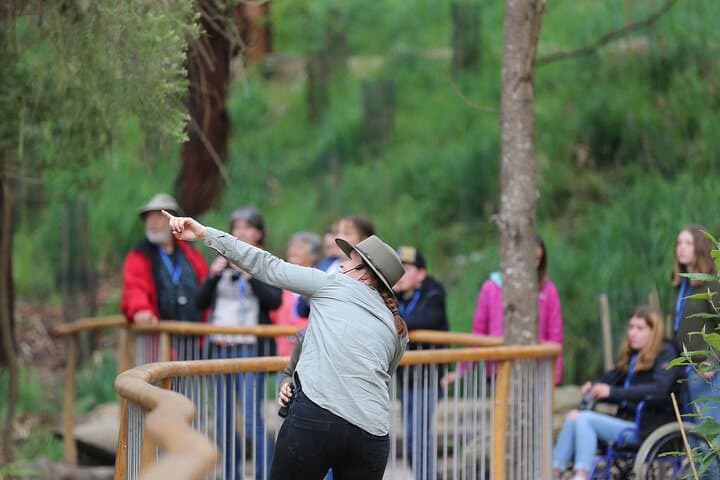
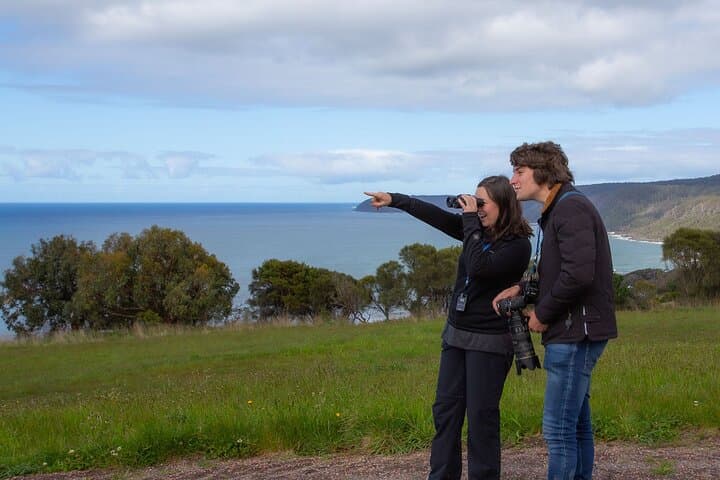
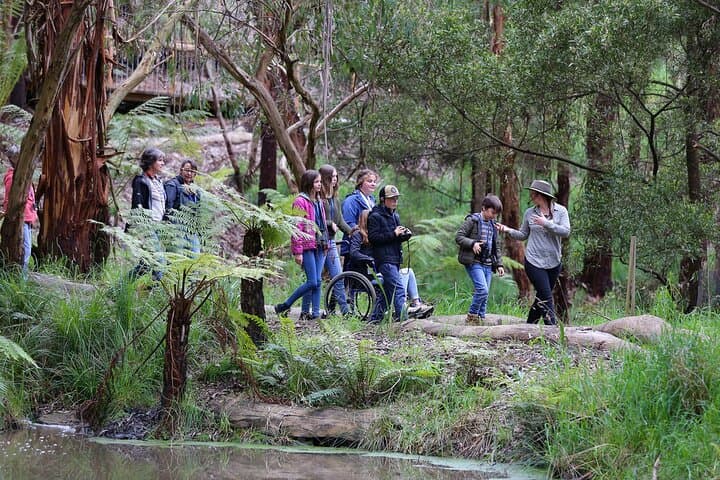
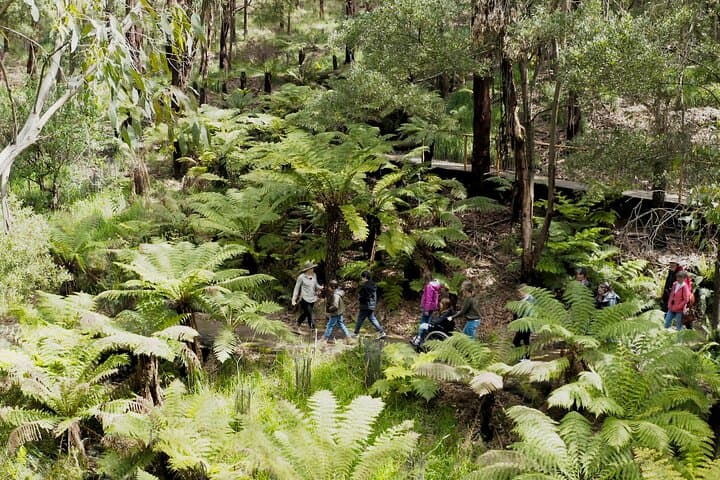
A salt-scented breeze pushes through tall eucalypts as a small group gathers at the Conservation Ecology Centre on the Great Ocean Road. The guide fits headsets and passes around binoculars; the path ahead is a 1.4 km, all-abilities track that curves through grassland, fern gullies and open forest with the ocean visible in the distance. The walk moves deliberately—quiet, observant—and the bush responds: a koala blink here, a lyrebird calling there.
A salt-scented breeze pushes through tall eucalypts as a small group gathers at the Conservation Ecology Centre on the Great Ocean Road. The guide fits headsets and passes around binoculars; the path ahead is a 1.4 km, all-abilities track that curves through grassland, fern gullies and open forest with the ocean visible in the distance. The walk moves deliberately—quiet, observant—and the bush responds: a koala blink here, a lyrebird calling there.
The Otways are geologically young, carved from sedimentary sandstone overlaid by volcanic flows; soils and gullies create pockets of cool temperate rainforest where tree ferns hold moisture year-round. The area sits on the traditional lands of the Gadubanud people; local conservation efforts now blend scientific research with community stewardship to protect threatened species unique to this stretch of coastline.
Practically, the tour is 75 minutes guided by a conservationist who pauses at the research hub to explain monitoring techniques and current recovery projects. Terrain is mostly flat with minimal elevation change; sections of boardwalk appear in wetter gullies. Expect close wildlife encounters at a measured pace—this is observation, not disturbance.
Bring layered clothing for coastal changeability, comfortable walking shoes, and a water bottle. Photography is encouraged but keep voices low and movements slow to avoid flushing wildlife. The onsite café and gift shop are good for a post-walk coffee and to learn more about how tour fees fund research. For travelers wanting an informed, low-impact wildlife experience, this guided walk delivers insight into Otway ecology without demanding technical fitness.