THE ADVENTURE COLLECTIVE® · Independent discovery and booking for outdoor travel

Spend three hours walking the high-altitude cloud forest of Curicancha Reserve with a local naturalist guide and professional optics. This guided wildlife tour focuses on birdwatching and unique forest features like strangler figs, offering 30–50 species on a typical morning.
Spend three hours walking the high-altitude cloud forest of Curicancha Reserve with a local naturalist guide and professional optics. This guided wildlife tour focuses on birdwatching and unique forest features like strangler figs, offering 30–50 species on a typical morning.
Fog threads through the canopy as you step onto the soft, leaf-littered trail at Curicancha Reserve—cloud forest breathing around you, a chorus of calls answering every footfall. In the first minutes the guide lifts a compact telescope and a distant tanager becomes a jewel in the lens; closer, a motmot watches from a vine-strewn branch, daring you to follow its watchful eye.
Verified experiences and guided adventures in the surrounding area.
Operated by Cloud Forest wildlife tour · Santa Elena, Puntarenas
Fog threads through the canopy as you step onto the soft, leaf-littered trail at Curicancha Reserve—cloud forest breathing around you, a chorus of calls answering every footfall. In the first minutes the guide lifts a compact telescope and a distant tanager becomes a jewel in the lens; closer, a motmot watches from a vine-strewn branch, daring you to follow its watchful eye.
Curicancha sits on the western slope of the Monteverde massif at roughly 1,300–1,600 m, part of a chain of high-altitude tropical forests shaped by volcanic soils and constant moisture. The reserve’s strangler figs (Las Higeras Estranguladoras) reveal centuries of arboreal competition—roots wrapped like rope, trunks hollowed into living tunnels you can peer inside. Local culture here blends smallholder farming with long-standing conservation efforts; private reserves like Curicancha expanded in the 1980s as landowners traded pasture for protection.
Expect 3 hours of gently undulating trails, moss-slick roots, and viewpoint clearings where you can tally 30–50 bird species on a good morning. Guides bring optical equipment to make distant behaviors legible and emphasize quiet observation and minimal disturbance.
Practical notes: wear good treaded shoes and a lightweight waterproof layer—the microclimate can flip from mist to downpour. Carry water, insect repellent, and a compact pair of binoculars if you have them; leave drones and loud gear behind. Morning tours catch the most active birds; afternoons are quieter but rich for mammal signs. The loop is accessible to most fitness levels, but uneven footing rewards attention. Curicancha is an exercise in observation—move slowly, let the forest reveal itself.
easy.
3 hours.
Suitable for most people with light cardiovascular fitness; trails are uneven but no technical climbing required.
The guided walk is approximately 3 hours at a relaxed, observational pace with frequent stops for spotting and interpretation.
Yes—trails are labeled easy and the activity level is suitable for most ages; strollers may be used on some paths and the site is wheelchair accessible in parts.
You can expect 30–50 bird species on a good morning, including tanagers, motmots, trogons and hummingbirds; small mammals and amphibians are possible but less common.
Yes—guides typically carry a professional telescope and offer species identification and natural history interpretation throughout the hike.
Private reserves around Monteverde were established from the 1970s onward as local landowners and conservationists protected remnant cloud forest on steep slopes.
Curicancha operates as a private refuge that supports habitat connectivity and bird conservation; visitors are asked to stay on trails and minimize disturbance to maintain ecological integrity.
Cloud Forest wildlife tour operates guided outdoor trips and adventures with an emphasis on safety, stewardship, and memorable experiences.
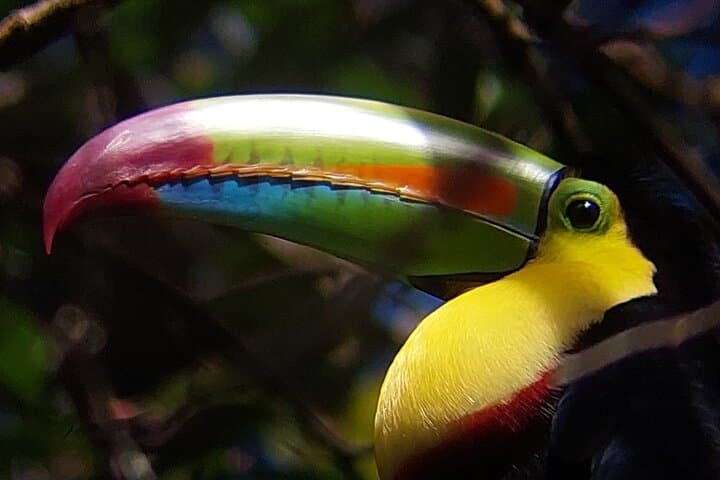
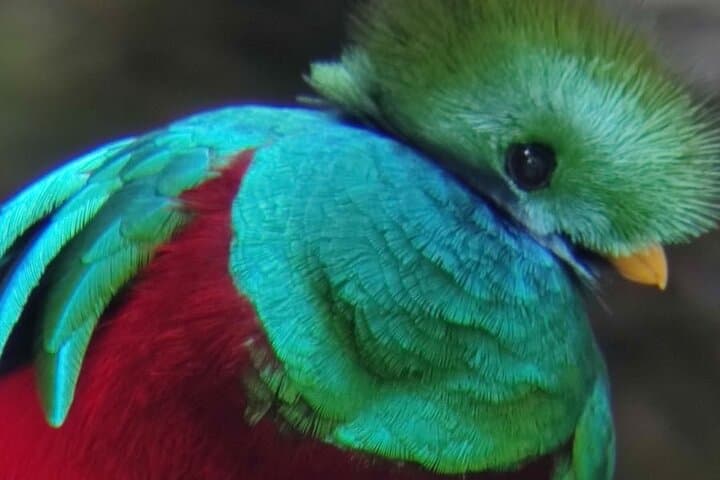
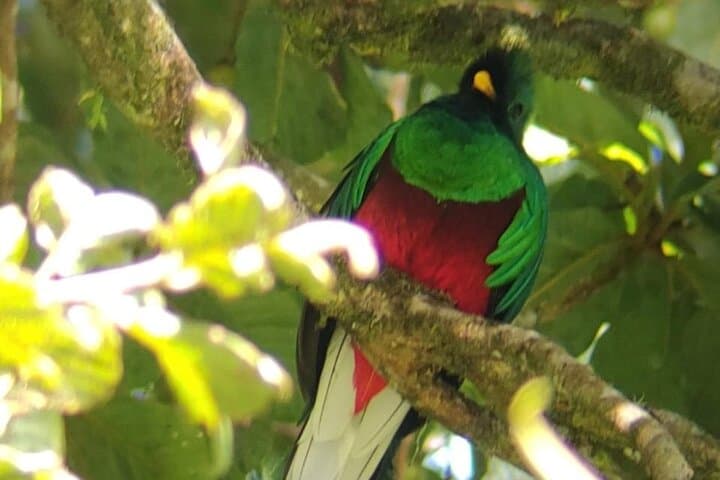
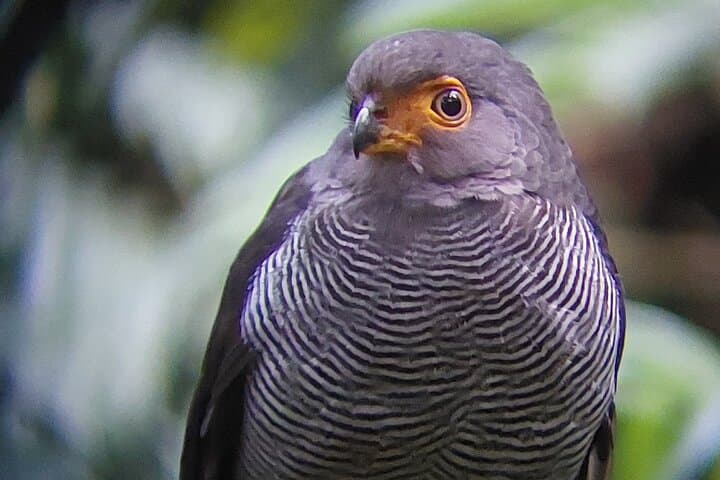
Fog threads through the canopy as you step onto the soft, leaf-littered trail at Curicancha Reserve—cloud forest breathing around you, a chorus of calls answering every footfall. In the first minutes the guide lifts a compact telescope and a distant tanager becomes a jewel in the lens; closer, a motmot watches from a vine-strewn branch, daring you to follow its watchful eye.
Fog threads through the canopy as you step onto the soft, leaf-littered trail at Curicancha Reserve—cloud forest breathing around you, a chorus of calls answering every footfall. In the first minutes the guide lifts a compact telescope and a distant tanager becomes a jewel in the lens; closer, a motmot watches from a vine-strewn branch, daring you to follow its watchful eye.
Curicancha sits on the western slope of the Monteverde massif at roughly 1,300–1,600 m, part of a chain of high-altitude tropical forests shaped by volcanic soils and constant moisture. The reserve’s strangler figs (Las Higeras Estranguladoras) reveal centuries of arboreal competition—roots wrapped like rope, trunks hollowed into living tunnels you can peer inside. Local culture here blends smallholder farming with long-standing conservation efforts; private reserves like Curicancha expanded in the 1980s as landowners traded pasture for protection.
Expect 3 hours of gently undulating trails, moss-slick roots, and viewpoint clearings where you can tally 30–50 bird species on a good morning. Guides bring optical equipment to make distant behaviors legible and emphasize quiet observation and minimal disturbance.
Practical notes: wear good treaded shoes and a lightweight waterproof layer—the microclimate can flip from mist to downpour. Carry water, insect repellent, and a compact pair of binoculars if you have them; leave drones and loud gear behind. Morning tours catch the most active birds; afternoons are quieter but rich for mammal signs. The loop is accessible to most fitness levels, but uneven footing rewards attention. Curicancha is an exercise in observation—move slowly, let the forest reveal itself.