THE ADVENTURE COLLECTIVE® · Independent discovery and booking for outdoor travel

See Ávila’s medieval walls and Saint Teresa’s birthplace from the back of a nimble tuk‑tuk. In an hour you’ll pass palaces, gates and a world‑class mirador with short photo stops and concise historical commentary.
See Ávila’s medieval walls and Saint Teresa’s birthplace from the back of a nimble tuk‑tuk. In an hour you’ll pass palaces, gates and a world‑class mirador with short photo stops and concise historical commentary.
The tuk‑tuk hums along narrow cobblestone streets as Ávila’s stone curtain rises into view: a 12th‑century wall punctuated by towers, gates and the accidental light that makes granite glow. You slide past palaces, Romanesque facades and small plazas while the driver and audio guide layer context over the city’s geometry.
Verified experiences and guided adventures in the surrounding area.
Operated by tukygo · Ávila, Castilla y León
The tuk‑tuk hums along narrow cobblestone streets as Ávila’s stone curtain rises into view: a 12th‑century wall punctuated by towers, gates and the accidental light that makes granite glow. You slide past palaces, Romanesque facades and small plazas while the driver and audio guide layer context over the city’s geometry.
Ávila’s walls were built to defend the high Castilian plateau; the surrounding land is the granite plain of the Central System with the Sierra de Gredos visible on clearer days. The city is as much a religious landmark as a military one — Saint Teresa’s birthplace and the Basilica mark Ávila’s influence on Spanish mysticism. Local culture still orbits weekly markets and convent kitchens; the Plaza de Mercado Chico and La Encarnación speak to civic life that’s remained steady for centuries.
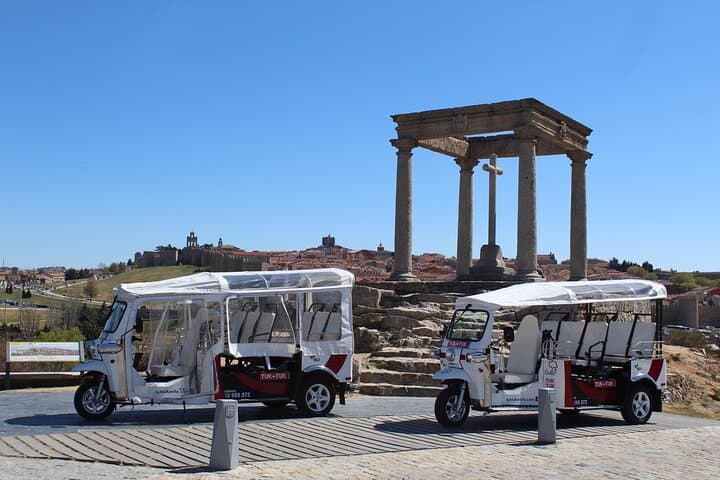
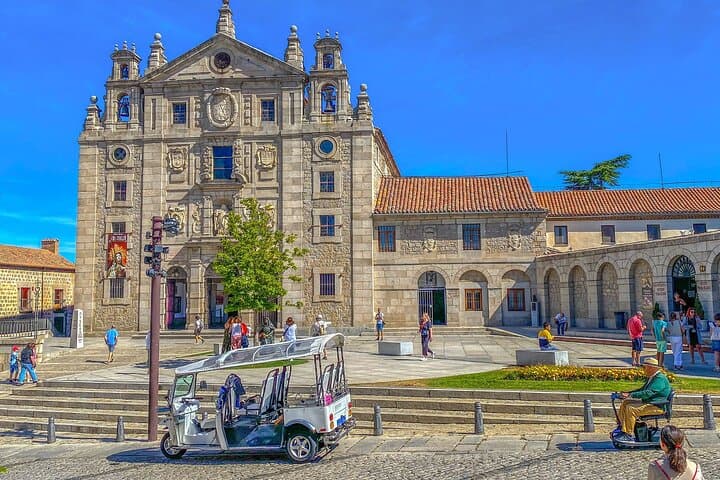
On this roughly 60‑minute loop you get multiple short stops: a brief visit inside the Basilica at Saint Teresa’s birthplace, photo stops at Puerta del Carmen and the North Lienzo, and a longer drop at the Mirador de los Cuatro Postes for the panoramic view of the wall embracing the town. The tour covers over a dozen monuments but does not include museum admissions beyond the Basilica area.
Practicalities: tours run with up to a dozen people, suitable for almost all fitness levels and families with children 3+. Expect frequent short descents (5–15 minutes) on uneven cobbles—wear sturdy shoes, carry water and sun protection, and book early for golden‑hour light. Confirm language options when reserving and note the operator’s 24‑hour cancellation policy.
easy.
1 hour.
Minimal fitness required; must be able to step on/off the tuk‑tuk and walk short distances on cobbles.
The experience lasts about 60 minutes with a maximum of 12 travelers in a shared tuk‑tuk.
Most monuments are viewed from outside; the tour includes a short visit to the Basilica area but museum admissions are not included.
Children aged 3 and older can ride; small strollers are permitted but you’ll need to fold them to board during stops—confirm specifics with the operator.
Full refunds are available if you cancel at least 24 hours before departure; confirm any weather‑related changes with the operator.
Ávila’s medieval walls date mainly to the 11th–14th centuries and reflect frontier defense on the Castilian plateau; the city’s religious institutions gained prominence with Saint Teresa in the 16th century.
The wall is a protected historic monument—stick to paved paths and avoid climbing on the masonry; local tourism initiatives encourage low‑impact visits and support preservation of religious sites.
tukygo operates guided outdoor trips and adventures with an emphasis on safety, stewardship, and memorable experiences.
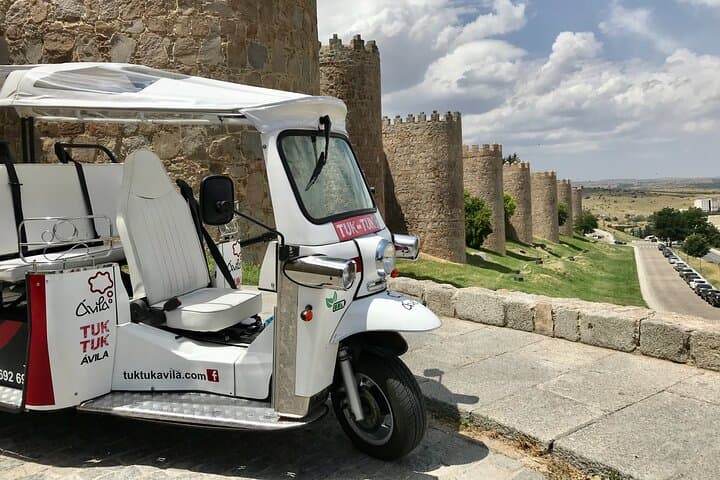
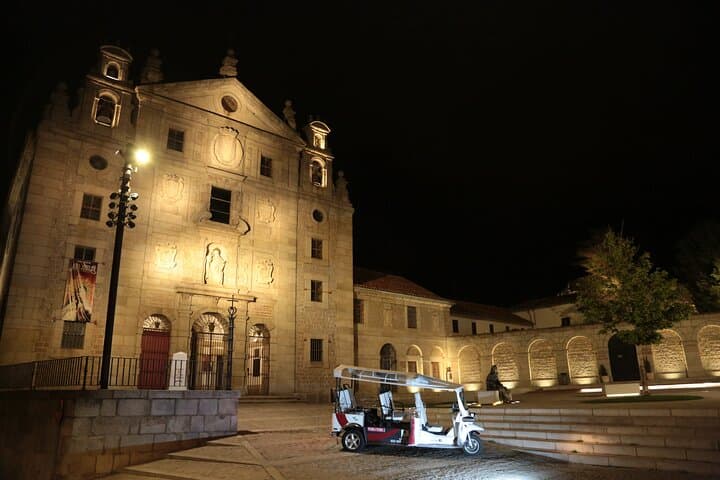
The tuk‑tuk hums along narrow cobblestone streets as Ávila’s stone curtain rises into view: a 12th‑century wall punctuated by towers, gates and the accidental light that makes granite glow. You slide past palaces, Romanesque facades and small plazas while the driver and audio guide layer context over the city’s geometry.
The tuk‑tuk hums along narrow cobblestone streets as Ávila’s stone curtain rises into view: a 12th‑century wall punctuated by towers, gates and the accidental light that makes granite glow. You slide past palaces, Romanesque facades and small plazas while the driver and audio guide layer context over the city’s geometry.
Ávila’s walls were built to defend the high Castilian plateau; the surrounding land is the granite plain of the Central System with the Sierra de Gredos visible on clearer days. The city is as much a religious landmark as a military one — Saint Teresa’s birthplace and the Basilica mark Ávila’s influence on Spanish mysticism. Local culture still orbits weekly markets and convent kitchens; the Plaza de Mercado Chico and La Encarnación speak to civic life that’s remained steady for centuries.
On this roughly 60‑minute loop you get multiple short stops: a brief visit inside the Basilica at Saint Teresa’s birthplace, photo stops at Puerta del Carmen and the North Lienzo, and a longer drop at the Mirador de los Cuatro Postes for the panoramic view of the wall embracing the town. The tour covers over a dozen monuments but does not include museum admissions beyond the Basilica area.
Practicalities: tours run with up to a dozen people, suitable for almost all fitness levels and families with children 3+. Expect frequent short descents (5–15 minutes) on uneven cobbles—wear sturdy shoes, carry water and sun protection, and book early for golden‑hour light. Confirm language options when reserving and note the operator’s 24‑hour cancellation policy.