THE ADVENTURE COLLECTIVE® · Independent discovery and booking for outdoor travel

Ascend Mount Etna by cable car and hike to a lateral crater at about 3,000 m, passing recent lava flows and an inner lava channel. This 4–5 hour guided trek mixes volcanic geology, broad panoramas and variable alpine weather—ideal for hikers with moderate fitness.
Ascend Mount Etna by cable car and hike to a lateral crater at about 3,000 m, passing recent lava flows and an inner lava channel. This 4–5 hour guided trek mixes volcanic geology, broad panoramas and variable alpine weather—ideal for hikers with moderate fitness.
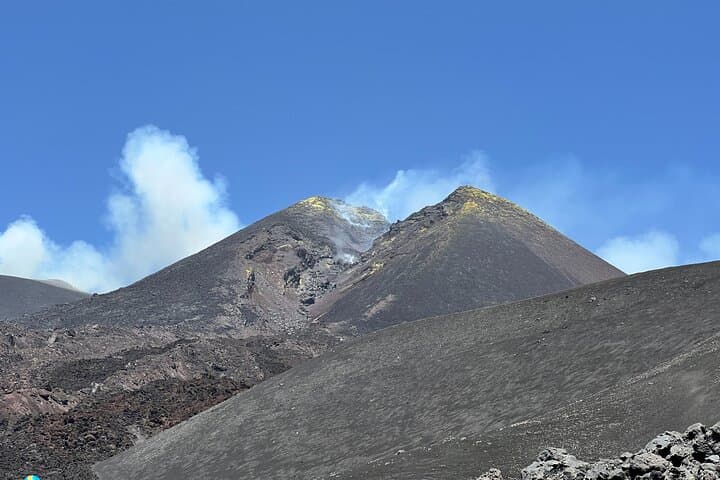
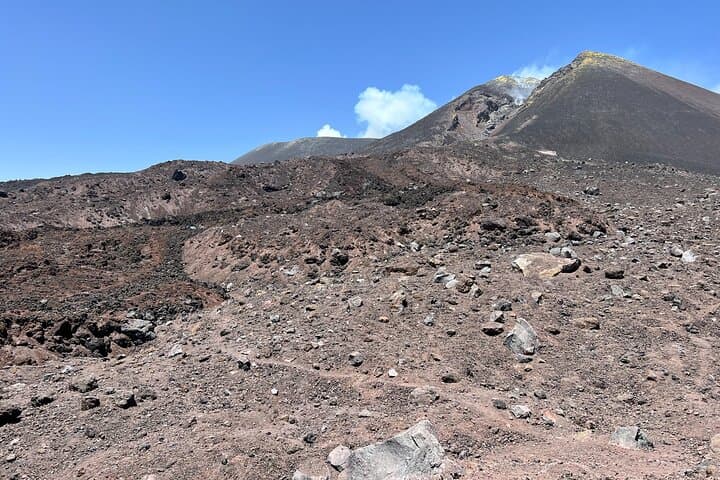
You step out of the cable car at 2,500 m and the wind immediately rearranges your layers. Black spines of recent lava cut the slope like fossilized rivers; the path climbs into pale sand and pumice toward Barbagallo, a lateral crater sitting near 3,000 m. The Ionian Sea gleams to the east while the vast scar of the Valle del Bove opens like a raw wound to the interior of Sicily.
Verified experiences and guided adventures in the surrounding area.
Operated by Etna Quad & Trekking · Nicolosi, Sicily
You step out of the cable car at 2,500 m and the wind immediately rearranges your layers. Black spines of recent lava cut the slope like fossilized rivers; the path climbs into pale sand and pumice toward Barbagallo, a lateral crater sitting near 3,000 m. The Ionian Sea gleams to the east while the vast scar of the Valle del Bove opens like a raw wound to the interior of Sicily.
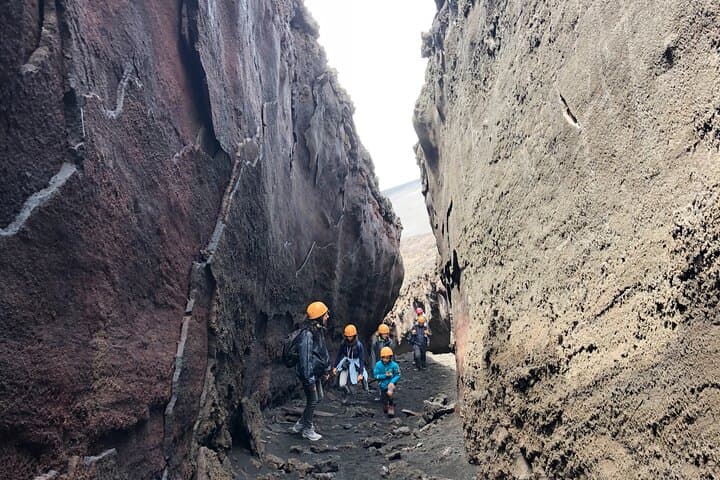
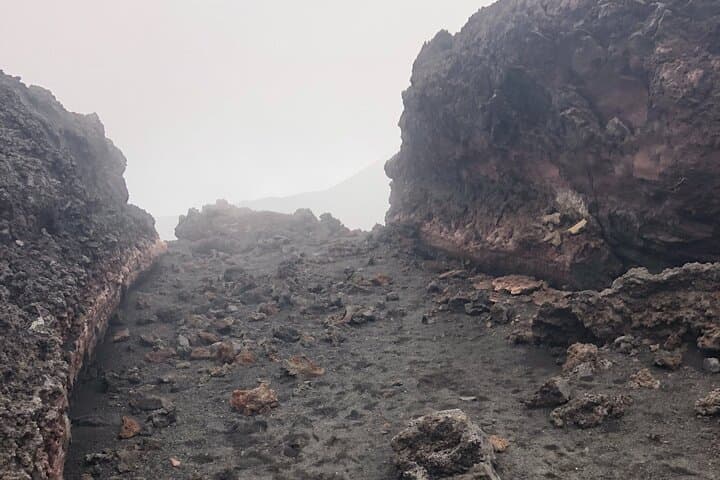
Etna is Europe’s most active stratovolcano, a basaltic giant shaped by frequent effusive eruptions and the odd explosive event. On this route you’ll pass 2002 and 2021 flow fields, walk inside a lava channel and stand at an effusive mouth that still smells faintly of sulfur. Local towns such as Nicolosi and Zafferana have long adapted to life on volcanic soils—viticulture and chestnut cultivation are part of the cultural backdrop.
Practically: the outing is 4–5 hours, starting at the cable car (round-trip included). Expect roughly 400–600 m of uphill walking on loose scree, volcanic sand and solidified lava; the last section can be steep and exposed to wind. Guides provide helmets and a windbreaker, but bring sturdy boots, layered clothing, sun protection and at least 1.5–2 L of water. Altitude and wind are the real challenges—move at a steady pace, pause for views, and follow your guide on route-finding around unstable older flows. On clear days the panorama runs from the Ionian coast to the Sicilian interior; on cloudy days the mountain commands all attention.
moderate.
4–5 hours.
Suitable for hikers with moderate fitness able to handle steady uphill walking and uneven volcanic terrain.
The route is rated moderate: expect 400–600 m of ascent on uneven volcanic terrain over 4–5 hours; no technical climbing is required but good fitness helps.
The elevation is moderate; most people tolerate it, but shortness of breath and fatigue can occur—pace yourself and hydrate; inform guides about any health issues.
Round-trip cable car to ~2,500 m, guide, windbreaker, trekking shoes (when noted by provider), and a protective helmet are included per the operator’s listing.
The operator may cancel for bad weather; their policy offers a full refund if canceled at least 24 hours ahead or if conditions require cancellation.
Mount Etna’s eruptions have shaped local settlements for millennia; historic eruptions have repeatedly reset agriculture and village life while creating richly fertile soils.
Stay on marked paths and avoid taking volcanic rock—fragile soils and pioneer plant communities recover slowly from disturbance, and collecting specimens is discouraged.
Etna Quad & Trekking operates guided outdoor trips and adventures with an emphasis on safety, stewardship, and memorable experiences.
You step out of the cable car at 2,500 m and the wind immediately rearranges your layers. Black spines of recent lava cut the slope like fossilized rivers; the path climbs into pale sand and pumice toward Barbagallo, a lateral crater sitting near 3,000 m. The Ionian Sea gleams to the east while the vast scar of the Valle del Bove opens like a raw wound to the interior of Sicily.
You step out of the cable car at 2,500 m and the wind immediately rearranges your layers. Black spines of recent lava cut the slope like fossilized rivers; the path climbs into pale sand and pumice toward Barbagallo, a lateral crater sitting near 3,000 m. The Ionian Sea gleams to the east while the vast scar of the Valle del Bove opens like a raw wound to the interior of Sicily.
Etna is Europe’s most active stratovolcano, a basaltic giant shaped by frequent effusive eruptions and the odd explosive event. On this route you’ll pass 2002 and 2021 flow fields, walk inside a lava channel and stand at an effusive mouth that still smells faintly of sulfur. Local towns such as Nicolosi and Zafferana have long adapted to life on volcanic soils—viticulture and chestnut cultivation are part of the cultural backdrop.
Practically: the outing is 4–5 hours, starting at the cable car (round-trip included). Expect roughly 400–600 m of uphill walking on loose scree, volcanic sand and solidified lava; the last section can be steep and exposed to wind. Guides provide helmets and a windbreaker, but bring sturdy boots, layered clothing, sun protection and at least 1.5–2 L of water. Altitude and wind are the real challenges—move at a steady pace, pause for views, and follow your guide on route-finding around unstable older flows. On clear days the panorama runs from the Ionian coast to the Sicilian interior; on cloudy days the mountain commands all attention.