THE ADVENTURE COLLECTIVE® · Independent discovery and booking for outdoor travel

Explore Rio’s Museum of Tomorrow and the Olympic Boulevard on a three-hour guided tour that blends interactive science exhibits, contemporary architecture, and waterfront culture. Perfect for curious travelers seeking an accessible, thought-provoking urban outing.
Explore Rio’s Museum of Tomorrow and the Olympic Boulevard on a three-hour guided tour that blends interactive science exhibits, contemporary architecture, and waterfront culture. Perfect for curious travelers seeking an accessible, thought-provoking urban outing.
You arrive at Praça Mauá with the salt air of Guanabara Bay tugging at your jacket and the museum’s white, angular silhouette cutting into the sky. The Museum of Tomorrow (Museu do Amanhã) sits on reclaimed port land beside the Olympic Boulevard; its cantilevered forms and shaded walkways feel like a machine tuned to a coastal breeze that dares you to look forward.
Verified experiences and guided adventures in the surrounding area.
Operated by RIO PASSEIOS EXPERIENCE · Rio de Janeiro, Rio de Janeiro
You arrive at Praça Mauá with the salt air of Guanabara Bay tugging at your jacket and the museum’s white, angular silhouette cutting into the sky. The Museum of Tomorrow (Museu do Amanhã) sits on reclaimed port land beside the Olympic Boulevard; its cantilevered forms and shaded walkways feel like a machine tuned to a coastal breeze that dares you to look forward.
Opened in 2015 and designed by Santiago Calatrava, the museum is part of Rio’s recent port revitalization and an architectural statement about futures and sustainability. Galleries pair interactive science exhibits with multimedia questions about climate, population and resources. The boardwalk of the Boulevard Olímpico runs 3.5 km along the bay and is punctuated by public art, fishing piers and sea birds that circle the harbor.
Culturally, the site bridges colonial-era port history — including nearby Cais do Valongo — with contemporary street art such as Eduardo Kobra’s mural nearby. Geologically, the bay’s shallow waters and mangrove-lined inlets shape local tides and birdlife; the waterfront’s concrete promenades contrast with the natural push of currents.
Practical notes: tours run about three hours, include admission and licensed transport, and are bilingual. The route is stroller- and wheelchair-friendly with mostly level walking. Bring a light layer for breezy waterfront conditions, a reusable bottle, and arrive early for photos without crowds. Expect rain-or-shine operation; pick-up times may vary with traffic, so confirm the evening before. The experience is urban and reflective—part museum, part seaside walk—best for curious travelers who want accessible science paired with waterfront culture.
easy.
3 hours.
Suitable for most fitness levels; requires around 1–2 km of easy walking on mostly level paved surfaces
Yes — the tour price includes Museum of Tomorrow admission and transportation in a licensed tourism car or van as described in the booking inclusions.
Guides speak English, Spanish and Portuguese; the tour is shared and bilingual to serve an international audience.
Yes — the museum and boardwalk route are stroller- and wheelchair-accessible with mostly level surfaces and ramps.
The tour operates rain or shine; cancellations for full refund must be made at least 24 hours before departure per policy.
The Museum of Tomorrow opened in 2015 as part of a port revitalization project; its modern design and science focus complement nearby historic port sites including Cais do Valongo.
The museum emphasizes sustainability in its exhibits; visitors are encouraged to limit single-use plastics and to respect the fragile bay shoreline and local bird habitats.
RIO PASSEIOS EXPERIENCE operates guided outdoor trips and adventures with an emphasis on safety, stewardship, and memorable experiences.
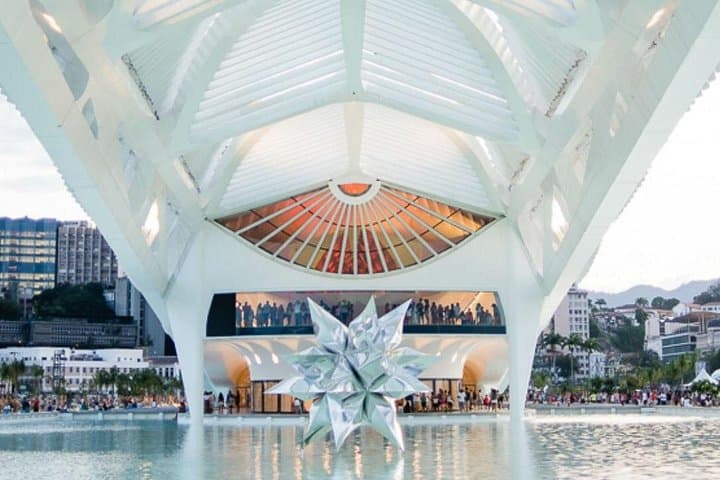
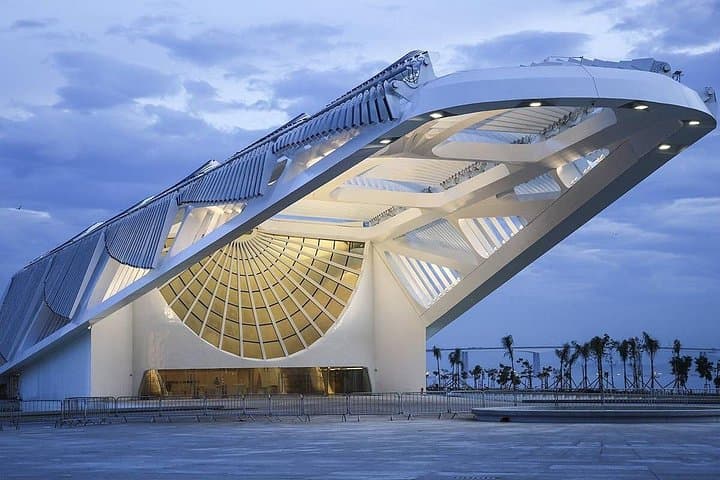
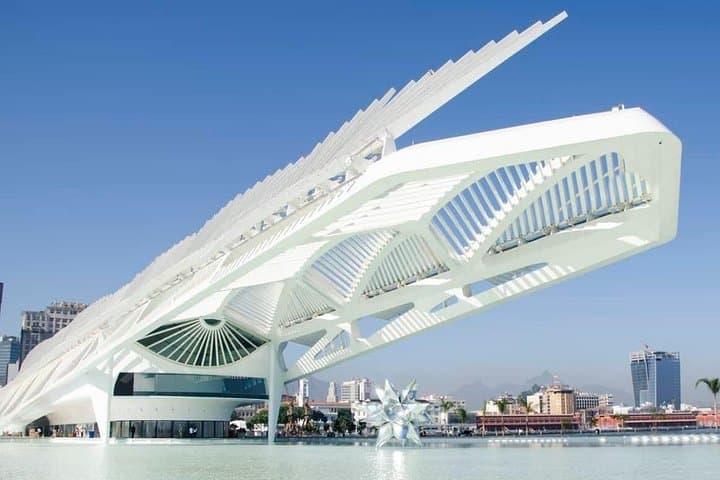
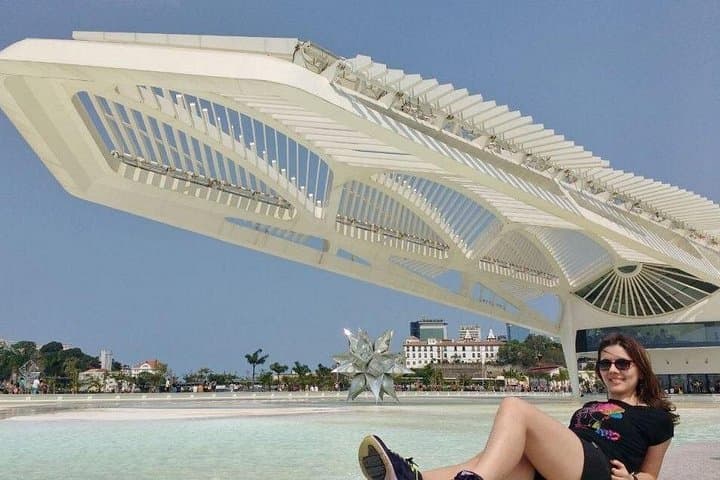
You arrive at Praça Mauá with the salt air of Guanabara Bay tugging at your jacket and the museum’s white, angular silhouette cutting into the sky. The Museum of Tomorrow (Museu do Amanhã) sits on reclaimed port land beside the Olympic Boulevard; its cantilevered forms and shaded walkways feel like a machine tuned to a coastal breeze that dares you to look forward.
You arrive at Praça Mauá with the salt air of Guanabara Bay tugging at your jacket and the museum’s white, angular silhouette cutting into the sky. The Museum of Tomorrow (Museu do Amanhã) sits on reclaimed port land beside the Olympic Boulevard; its cantilevered forms and shaded walkways feel like a machine tuned to a coastal breeze that dares you to look forward.
Opened in 2015 and designed by Santiago Calatrava, the museum is part of Rio’s recent port revitalization and an architectural statement about futures and sustainability. Galleries pair interactive science exhibits with multimedia questions about climate, population and resources. The boardwalk of the Boulevard Olímpico runs 3.5 km along the bay and is punctuated by public art, fishing piers and sea birds that circle the harbor.
Culturally, the site bridges colonial-era port history — including nearby Cais do Valongo — with contemporary street art such as Eduardo Kobra’s mural nearby. Geologically, the bay’s shallow waters and mangrove-lined inlets shape local tides and birdlife; the waterfront’s concrete promenades contrast with the natural push of currents.
Practical notes: tours run about three hours, include admission and licensed transport, and are bilingual. The route is stroller- and wheelchair-friendly with mostly level walking. Bring a light layer for breezy waterfront conditions, a reusable bottle, and arrive early for photos without crowds. Expect rain-or-shine operation; pick-up times may vary with traffic, so confirm the evening before. The experience is urban and reflective—part museum, part seaside walk—best for curious travelers who want accessible science paired with waterfront culture.