THE ADVENTURE COLLECTIVE® · Independent discovery and booking for outdoor travel

Stand at the lip of one of the world’s great waterfalls, feel the mist, and let an expert guide map the geology, wildlife, and human stories behind Victoria Falls. This two-hour walk combines dramatic viewpoints with local insight and accessible trails.
Stand at the lip of one of the world’s great waterfalls, feel the mist, and let an expert guide map the geology, wildlife, and human stories behind Victoria Falls. This two-hour walk combines dramatic viewpoints with local insight and accessible trails.
You arrive at the rim of the Zambezi and the falls announces itself—mist rising like a living curtain, water tearing off the basalt edge and filling the air with a constant, distant drum.
Verified experiences and guided adventures in the surrounding area.
Operated by The Shrub Lodge · Victoria Falls, Matabeleland North
You arrive at the rim of the Zambezi and the falls announces itself—mist rising like a living curtain, water tearing off the basalt edge and filling the air with a constant, distant drum.
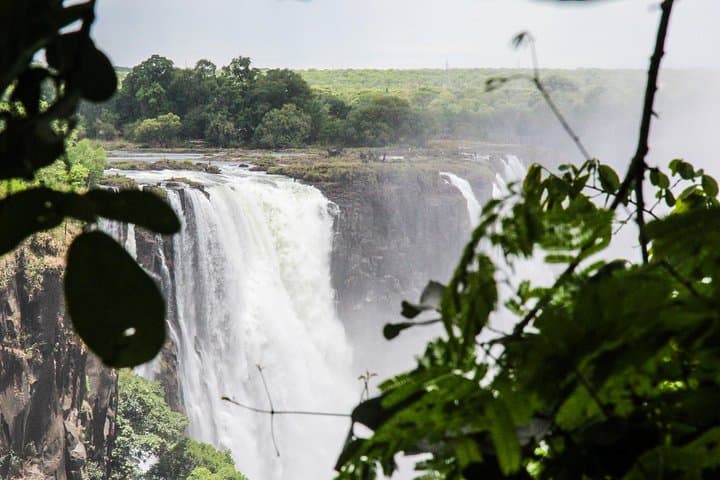
A two-hour guided tour walks that boundary. Start at the main viewing platform to take in Victoria Falls’ scale—roughly 108 meters (354 ft) of drop and nearly 1.7 kilometers of cataract across its widest reaches—and then follow paths into the rainforest where spray wets hair and camera lenses alike. The guide points out geological layers in the basalt, explains how the river exploited fractures to carve the gorge system, and names native trees and the birds that ride the spray.
Culturally, this place is shared ground: a World Heritage Site important to local Tonga and Lozi communities and a centerpiece of colonial exploration. Expect stories about early European explorers, hydroelectric plans, and current conservation efforts aimed at balancing tourism with river health.
Trails are short but wet and often slippery; boardwalks and viewing platforms make close-up views possible for most visitors, and the operator supplies ponchos. Photography windows open early or late; midday light creates heavy back-spray and crowds. Bring waterproof layers, sturdy shoes with grip, and a dry bag for electronics.
Practical notes: the tour is educational and accessible—wheelchair-friendly sections exist—but wear non-slip footwear, manage expectations for full-body spray, and plan transport because the site sits on an international border with Zambia across the gorge. The guided walk pairs spectacle with context: you leave with a clearer sense of the river’s power and the work required to protect it.
easy.
2 hours.
Suitable for most fitness levels; requires short walks on wet, uneven surfaces and occasional steps.
The tour runs about 2 hours and covers main viewpoints and rainforest paths close to the falls.
Yes—many viewing platforms and sections are wheelchair accessible, and the tour is described as suitable for all fitness levels; contact the operator about specific mobility needs.
Yes—expect significant spray near viewpoints; the operator provides raincoats but plan to protect electronics and wear quick-dry clothing.
Park entry fees to Victoria Falls are typically required and may be collected at the park entrance; confirm details with your booking and arrival point.
Victoria Falls, known locally as Mosi-oa-Tunya (“The Smoke That Thunders”), has been a cultural and spiritual site for local peoples and a focus of colonial exploration since the 19th century.
The falls’ ecology depends on Zambezi flow regimes; seasonal tourism and upstream water projects are monitored to protect habitats and downstream communities.
The Shrub Lodge operates guided outdoor trips and adventures with an emphasis on safety, stewardship, and memorable experiences.
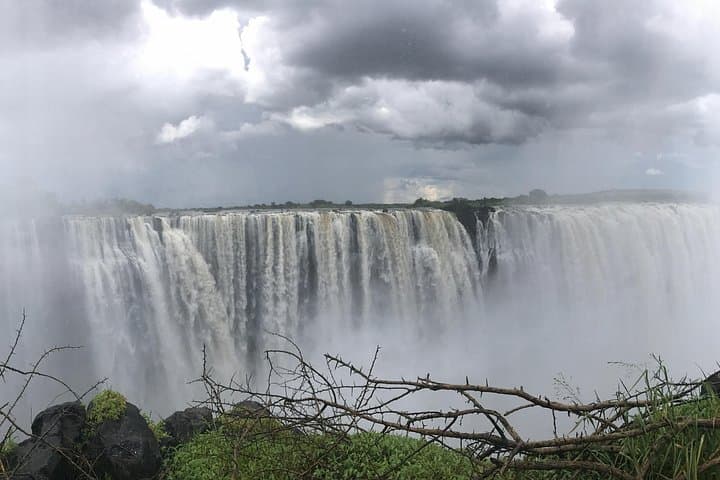
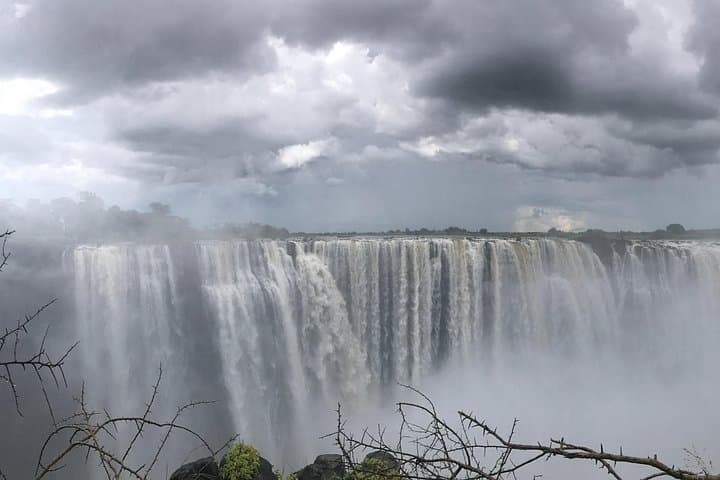
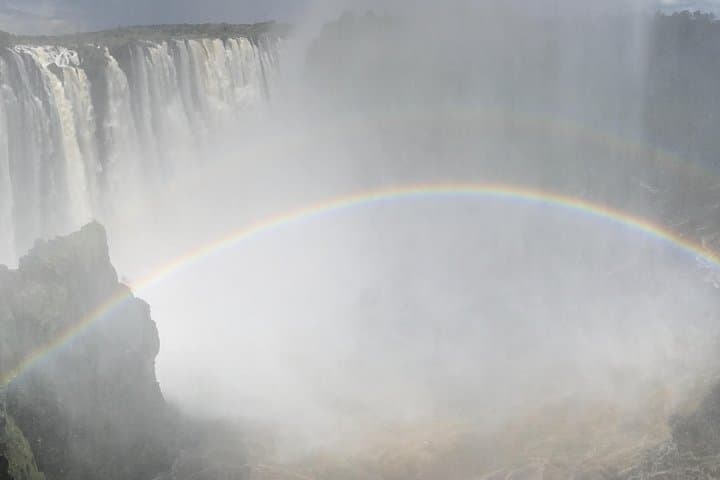
You arrive at the rim of the Zambezi and the falls announces itself—mist rising like a living curtain, water tearing off the basalt edge and filling the air with a constant, distant drum.
You arrive at the rim of the Zambezi and the falls announces itself—mist rising like a living curtain, water tearing off the basalt edge and filling the air with a constant, distant drum.
A two-hour guided tour walks that boundary. Start at the main viewing platform to take in Victoria Falls’ scale—roughly 108 meters (354 ft) of drop and nearly 1.7 kilometers of cataract across its widest reaches—and then follow paths into the rainforest where spray wets hair and camera lenses alike. The guide points out geological layers in the basalt, explains how the river exploited fractures to carve the gorge system, and names native trees and the birds that ride the spray.
Culturally, this place is shared ground: a World Heritage Site important to local Tonga and Lozi communities and a centerpiece of colonial exploration. Expect stories about early European explorers, hydroelectric plans, and current conservation efforts aimed at balancing tourism with river health.
Trails are short but wet and often slippery; boardwalks and viewing platforms make close-up views possible for most visitors, and the operator supplies ponchos. Photography windows open early or late; midday light creates heavy back-spray and crowds. Bring waterproof layers, sturdy shoes with grip, and a dry bag for electronics.
Practical notes: the tour is educational and accessible—wheelchair-friendly sections exist—but wear non-slip footwear, manage expectations for full-body spray, and plan transport because the site sits on an international border with Zambia across the gorge. The guided walk pairs spectacle with context: you leave with a clearer sense of the river’s power and the work required to protect it.