THE ADVENTURE COLLECTIVE® · Independent discovery and booking for outdoor travel

Catch Cape Town at its most elemental on a guided Lion's Head hike — sunrise or sunset transforms the skyline and ocean into a moving panorama. A local guide manages tricky scrambles while sharing geology, flora and city lore.
Catch Cape Town at its most elemental on a guided Lion's Head hike — sunrise or sunset transforms the skyline and ocean into a moving panorama. A local guide manages tricky scrambles while sharing geology, flora and city lore.
You reach the trailhead before the city wakes or just as traffic eases: wind from the Atlantic tugs at your jacket and fynbos scents rise off the slopes. The path climbs in tight switchbacks, then opens to rocky steps and fixed ladders where hands meet stone and the skyline unfolds — Table Mountain one side, the Atlantic the other.
Verified experiences and guided adventures in the surrounding area.
Operated by Kyle Noyes-Smith · Cape Town, Western Cape
You reach the trailhead before the city wakes or just as traffic eases: wind from the Atlantic tugs at your jacket and fynbos scents rise off the slopes. The path climbs in tight switchbacks, then opens to rocky steps and fixed ladders where hands meet stone and the skyline unfolds — Table Mountain one side, the Atlantic the other.
Lion's Head is a compact, dramatic cone rising to 669 m; the guided route typically covers 5–6 km round-trip with roughly 500–600 m of cumulative ascent depending on where you start. Geologically the peak is part of the Cape Fold Belt, carved from sandstone over millennia; the thin soils support the Cape Floristic Region's fynbos, a unique biodiversity hotspot with proteas, ericas and scrub that fuel the mountain’s seasonal color.
Culturally, Lion's Head has been a lookout and gathering place for centuries; local guides weave stories of colonial signaling, Khoi place-names and modern climbing lore into the ascent.
Practical guidance: expect rocky terrain, short sections of scrambling and fixed ladders — guides manage pace and safety, making the climb accessible to moderately fit hikers. For sunrise hikes bring a headlamp and warm layers for the exposed summit; for sunsets allow extra daylight for descent or book a guide with headlamps. Hydrate and carry 1–2 liters of water, wear sturdy shoes with good grip, and check wind and weather before you go — Cape Town’s microclimates can change fast. Reach the summit for a 360° panorama that rewards early starts and late finishes alike.
moderate.
2–3 hours.
Moderately fit: able to handle steady climbs, short scrambling sections, and 500–600 m of elevation gain.
There are short sections with ladders and handholds that require basic scrambling; guides assist and the route is manageable for those comfortable with heights.
With a guide it's generally safe — headlamp use, proper footwear and following guide instructions reduce risk; avoid the hike alone in low light if inexperienced.
You can meet at the trailhead; many operators offer optional pickup and drop-off services if booked in advance.
Sunrise is best for photography and cooler temps; sunset offers dramatic skies but ensure you have a headlamp for the descent or pick a guided option that provides one.
Lion's Head was used historically as a vantage and signaling point; its name and routes reflect colonial mapping and earlier Khoi presence in the region.
Stick to marked paths to protect fragile fynbos and prevent erosion; avoid littering and do not remove plant material — the Cape Floristic Region is highly sensitive.
Kyle Noyes-Smith operates guided outdoor trips and adventures with an emphasis on safety, stewardship, and memorable experiences.

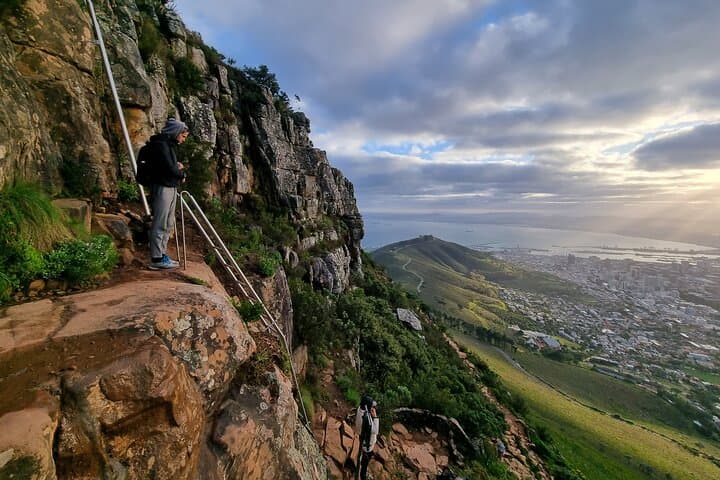


You reach the trailhead before the city wakes or just as traffic eases: wind from the Atlantic tugs at your jacket and fynbos scents rise off the slopes. The path climbs in tight switchbacks, then opens to rocky steps and fixed ladders where hands meet stone and the skyline unfolds — Table Mountain one side, the Atlantic the other.
You reach the trailhead before the city wakes or just as traffic eases: wind from the Atlantic tugs at your jacket and fynbos scents rise off the slopes. The path climbs in tight switchbacks, then opens to rocky steps and fixed ladders where hands meet stone and the skyline unfolds — Table Mountain one side, the Atlantic the other.
Lion's Head is a compact, dramatic cone rising to 669 m; the guided route typically covers 5–6 km round-trip with roughly 500–600 m of cumulative ascent depending on where you start. Geologically the peak is part of the Cape Fold Belt, carved from sandstone over millennia; the thin soils support the Cape Floristic Region's fynbos, a unique biodiversity hotspot with proteas, ericas and scrub that fuel the mountain’s seasonal color.
Culturally, Lion's Head has been a lookout and gathering place for centuries; local guides weave stories of colonial signaling, Khoi place-names and modern climbing lore into the ascent.
Practical guidance: expect rocky terrain, short sections of scrambling and fixed ladders — guides manage pace and safety, making the climb accessible to moderately fit hikers. For sunrise hikes bring a headlamp and warm layers for the exposed summit; for sunsets allow extra daylight for descent or book a guide with headlamps. Hydrate and carry 1–2 liters of water, wear sturdy shoes with good grip, and check wind and weather before you go — Cape Town’s microclimates can change fast. Reach the summit for a 360° panorama that rewards early starts and late finishes alike.