THE ADVENTURE COLLECTIVE® · Independent discovery and booking for outdoor travel

Stand at the lip of Europe’s most active volcano on a guided ascent to the summit craters of Mount Etna. This 5–7 hour trek covers volcanic scree and lava terraces with expert volcanological guidance.
Stand at the lip of Europe’s most active volcano on a guided ascent to the summit craters of Mount Etna. This 5–7 hour trek covers volcanic scree and lava terraces with expert volcanological guidance.
You step out of the thin mountain air and the volcanic plain opens: black pumice underfoot, wind pushing at your jacket, and a line of steam and sulphur curling from the summit ahead. The guide points the way along a stitched ribbon of hardened lava and loose scoria toward the crater rim, where the mountain still breathes.
Verified experiences and guided adventures in the surrounding area.
Operated by Guidetna.it - Volcanological Guides on the Etna · Nicolosi, Sicily
You step out of the thin mountain air and the volcanic plain opens: black pumice underfoot, wind pushing at your jacket, and a line of steam and sulphur curling from the summit ahead. The guide points the way along a stitched ribbon of hardened lava and loose scoria toward the crater rim, where the mountain still breathes.
Mount Etna’s summit is a living geological page—layers of basalt built by centuries of eruptions and recent activity that reshaped its rims. The route from Rifugio Sapienza climbs across silvery lava flows and past parched lava fields; older terraces bear the marks of agricultural life below, where centuries of people have farmed vineyards and citrus on Etna’s fertile soils. Local volcanology informs the route: guides watch wind, gas, and recent lava to choose a safe line to the crater edge.
Expect uneven volcanic scree, steep pitches, and sudden gusts at altitude. The round trip takes roughly 5–7 hours with 1,200–1,400 m of elevation gain and about 6–10 km total distance depending on starting point—Rifugio Sapienza or Piano Provenzana. Bring layered insulation, sturdy boots with good traction, sun protection and at least 2–3 liters of water. Timing is practical—start early to avoid afternoon weather and to maximize visibility.
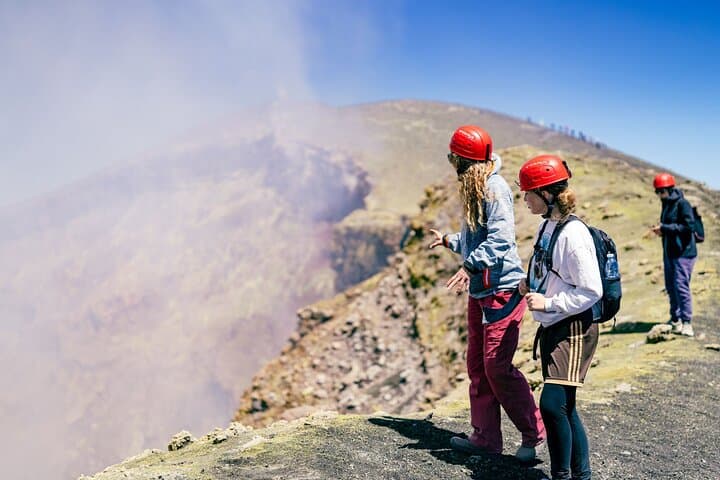
This is a high-altitude, guided experience: you’ll stand at the lip of an active volcano, feel the heat in the air, and hear the mountain’s low, constant rumble. Follow your guide, respect closures, and let Etna’s raw energy set the pace for a demanding but unforgettable day.
challenging.
5–7 hours.
Good cardiovascular fitness and comfort on steep, loose volcanic terrain; able to hike continuously for several hours.
The guided excursion typically lasts 5–7 hours round trip, depending on the meeting point and conditions.
No technical mountaineering skills are required, but you should be comfortable on steep, loose volcanic scree and at high altitude.
This excursion is not recommended for pregnant travelers or those with serious cardiovascular issues due to altitude and exertion.
Meet at Rifugio Sapienza (south) or Piano Provenzana (north) with a typical meeting time around 8:30 am and departure shortly after.
Etna has been erupting for hundreds of thousands of years and has shaped local culture; the mountain’s fertile slopes have supported vineyards and villages for centuries.
Mount Etna is a protected UNESCO site — stick to marked routes, avoid collecting rock or ash, and respect seasonal closures to reduce erosion and disturbance.
Guidetna.it - Volcanological Guides on the Etna operates guided outdoor trips and adventures with an emphasis on safety, stewardship, and memorable experiences.
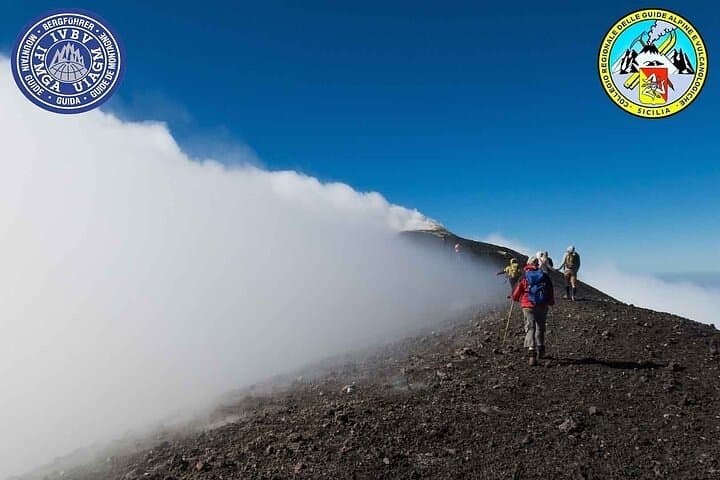
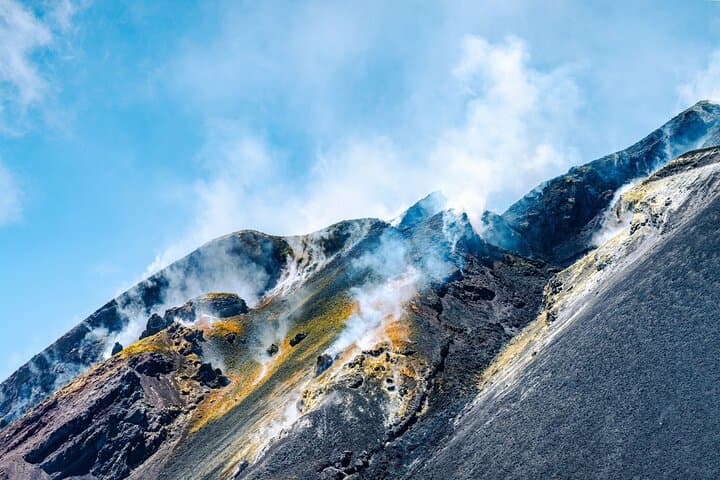
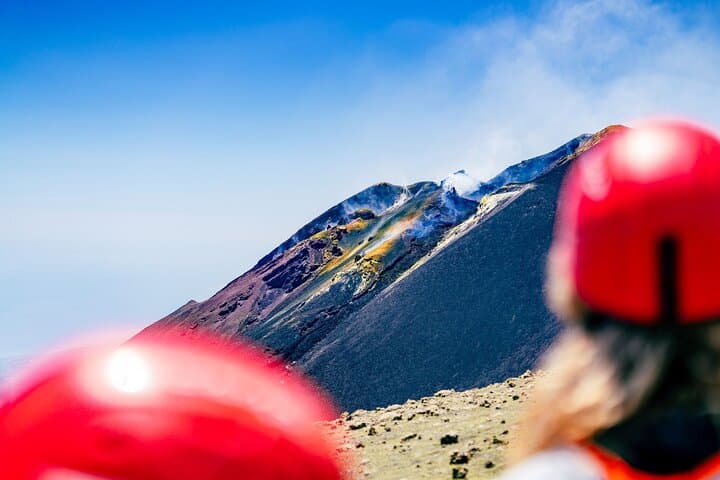
You step out of the thin mountain air and the volcanic plain opens: black pumice underfoot, wind pushing at your jacket, and a line of steam and sulphur curling from the summit ahead. The guide points the way along a stitched ribbon of hardened lava and loose scoria toward the crater rim, where the mountain still breathes.
You step out of the thin mountain air and the volcanic plain opens: black pumice underfoot, wind pushing at your jacket, and a line of steam and sulphur curling from the summit ahead. The guide points the way along a stitched ribbon of hardened lava and loose scoria toward the crater rim, where the mountain still breathes.
Mount Etna’s summit is a living geological page—layers of basalt built by centuries of eruptions and recent activity that reshaped its rims. The route from Rifugio Sapienza climbs across silvery lava flows and past parched lava fields; older terraces bear the marks of agricultural life below, where centuries of people have farmed vineyards and citrus on Etna’s fertile soils. Local volcanology informs the route: guides watch wind, gas, and recent lava to choose a safe line to the crater edge.
Expect uneven volcanic scree, steep pitches, and sudden gusts at altitude. The round trip takes roughly 5–7 hours with 1,200–1,400 m of elevation gain and about 6–10 km total distance depending on starting point—Rifugio Sapienza or Piano Provenzana. Bring layered insulation, sturdy boots with good traction, sun protection and at least 2–3 liters of water. Timing is practical—start early to avoid afternoon weather and to maximize visibility.
This is a high-altitude, guided experience: you’ll stand at the lip of an active volcano, feel the heat in the air, and hear the mountain’s low, constant rumble. Follow your guide, respect closures, and let Etna’s raw energy set the pace for a demanding but unforgettable day.