THE ADVENTURE COLLECTIVE® · Independent discovery and booking for outdoor travel

Traverse powder-silenced hemlock forests and learn to read fox tracks under the gaze of Mt. Bachelor on this guided snowshoe tour. Ideal for families and first-timers, the outing blends natural-history interpretation with practical instruction and hot cocoa breaks.
Traverse powder-silenced hemlock forests and learn to read fox tracks under the gaze of Mt. Bachelor on this guided snowshoe tour. Ideal for families and first-timers, the outing blends natural-history interpretation with practical instruction and hot cocoa breaks.
You step out of the Fred Meyer parking lot and the air snaps—cold, clear, the kind that sharpens your breath and focuses everything into the present. In an hour the cityscape gives way to a white quiet: old-growth hemlock and fir whose lower branches sag under the weight of fresh powder. Your guide checks snowshoes, hands you a steaming paper cup of cocoa, and points to a narrow line of animal tracks threading between trees. The quiet isn’t empty; it’s full of stories.
Verified experiences and guided adventures in the surrounding area.
Operated by Wanderlust Tours · Bend, Oregon
You step out of the Fred Meyer parking lot and the air snaps—cold, clear, the kind that sharpens your breath and focuses everything into the present. In an hour the cityscape gives way to a white quiet: old-growth hemlock and fir whose lower branches sag under the weight of fresh powder. Your guide checks snowshoes, hands you a steaming paper cup of cocoa, and points to a narrow line of animal tracks threading between trees. The quiet isn’t empty; it’s full of stories.
This guided snowshoe tour runs on the flanks of Mt. Bachelor and through sections of Deschutes National Forest where winter is the dominant season. Geologically, the Cascade crest here is a mix of volcanic cone and glacially carved valleys—lava flows capped by winter that traps and releases water over seasons. The deep snowpack that blankets these slopes is a lifeline for Central Oregon: it feeds rivers, supports elk and pine marten, and buffers the regional climate.
Culturally the area sits on lands historically used by Northern Paiute and Sahaptin-speaking peoples. Guides on the tour typically weave natural history with human history—how indigenous families read tracks and seasons, how early settlers and foresters learned to measure snow’s impact on irrigation and timber.
The experience itself is straightforward and family-friendly. Expect four hours from meeting to return. The group moves at a relaxed pace with short climbs and descents; guides teach basic kick-step and side-step techniques, how to break trail, and how to read sign left by foxes or birds. You’ll pause on a ridge or at a small clearing to drink cocoa, watch clouds spill across peaks, and learn why a healthy snowpack matters for fish runs and wildfire mitigation later in the year.
Practical notes: Meet at the tour office in the Fred Meyer shopping center in Bend 10–15 minutes early to sign waivers and get fitted. Rental snow pants and boots are available if you travel light, but bring layered clothing, water, and sunscreen—snow reflects sun aggressively even on cold days. The route gains and loses elevation around 6,000 ft, so allow extra time if you’re adjusting to altitude.
For families, the tour is an ideal intro to off-trail winter travel: guides keep groups small, teach safety basics, and emphasize low-impact travel. If you want sharper fitness gains, ask about more strenuous routes or private outings that head higher into alpine meadows.
In short, this Bend snowshoe tour blends simple techniques, regional ecology, and quiet winter moments—an accessible way to feel the Cascades’ winter pulse and leave with both photos and a clearer sense of why snow matters here.
easy.
4 hours.
Light aerobic fitness; able to walk on uneven snowy terrain for several miles with breaks
Recommended for children 8 and older; guides keep pace moderate and include frequent rests—assess based on your child’s stamina and cold tolerance.
Yes, snowshoes are included and guides will fit and instruct on their use before departure.
Tours meet at the operator office in the Fred Meyer shopping center in Bend; arrive 10–15 minutes early to sign waivers and get fitted.
Yes—boots and powder/ski pants are available for rent at the office prior to departure.
Absolutely—this is an introductory, guided snowshoe with instruction on technique, safety, and low-impact winter travel.
Tours may be canceled for severe weather or unsafe trail conditions; the operator will contact you and follow a strict cancellation policy.
The Deschutes region is part of traditional lands of Northern Paiute and Sahaptin-speaking peoples; guides often highlight indigenous knowledge of snow and wildlife.
Tours emphasize Leave No Trace winter travel and the importance of snowpack for downstream water resources and wildfire resilience.
Wanderlust Tours operates guided outdoor trips and adventures with an emphasis on safety, stewardship, and memorable experiences.
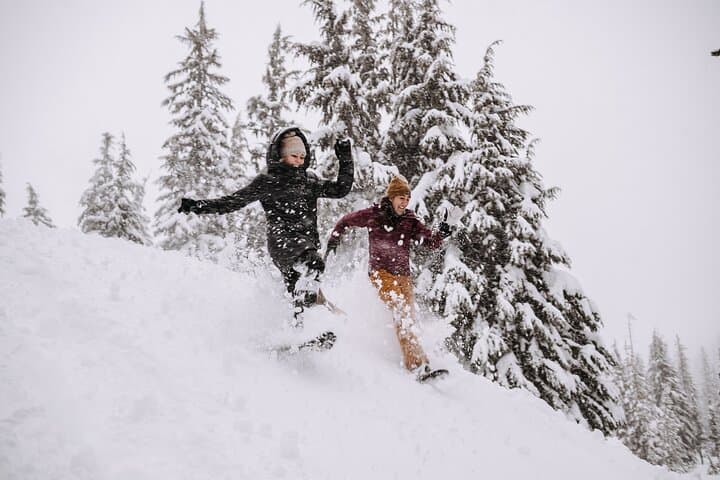
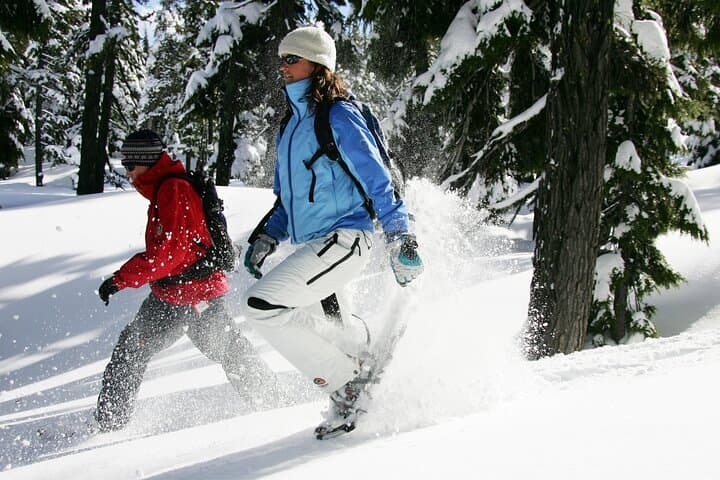
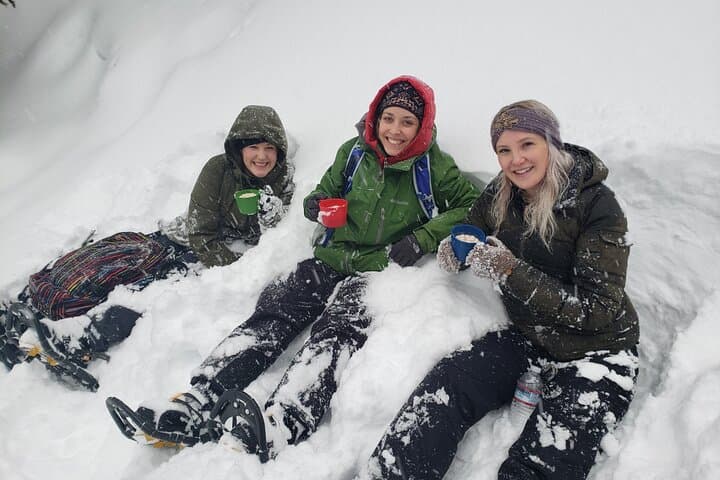
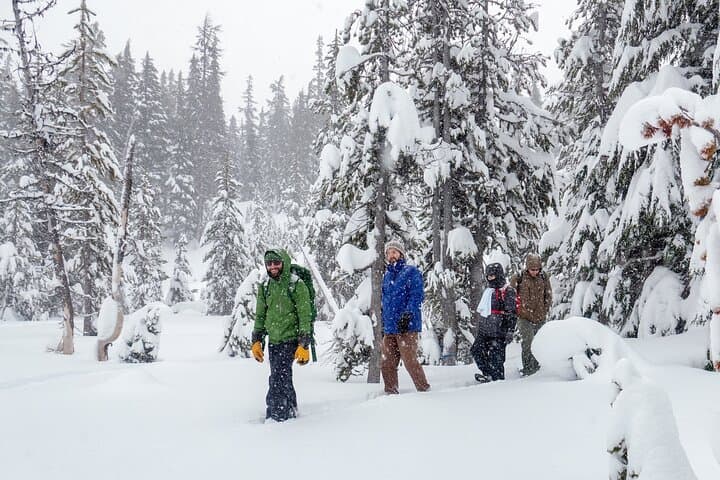
You step out of the Fred Meyer parking lot and the air snaps—cold, clear, the kind that sharpens your breath and focuses everything into the present. In an hour the cityscape gives way to a white quiet: old-growth hemlock and fir whose lower branches sag under the weight of fresh powder. Your guide checks snowshoes, hands you a steaming paper cup of cocoa, and points to a narrow line of animal tracks threading between trees. The quiet isn’t empty; it’s full of stories.
You step out of the Fred Meyer parking lot and the air snaps—cold, clear, the kind that sharpens your breath and focuses everything into the present. In an hour the cityscape gives way to a white quiet: old-growth hemlock and fir whose lower branches sag under the weight of fresh powder. Your guide checks snowshoes, hands you a steaming paper cup of cocoa, and points to a narrow line of animal tracks threading between trees. The quiet isn’t empty; it’s full of stories.
This guided snowshoe tour runs on the flanks of Mt. Bachelor and through sections of Deschutes National Forest where winter is the dominant season. Geologically, the Cascade crest here is a mix of volcanic cone and glacially carved valleys—lava flows capped by winter that traps and releases water over seasons. The deep snowpack that blankets these slopes is a lifeline for Central Oregon: it feeds rivers, supports elk and pine marten, and buffers the regional climate.
Culturally the area sits on lands historically used by Northern Paiute and Sahaptin-speaking peoples. Guides on the tour typically weave natural history with human history—how indigenous families read tracks and seasons, how early settlers and foresters learned to measure snow’s impact on irrigation and timber.
The experience itself is straightforward and family-friendly. Expect four hours from meeting to return. The group moves at a relaxed pace with short climbs and descents; guides teach basic kick-step and side-step techniques, how to break trail, and how to read sign left by foxes or birds. You’ll pause on a ridge or at a small clearing to drink cocoa, watch clouds spill across peaks, and learn why a healthy snowpack matters for fish runs and wildfire mitigation later in the year.
Practical notes: Meet at the tour office in the Fred Meyer shopping center in Bend 10–15 minutes early to sign waivers and get fitted. Rental snow pants and boots are available if you travel light, but bring layered clothing, water, and sunscreen—snow reflects sun aggressively even on cold days. The route gains and loses elevation around 6,000 ft, so allow extra time if you’re adjusting to altitude.
For families, the tour is an ideal intro to off-trail winter travel: guides keep groups small, teach safety basics, and emphasize low-impact travel. If you want sharper fitness gains, ask about more strenuous routes or private outings that head higher into alpine meadows.
In short, this Bend snowshoe tour blends simple techniques, regional ecology, and quiet winter moments—an accessible way to feel the Cascades’ winter pulse and leave with both photos and a clearer sense of why snow matters here.