THE ADVENTURE COLLECTIVE® · Independent discovery and booking for outdoor travel

Snowdon rewards steady effort with wide-open views and a sense of true mountain travel. Join a local guide to slip past the crowds on quieter trails, learn the mountain’s stories, and reach Wales’ highest point with confidence.
Snowdon rewards steady effort with wide-open views and a sense of true mountain travel. Join a local guide to slip past the crowds on quieter trails, learn the mountain’s stories, and reach Wales’ highest point with confidence.
Dawn creeps over Eryri and the mountain shakes off its cloud blanket. Boots bite into the first rise as skylarks chatter from the heather, and a cold breeze urges you uphill. Llyn Llydaw lies still, pretending to be glass, while the zigzags ahead promise a steady climb to 1,085 meters. With a local guide setting a calm, confident pace, the day stretches into a satisfying arc: steady ascent, big views, and the simple pleasure of moving through Welsh high country.
Verified experiences and guided adventures in the surrounding area.
Operated by MountainXperience · Llanberis, Wales
Dawn creeps over Eryri and the mountain shakes off its cloud blanket. Boots bite into the first rise as skylarks chatter from the heather, and a cold breeze urges you uphill. Llyn Llydaw lies still, pretending to be glass, while the zigzags ahead promise a steady climb to 1,085 meters. With a local guide setting a calm, confident pace, the day stretches into a satisfying arc: steady ascent, big views, and the simple pleasure of moving through Welsh high country.
Snowdon—Yr Wyddfa in Welsh—is the highest point in Wales and England, and its story is layered into the landscape. Glaciers carved the cwms you’ll peer into from the ridgelines; slate quarrying powered Llanberis and left a maze of terraces and tramways in the valleys. Since 1896, the Snowdon Mountain Railway has chugged to the summit when weather allows, a reminder that this peak has long drawn visitors. The guides here favor quieter lines over the main thoroughfares, using local knowledge to dodge bottlenecks and find the kind of rhythm most hikers crave.
Expect 11–15 km round-trip (7–9 miles) with 900–1,000 meters of ascent depending on route. The Llanberis Path offers the longest but most gradual climb. The Pyg and Miners’ Tracks stack steeper sections with high drama around the lakes. Rhyd Ddu and the Watkin Path feel wilder and more remote. Underfoot you’ll find well-built stone steps, gravel, and occasional loose rock—nothing technical, but the mountain demands respect, especially when cloud or wind rolls in.
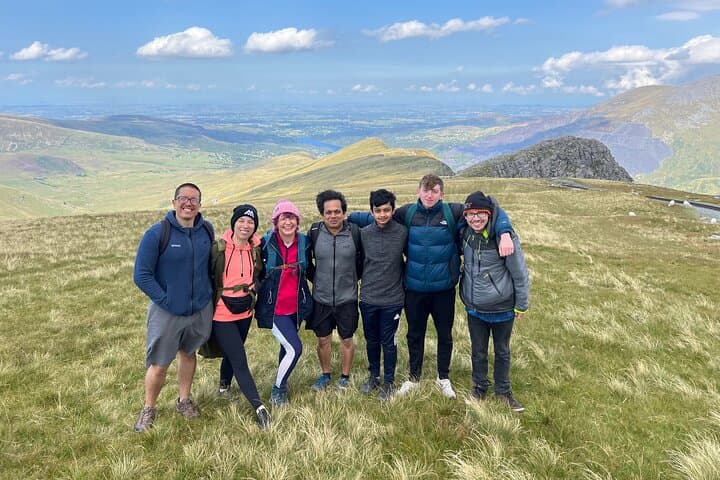
Guided days typically run 5–7 hours with small groups (often 8 or fewer), and run from Easter to October half term. Good boots, a waterproof shell, warm layers, and enough food and water turn a hard day into a memorable one. The summit building, Hafod Eryri, opens seasonally; don’t rely on it for supplies. Weather rules here: your guide will pivot plans if the mountain says no.
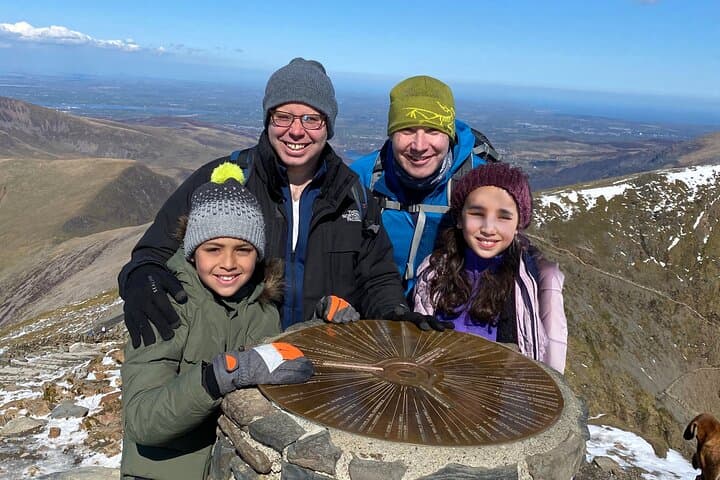
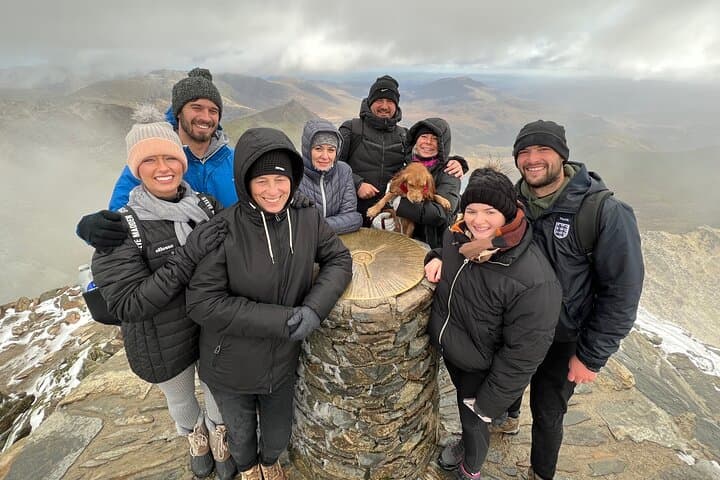
The payoff is clean and clear. On a good day, the panorama stretches to Anglesey and, across the Irish Sea, faint contours of distant lands. On a moody day, ridges appear and vanish as the wind pushes you onward. Either way, Yr Wyddfa meets you where you are and asks for your steady effort. Give it that, and the summit cairn becomes more than a viewpoint—it’s the capstone to a well-earned ascent in Wales’ legendary high ground.
challenging.
5–7 hours.
Comfortable hiking 7–9 miles/11–15 km with 900–1,000 m of ascent on uneven terrain; steady pace with short breaks.
Most guided routes cover 11–15 km (7–9 miles) round-trip with 900–1,000 m (2,950–3,280 ft) of ascent, taking 5–7 hours depending on conditions and group pace.
Your guide selects the best option on the day—often quieter lines than the main path—to match weather, group ability, and parking logistics.
No technical skills are required, but you should be able to hike continuously for several hours on uneven terrain. Your guide will manage pacing and navigation.
Safety comes first—routes may change, start times adjusted, or the hike postponed or canceled if conditions are unsafe. You’ll be updated ahead of time.
Facilities exist at major trailheads. The summit building opens seasonally with limited services; always bring your own food and water.
Yes, ages 8+ with a parent or guardian, provided they have suitable clothing, stamina, and enthusiasm for a full mountain day.
Yr Wyddfa’s slopes fed the slate boom that built Llanberis, while the Snowdon Mountain Railway has carried visitors since 1896. The Welsh name and local legends—like the giant Rhitta Gawr—speak to the mountain’s deep cultural roots.
Eryri National Park battles path erosion and litter. Stick to established trails, pack out all waste, and avoid fragile vegetation to keep the mountain wild.
MountainXperience operates guided outdoor trips and adventures with an emphasis on safety, stewardship, and memorable experiences.
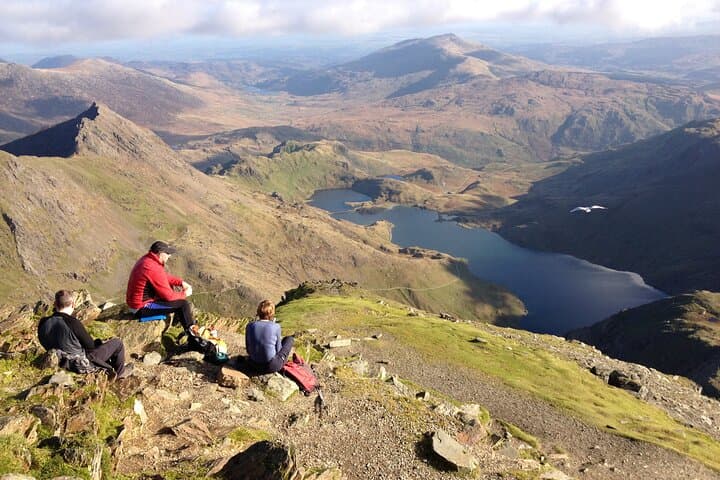
Dawn creeps over Eryri and the mountain shakes off its cloud blanket. Boots bite into the first rise as skylarks chatter from the heather, and a cold breeze urges you uphill. Llyn Llydaw lies still, pretending to be glass, while the zigzags ahead promise a steady climb to 1,085 meters. With a local guide setting a calm, confident pace, the day stretches into a satisfying arc: steady ascent, big views, and the simple pleasure of moving through Welsh high country.
Dawn creeps over Eryri and the mountain shakes off its cloud blanket. Boots bite into the first rise as skylarks chatter from the heather, and a cold breeze urges you uphill. Llyn Llydaw lies still, pretending to be glass, while the zigzags ahead promise a steady climb to 1,085 meters. With a local guide setting a calm, confident pace, the day stretches into a satisfying arc: steady ascent, big views, and the simple pleasure of moving through Welsh high country.
Snowdon—Yr Wyddfa in Welsh—is the highest point in Wales and England, and its story is layered into the landscape. Glaciers carved the cwms you’ll peer into from the ridgelines; slate quarrying powered Llanberis and left a maze of terraces and tramways in the valleys. Since 1896, the Snowdon Mountain Railway has chugged to the summit when weather allows, a reminder that this peak has long drawn visitors. The guides here favor quieter lines over the main thoroughfares, using local knowledge to dodge bottlenecks and find the kind of rhythm most hikers crave.
Expect 11–15 km round-trip (7–9 miles) with 900–1,000 meters of ascent depending on route. The Llanberis Path offers the longest but most gradual climb. The Pyg and Miners’ Tracks stack steeper sections with high drama around the lakes. Rhyd Ddu and the Watkin Path feel wilder and more remote. Underfoot you’ll find well-built stone steps, gravel, and occasional loose rock—nothing technical, but the mountain demands respect, especially when cloud or wind rolls in.
Guided days typically run 5–7 hours with small groups (often 8 or fewer), and run from Easter to October half term. Good boots, a waterproof shell, warm layers, and enough food and water turn a hard day into a memorable one. The summit building, Hafod Eryri, opens seasonally; don’t rely on it for supplies. Weather rules here: your guide will pivot plans if the mountain says no.
The payoff is clean and clear. On a good day, the panorama stretches to Anglesey and, across the Irish Sea, faint contours of distant lands. On a moody day, ridges appear and vanish as the wind pushes you onward. Either way, Yr Wyddfa meets you where you are and asks for your steady effort. Give it that, and the summit cairn becomes more than a viewpoint—it’s the capstone to a well-earned ascent in Wales’ legendary high ground.