THE ADVENTURE COLLECTIVE® · Independent discovery and booking for outdoor travel

Wade into the clear Atlantic off southern Lanzarote with a local guide and 90 minutes of fish-spotting among lava-formed reefs. Ideal for first-time snorkelers, this tour blends hands-on instruction with close-up encounters with parrotfish, sponges, and the island's volcanic coastline.
Wade into the clear Atlantic off southern Lanzarote with a local guide and 90 minutes of fish-spotting among lava-formed reefs. Ideal for first-time snorkelers, this tour blends hands-on instruction with close-up encounters with parrotfish, sponges, and the island's volcanic coastline.
The water tastes faintly mineral as you slip the mask over your face and look down—an expanse of cobalt broken by black lava fingers and sunlit patches of sand. Small fish weave through rocky outcrops like commuters between towers; a parrotfish grinds at a sponge and a puffed bream inspects you as though you are the oddity. The guide counts heads, points to a tangle of bright orange sponge, and the Atlantic seems to move with intention, inviting and testing in equal measure.
Verified experiences and guided adventures in the surrounding area.
Operated by Dive College Lanzarote · Playa Blanca, Las Palmas
The water tastes faintly mineral as you slip the mask over your face and look down—an expanse of cobalt broken by black lava fingers and sunlit patches of sand. Small fish weave through rocky outcrops like commuters between towers; a parrotfish grinds at a sponge and a puffed bream inspects you as though you are the oddity. The guide counts heads, points to a tangle of bright orange sponge, and the Atlantic seems to move with intention, inviting and testing in equal measure.
This is southern Lanzarote, a coastline shaped by fire. The island’s geology is recent on a human scale—lavas from the 18th-century eruptions smoothed into cliffs and coves where clear water fills shallow basins. Local fishermen have read these currents for generations; today small guided groups follow those same channels to the best reefs, where volcanic rock gives structure to a surprising diversity of marine life. Cultural echoes are at the edge of the beaches: whitewashed villas and wind-sculpted stone walls remind you that this archipelago is both a wilderness and a living place.
The operator’s 90-minute guided snorkel is designed for beginners and curious travelers. A short briefing covers species identification, the ethical rules of interacting with wildlife, and how to use gear properly. Then you enter the water—often in coves near Playa Blanca or the Papagayo beaches—where depths are typically 2–6 meters and visibility commonly ranges from 10 to 20 meters. Guides bring a pocket fish ID book and a small bag for collected trash; it’s as much about seeing as it is about leaving no trace.
Practicalities matter: water temperatures hover from about 18°C in winter to 23°C in summer, so a thin wetsuit is often comfortable outside high summer. Expect rocky entry and exit points; fins and a snug mask make all the difference. The activity is suitable for anyone who can swim and is comfortable in open water, and operators usually offer free pickup in Playa Blanca with instant confirmation and a 24-hour cancellation window.
For photographers, mornings are typically calmer; late afternoon sends warm light across the lava and highlights the coastline. Keep close to guides, respect the rules about touching, and use reef-safe sunscreen. This snorkel is an accessible way to meet the Atlantic off Lanzarote—a short, focused encounter that leaves you with clearer eyes for both the sea and the volcanic landscape that frames it.
easy.
1.5 hours (90 minutes).
Basic swimming ability and comfort in open water; suitable for most fitness levels.
No—this tour is designed for beginners; you should be comfortable in the water and able to float and swim short distances.
Expect about 18–20°C in winter and 21–23°C in summer; a thin wetsuit is commonly provided and recommended outside high summer.
Typical snorkeling depth is 2–6 meters; guides keep groups in shallow, protected areas suitable for beginners.
Yes—wetsuit, mask, snorkel, and fins are included, along with a waterproof fish ID booklet and a small trash bag.
This activity is not recommended for travelers with poor cardiovascular health—consult your doctor and disclose health issues when booking.
The operator cancels for bad weather or unsafe conditions with full refunds if canceled at least 24 hours before departure; guides may adjust locations for safety.
Lanzarote’s coastline was reshaped by prolonged volcanic eruptions in the 18th century; the resulting black lava forms the reefs and coves you’ll explore.
Operators emphasize leaving no trace—briefings include rules for interaction and offer small bags for picking up debris to reduce marine pollution.
Dive College Lanzarote operates guided outdoor trips and adventures with an emphasis on safety, stewardship, and memorable experiences.
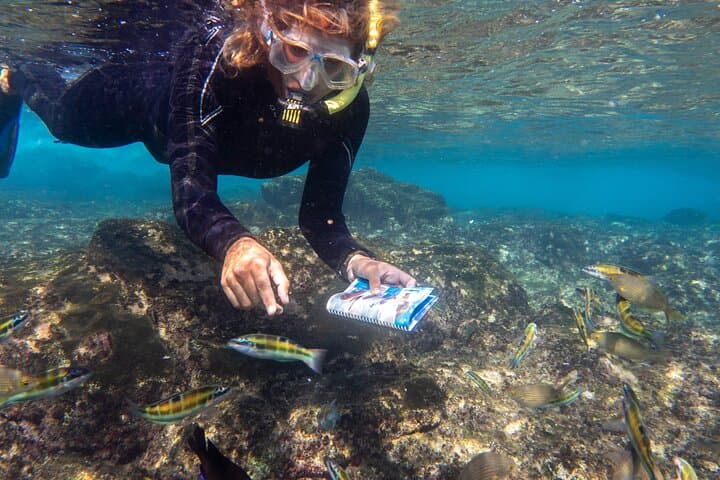
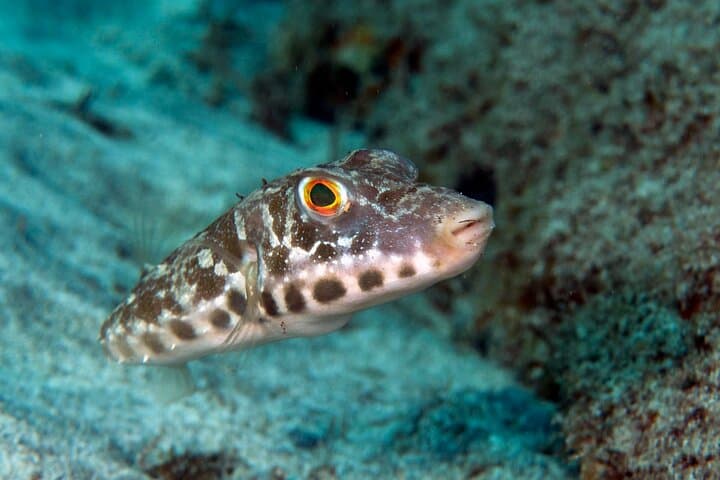
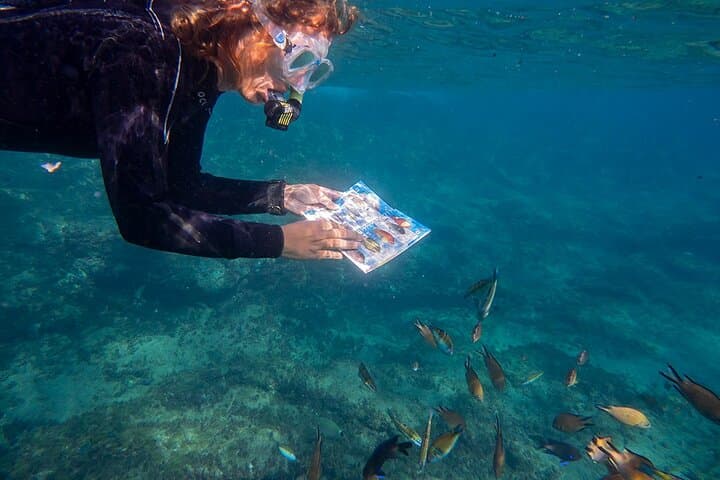
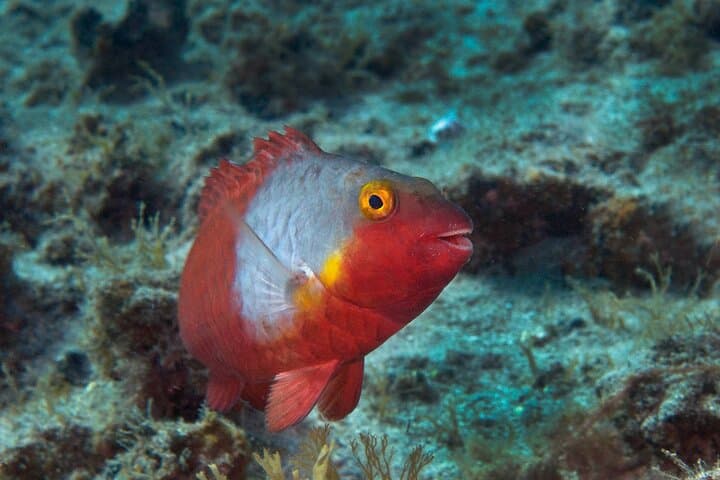
The water tastes faintly mineral as you slip the mask over your face and look down—an expanse of cobalt broken by black lava fingers and sunlit patches of sand. Small fish weave through rocky outcrops like commuters between towers; a parrotfish grinds at a sponge and a puffed bream inspects you as though you are the oddity. The guide counts heads, points to a tangle of bright orange sponge, and the Atlantic seems to move with intention, inviting and testing in equal measure.
The water tastes faintly mineral as you slip the mask over your face and look down—an expanse of cobalt broken by black lava fingers and sunlit patches of sand. Small fish weave through rocky outcrops like commuters between towers; a parrotfish grinds at a sponge and a puffed bream inspects you as though you are the oddity. The guide counts heads, points to a tangle of bright orange sponge, and the Atlantic seems to move with intention, inviting and testing in equal measure.
This is southern Lanzarote, a coastline shaped by fire. The island’s geology is recent on a human scale—lavas from the 18th-century eruptions smoothed into cliffs and coves where clear water fills shallow basins. Local fishermen have read these currents for generations; today small guided groups follow those same channels to the best reefs, where volcanic rock gives structure to a surprising diversity of marine life. Cultural echoes are at the edge of the beaches: whitewashed villas and wind-sculpted stone walls remind you that this archipelago is both a wilderness and a living place.
The operator’s 90-minute guided snorkel is designed for beginners and curious travelers. A short briefing covers species identification, the ethical rules of interacting with wildlife, and how to use gear properly. Then you enter the water—often in coves near Playa Blanca or the Papagayo beaches—where depths are typically 2–6 meters and visibility commonly ranges from 10 to 20 meters. Guides bring a pocket fish ID book and a small bag for collected trash; it’s as much about seeing as it is about leaving no trace.
Practicalities matter: water temperatures hover from about 18°C in winter to 23°C in summer, so a thin wetsuit is often comfortable outside high summer. Expect rocky entry and exit points; fins and a snug mask make all the difference. The activity is suitable for anyone who can swim and is comfortable in open water, and operators usually offer free pickup in Playa Blanca with instant confirmation and a 24-hour cancellation window.
For photographers, mornings are typically calmer; late afternoon sends warm light across the lava and highlights the coastline. Keep close to guides, respect the rules about touching, and use reef-safe sunscreen. This snorkel is an accessible way to meet the Atlantic off Lanzarote—a short, focused encounter that leaves you with clearer eyes for both the sea and the volcanic landscape that frames it.