THE ADVENTURE COLLECTIVE® · Independent discovery and booking for outdoor travel

Float over one of the world’s top shore-diving reefs under Blue Heron Bridge with an expert guide. This 75-minute small-group snorkel tour offers close views of octopus, parrotfish and stingrays in calm, shallow water accessible from Phil Foster Park.
Float over one of the world’s top shore-diving reefs under Blue Heron Bridge with an expert guide. This 75-minute small-group snorkel tour offers close views of octopus, parrotfish and stingrays in calm, shallow water accessible from Phil Foster Park.
The first breath of salt arrives before you step off the sand: warm Atlantic water laps a protected inlet beneath a low concrete bridge, and the surface glitters with the tight choreography of small fish. You wade in from Phil Foster Park and, guided by instructors who read the reef like a map, slide into water six to ten feet deep where coral rubble, sponges and concrete pilings host a surprising urban reef.
Verified experiences and guided adventures in the surrounding area.
The first breath of salt arrives before you step off the sand: warm Atlantic water laps a protected inlet beneath a low concrete bridge, and the surface glitters with the tight choreography of small fish. You wade in from Phil Foster Park and, guided by instructors who read the reef like a map, slide into water six to ten feet deep where coral rubble, sponges and concrete pilings host a surprising urban reef.
Blue Heron Bridge rose to fame as a shore-diving hotspot because of its unique geology and human history — storm-deposited rock and old bridge structures combine with warm Gulf Stream-influenced waters to create a nursery-like environment for reef life. Local dive culture here values small groups, low-impact practices, and freediving skills that minimize disturbance to delicate critters like juvenile fishes and octopus.
Expect close encounters: parrotfish scraping algae, spadefish schooling around pilings, curious octopuses probing crevices, and the occasional southern stingray gliding across sand patches. The site’s calm, inland position behind barrier islands keeps currents gentle, so snorkelers of all levels can linger without battling swell.
Practical notes: tours run about 75 minutes with roughly 60 in-water, and guides provide masks, snorkels and instruction — know how to swim. Arrive early to check gear fit, apply reef-safe sunscreen, and secure waterproof cameras if you want photos. Peak visibility tends to be morning; visibility can decline after storms. Follow guide directions on buoyancy and distance from the reef to protect both you and the habitat, and plan for simple shore access from the southwest corner of Phil Foster Park.
easy.
1–1.5 hours.
Suitable for travelers with moderate fitness who can swim and tread water for short periods; minimal surface swimming required.
Yes — all participants must be able to swim and be comfortable in open water; guides can assist but cannot substitute basic swimming ability.
Yes — the tour includes use of snorkeling equipment, but many guests bring their own masks for fit and comfort.
Depth ranges roughly 6–10 feet; visibility is usually good in calm mornings but can drop after storms or strong winds.
Children who can swim and keep up with the group are allowed; confirm age limits and life jacket options with the operator when booking.
The Blue Heron Bridge reef formed where bridge pilings and coastal deposits combined, and a local diver community helped document its biodiversity, turning an urban spot into a conservation-minded attraction.
Operators promote low-contact snorkeling and reef-safe products; avoid touching or collecting marine life and follow guide instructions to reduce habitat impact.
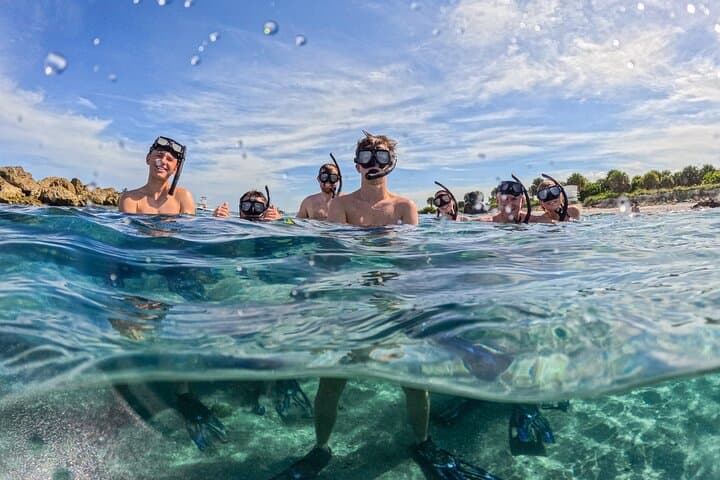
The first breath of salt arrives before you step off the sand: warm Atlantic water laps a protected inlet beneath a low concrete bridge, and the surface glitters with the tight choreography of small fish. You wade in from Phil Foster Park and, guided by instructors who read the reef like a map, slide into water six to ten feet deep where coral rubble, sponges and concrete pilings host a surprising urban reef.
The first breath of salt arrives before you step off the sand: warm Atlantic water laps a protected inlet beneath a low concrete bridge, and the surface glitters with the tight choreography of small fish. You wade in from Phil Foster Park and, guided by instructors who read the reef like a map, slide into water six to ten feet deep where coral rubble, sponges and concrete pilings host a surprising urban reef.
Blue Heron Bridge rose to fame as a shore-diving hotspot because of its unique geology and human history — storm-deposited rock and old bridge structures combine with warm Gulf Stream-influenced waters to create a nursery-like environment for reef life. Local dive culture here values small groups, low-impact practices, and freediving skills that minimize disturbance to delicate critters like juvenile fishes and octopus.
Expect close encounters: parrotfish scraping algae, spadefish schooling around pilings, curious octopuses probing crevices, and the occasional southern stingray gliding across sand patches. The site’s calm, inland position behind barrier islands keeps currents gentle, so snorkelers of all levels can linger without battling swell.
Practical notes: tours run about 75 minutes with roughly 60 in-water, and guides provide masks, snorkels and instruction — know how to swim. Arrive early to check gear fit, apply reef-safe sunscreen, and secure waterproof cameras if you want photos. Peak visibility tends to be morning; visibility can decline after storms. Follow guide directions on buoyancy and distance from the reef to protect both you and the habitat, and plan for simple shore access from the southwest corner of Phil Foster Park.