THE ADVENTURE COLLECTIVE® · Independent discovery and booking for outdoor travel

Scramble up rounded granite, learn route-reading and move techniques, and take desert panoramas from exposed ledges in Joshua Tree National Park. This guided half-day tour blends hands-on instruction with family-friendly adventure and big-sky views.
Scramble up rounded granite, learn route-reading and move techniques, and take desert panoramas from exposed ledges in Joshua Tree National Park. This guided half-day tour blends hands-on instruction with family-friendly adventure and big-sky views.
The day opens with high desert light—granite faces glow pale gold while wind carries the dry scent of creosote and overripe yucca. Guides gather the group at a trailhead, brief everyone on hand-and-foot moves, and point to the first cluster of boulders that rise like ship hulls from sand.
Verified experiences and guided adventures in the surrounding area.
Operated by Joshua Tree Tours and Experiences, LLC · Joshua Tree, CA
The day opens with high desert light—granite faces glow pale gold while wind carries the dry scent of creosote and overripe yucca. Guides gather the group at a trailhead, brief everyone on hand-and-foot moves, and point to the first cluster of boulders that rise like ship hulls from sand.
Joshua Tree’s landscape is geologically young granite, weathered into rounded monoliths and tight chimneys. The park sits at the collision zone between the Mojave and Colorado deserts; elevation and faulting produce sudden ridgelines and panoramic basins. Culturally the area holds deep meaning for Cahuilla and Serrano peoples and later drew miners, homesteaders, and climbers who left a patchwork of routes and names on these rocks.
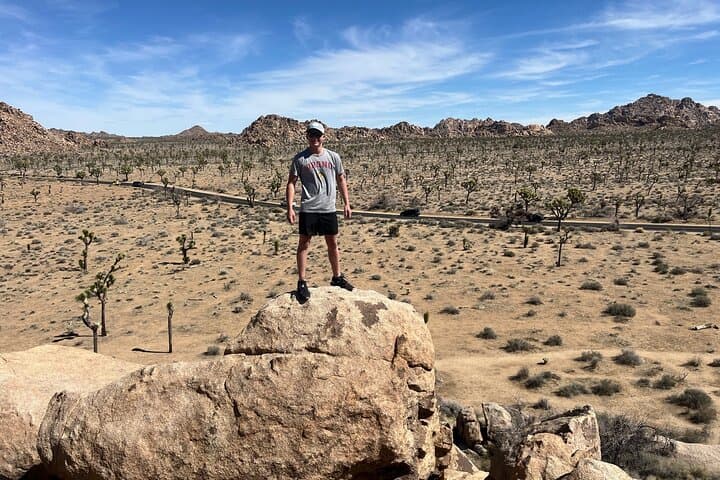
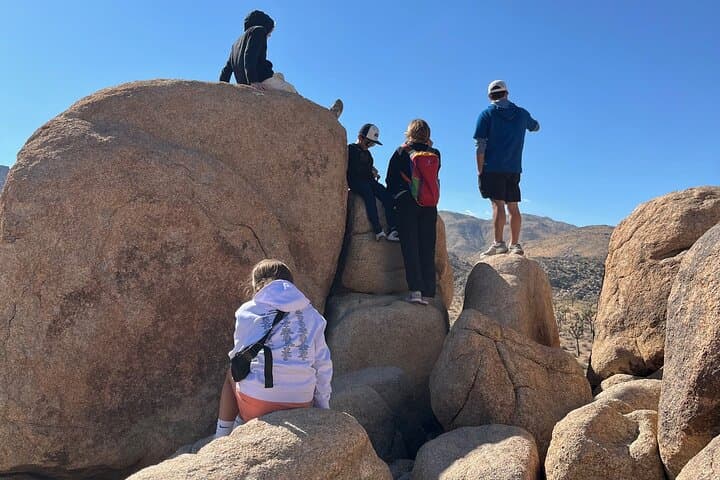
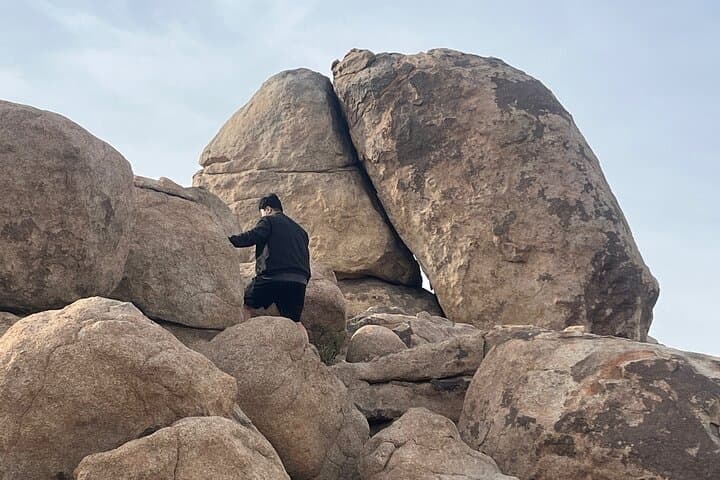
On a scramble, expect varied terrain: sandy washes, broken slab, stacked boulders and short exposed chimneys. Moves are typically non-technical but steep—hands for balance, feet for smears—and each ledge rewards a wider view of spiny Joshua trees and distant desert peaks. Guides teach route reading, low-angle protection, and safe spotting.
Practically: wear grippy shoes, layer early-morning cold away, and carry 1–2 liters of water per person; shade is sparse. Tours usually run about four hours, traverse multiple scramble zones, and suit fit, agile hikers rather than pure climbers. Weather dictates difficulty—heat and flash storms change the equation—so plan for early starts in summer and mid-day outings shoulder seasons. With attention to footing and hydration, this is an accessible, stirring way to engage Joshua Tree’s rockwork and open panoramas.
challenging.
4 hours.
Good aerobic fitness and balance; comfortable with frequent scrambling and short exposed sections.
No technical climbing is required, but participants should be comfortable using hands and feet on steep, exposed rock and have good balance.
Bring at least 1–2 liters per person; guides provide bottled water but personal supply is advised, especially in summer.
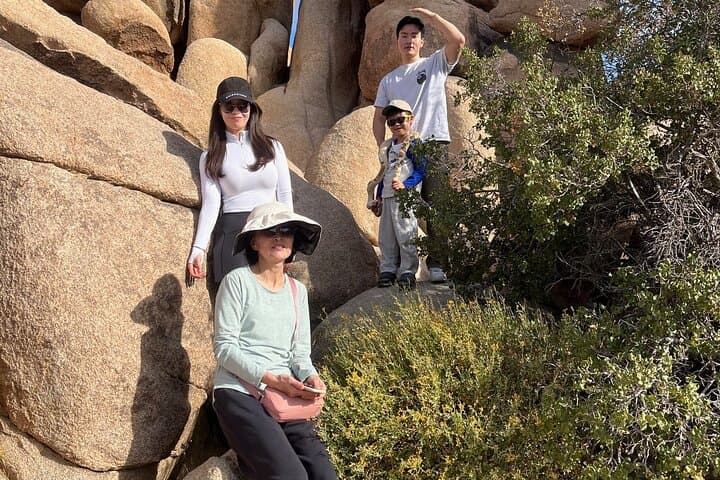
Families can join but children should be old enough to follow instruction and handle sustained scrambling—check operator age limits before booking.
Tours may be canceled for lightning, heavy rain, or unsafe conditions—operators typically offer a refund or rescheduling per their policy.
The granite formed from molten rock uplifted and fractured by faulting; the park preserves Indigenous cultural sites and a history of 20th-century climbing development.
Stick to established routes and pack out waste—biological soil crusts and slow-growing desert plants are fragile and recover slowly from disturbance.
Joshua Tree Tours and Experiences, LLC operates guided outdoor trips and adventures with an emphasis on safety, stewardship, and memorable experiences.
The day opens with high desert light—granite faces glow pale gold while wind carries the dry scent of creosote and overripe yucca. Guides gather the group at a trailhead, brief everyone on hand-and-foot moves, and point to the first cluster of boulders that rise like ship hulls from sand.
The day opens with high desert light—granite faces glow pale gold while wind carries the dry scent of creosote and overripe yucca. Guides gather the group at a trailhead, brief everyone on hand-and-foot moves, and point to the first cluster of boulders that rise like ship hulls from sand.
Joshua Tree’s landscape is geologically young granite, weathered into rounded monoliths and tight chimneys. The park sits at the collision zone between the Mojave and Colorado deserts; elevation and faulting produce sudden ridgelines and panoramic basins. Culturally the area holds deep meaning for Cahuilla and Serrano peoples and later drew miners, homesteaders, and climbers who left a patchwork of routes and names on these rocks.
On a scramble, expect varied terrain: sandy washes, broken slab, stacked boulders and short exposed chimneys. Moves are typically non-technical but steep—hands for balance, feet for smears—and each ledge rewards a wider view of spiny Joshua trees and distant desert peaks. Guides teach route reading, low-angle protection, and safe spotting.
Practically: wear grippy shoes, layer early-morning cold away, and carry 1–2 liters of water per person; shade is sparse. Tours usually run about four hours, traverse multiple scramble zones, and suit fit, agile hikers rather than pure climbers. Weather dictates difficulty—heat and flash storms change the equation—so plan for early starts in summer and mid-day outings shoulder seasons. With attention to footing and hydration, this is an accessible, stirring way to engage Joshua Tree’s rockwork and open panoramas.