THE ADVENTURE COLLECTIVE® · Independent discovery and booking for outdoor travel

Learn to climb on Tenerife’s volcanic walls with a certified guide in a private, half-day session. Small groups, progressive coaching and sun-warmed sport routes make Arico a perfect playground for beginners and intermediate climbers alike.
Learn to climb on Tenerife’s volcanic walls with a certified guide in a private, half-day session. Small groups, progressive coaching and sun-warmed sport routes make Arico a perfect playground for beginners and intermediate climbers alike.
The cliff smells faintly of salt and sun-baked stone as you clip in and look up: a wall of volcanic rock, textured like old leather, rising above the scrubby Canary laurel and sun-baked terraces. A white van idles at the DISA gas station in Arico Viejo — the meet point — and within 15 minutes you’ll be at the base of the crag, harness snug, helmet on, belts of rope coiling like patient serpents at your feet.
Verified experiences and guided adventures in the surrounding area.
Operated by Tenerife Rock&Nature · Arico, Santa Cruz de Tenerife
The cliff smells faintly of salt and sun-baked stone as you clip in and look up: a wall of volcanic rock, textured like old leather, rising above the scrubby Canary laurel and sun-baked terraces. A white van idles at the DISA gas station in Arico Viejo — the meet point — and within 15 minutes you’ll be at the base of the crag, harness snug, helmet on, belts of rope coiling like patient serpents at your feet.
Tenerife’s climbing culture is younger than the island’s human history but no less intense. The archipelago is the product of volcanic fire; the crags here are volcanic rock—abrasive, pocketed and compact—formed from flows and explosive eruptions that carved ridgelines and steep faces. The south-eastern slopes where Arico sits have become a hub for sport climbing: short approaches, sun-drenched walls, and routes bolted into rock that still remembers lava.
Your guide is certified by Spain’s active-tourism authority and frames the day as a progression. Safety drills—harness adjustment, tying in, rope position, quickdraw technique, clipping, anchor management, and belay device use—are threaded through every pitch until they become second nature. The session is tailored: beginners spend time on top-rope movement and confidence-building; more experienced climbers work on lead technique and clipping economy. Groups top out at four, so coaching is intimate rather than rushed.
There’s a local rhythm to climbing in Arico. Mornings are for shade and instruction; by midafternoon the walls bake and the wind off the Atlantic can either soothe or test your focus. After a day on the rock many climbers slip down to the coast — El Médano or La Tejita — for cold beer and papas arrugadas with mojo, the island’s salt-and-potato ritual.
Practicalities: the outing runs about five hours with a short 10–20 minute approach. All technical group gear is provided—ropes, quickdraws, helmets, harnesses—but guides recommend bringing your own climbing shoes when possible. Expect moderate physical demand: repeated climbing efforts, standing on small edges, and some scrambling on approach. The operator accepts children from age five, but participants should be in good cardiovascular health; pregnancy and heart conditions are not recommended.
Pack sun protection, 1.5–2 liters of water, grippy footwear for the approach, and a small daypack for layers and snacks. Start early in summer to avoid heat; fall through spring usually offer the best temperatures for sustained climbing. Above all, come ready to learn: the guide’s job is to give you tools you can carry off the rock — concentration, control, and a steady, confident foot placement that will make you feel more like a climber when you leave.
moderate.
5 hours.
Moderate fitness—able to hike short approaches and perform repetitive climbing moves; good balance and core strength help.
Meet at the DISA gas station in Arico Viejo; from there the guide will drive or lead you to the crag—plan to arrive 10 minutes early.
No—sessions are tailored to all levels. Beginners will focus on belaying and top-rope technique while more experienced climbers can work on lead skills.
Group technical gear is supplied (ropes, quickdraws, helmets, harnesses); you may bring your own climbing shoes and chalk if preferred.
Children from age five are welcome, but they should be comfortable with heights and able to follow safety instruction.
Activities are canceled for bad weather; full refunds are offered if canceled at least 24 hours before the start time.
Guides are certified locally; they commonly speak Spanish and often English, but confirm language needs when booking.
Climbing on Tenerife grew with the island’s tourism boom in the late 20th century; the volcanic cliffs around Arico are carved from successive lava flows and erosion that expose compact, climbable faces.
Stick to established paths, avoid trampling rare laurel seedlings, and pack out all trash; bolting routes was done with local permits—respect fixed anchors and local access rules.
Tenerife Rock&Nature operates guided outdoor trips and adventures with an emphasis on safety, stewardship, and memorable experiences.
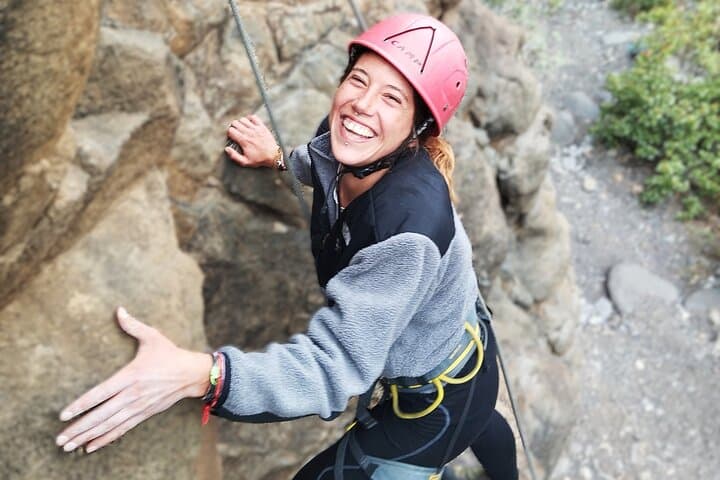
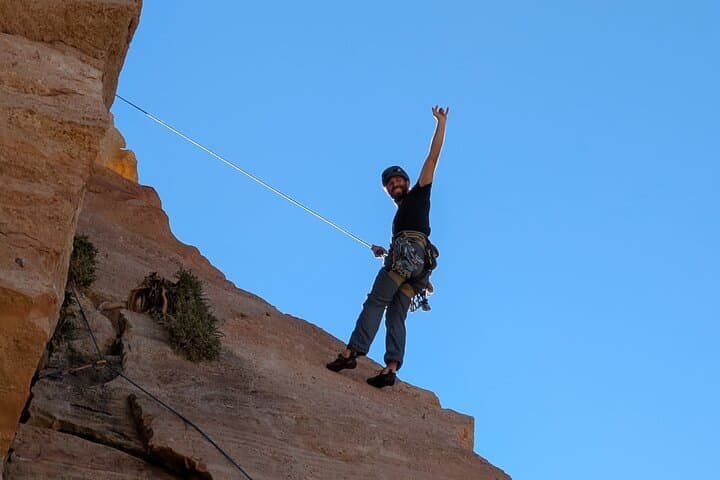
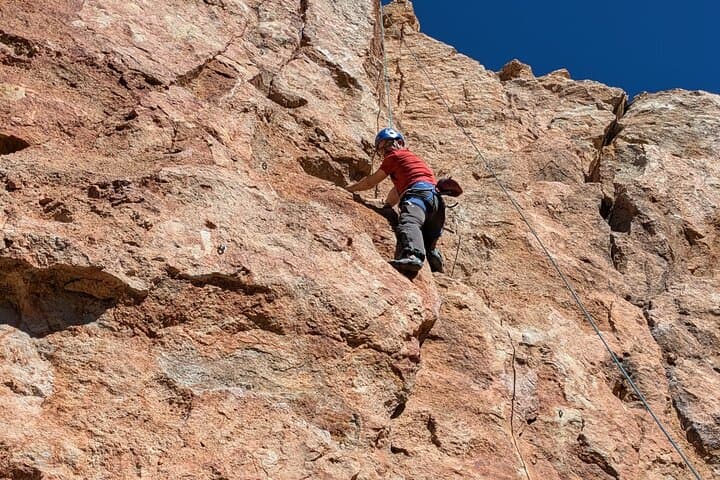
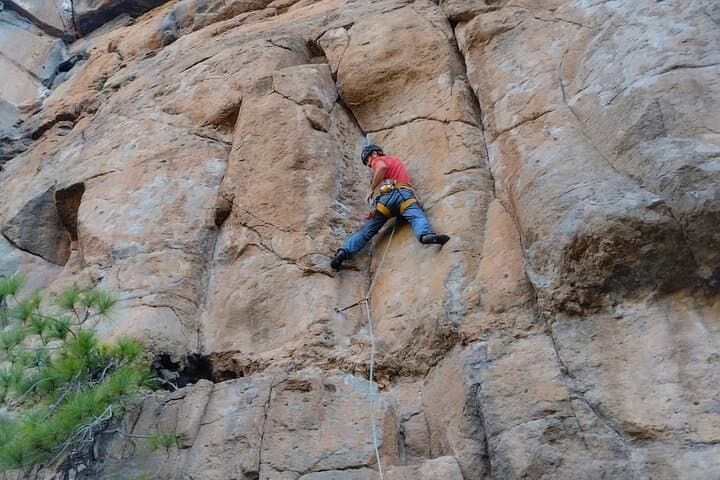
The cliff smells faintly of salt and sun-baked stone as you clip in and look up: a wall of volcanic rock, textured like old leather, rising above the scrubby Canary laurel and sun-baked terraces. A white van idles at the DISA gas station in Arico Viejo — the meet point — and within 15 minutes you’ll be at the base of the crag, harness snug, helmet on, belts of rope coiling like patient serpents at your feet.
The cliff smells faintly of salt and sun-baked stone as you clip in and look up: a wall of volcanic rock, textured like old leather, rising above the scrubby Canary laurel and sun-baked terraces. A white van idles at the DISA gas station in Arico Viejo — the meet point — and within 15 minutes you’ll be at the base of the crag, harness snug, helmet on, belts of rope coiling like patient serpents at your feet.
Tenerife’s climbing culture is younger than the island’s human history but no less intense. The archipelago is the product of volcanic fire; the crags here are volcanic rock—abrasive, pocketed and compact—formed from flows and explosive eruptions that carved ridgelines and steep faces. The south-eastern slopes where Arico sits have become a hub for sport climbing: short approaches, sun-drenched walls, and routes bolted into rock that still remembers lava.
Your guide is certified by Spain’s active-tourism authority and frames the day as a progression. Safety drills—harness adjustment, tying in, rope position, quickdraw technique, clipping, anchor management, and belay device use—are threaded through every pitch until they become second nature. The session is tailored: beginners spend time on top-rope movement and confidence-building; more experienced climbers work on lead technique and clipping economy. Groups top out at four, so coaching is intimate rather than rushed.
There’s a local rhythm to climbing in Arico. Mornings are for shade and instruction; by midafternoon the walls bake and the wind off the Atlantic can either soothe or test your focus. After a day on the rock many climbers slip down to the coast — El Médano or La Tejita — for cold beer and papas arrugadas with mojo, the island’s salt-and-potato ritual.
Practicalities: the outing runs about five hours with a short 10–20 minute approach. All technical group gear is provided—ropes, quickdraws, helmets, harnesses—but guides recommend bringing your own climbing shoes when possible. Expect moderate physical demand: repeated climbing efforts, standing on small edges, and some scrambling on approach. The operator accepts children from age five, but participants should be in good cardiovascular health; pregnancy and heart conditions are not recommended.
Pack sun protection, 1.5–2 liters of water, grippy footwear for the approach, and a small daypack for layers and snacks. Start early in summer to avoid heat; fall through spring usually offer the best temperatures for sustained climbing. Above all, come ready to learn: the guide’s job is to give you tools you can carry off the rock — concentration, control, and a steady, confident foot placement that will make you feel more like a climber when you leave.