THE ADVENTURE COLLECTIVE® · Independent discovery and booking for outdoor travel

Climb the columns of Devils Tower with certified guides who teach trad multipitch technique while honoring the site’s cultural significance. Expect long crack pitches, quiet prairie views, and a strong Leave No Trace ethic.
Climb the columns of Devils Tower with certified guides who teach trad multipitch technique while honoring the site’s cultural significance. Expect long crack pitches, quiet prairie views, and a strong Leave No Trace ethic.
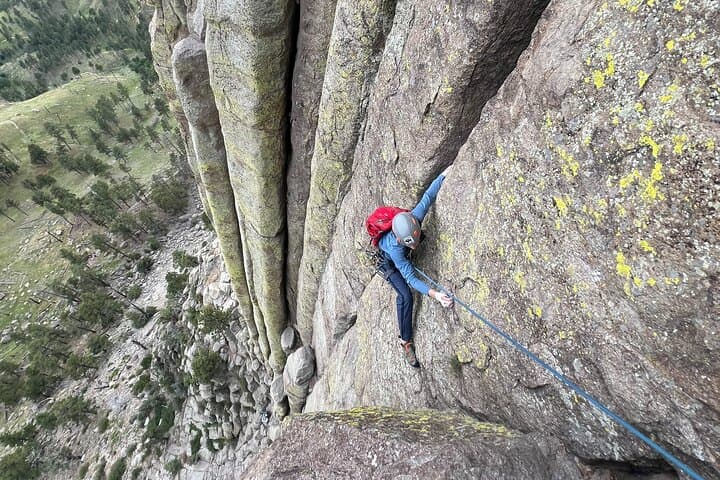
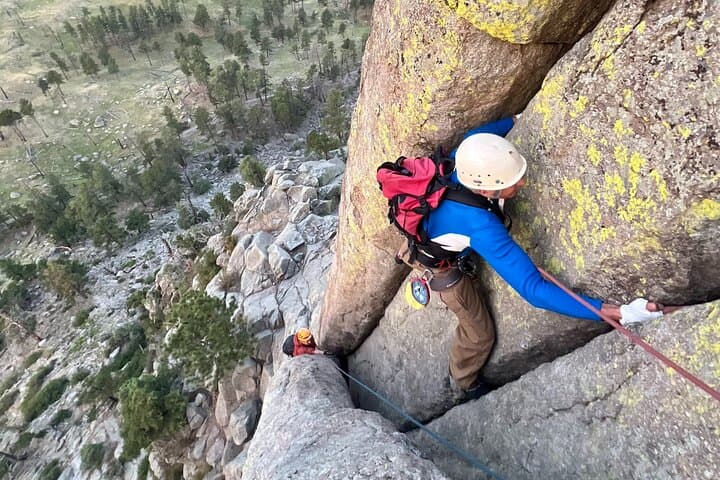
The first steps up the gravel overflow lot feel ordinary — pickup trucks, backpacks, the nervous laugh before a rope goes tight — until the Tower itself rises from the prairie like a man-made cathedral. Granite columns, actually phonolite porphyry cooled into hexagonal pillars, climb straight up from grassland; the rock does not ask you to look, it insists. Climbers gather at the base, harnesses clicking, as guidebriefs parse rope etiquette and the history that sits on the same stone: Bear Lodge, a sacred site for several Plains tribes.
Verified experiences and guided adventures in the surrounding area.
Operated by Wyoming Mountain Guides · Hulett, Wyoming
The first steps up the gravel overflow lot feel ordinary — pickup trucks, backpacks, the nervous laugh before a rope goes tight — until the Tower itself rises from the prairie like a man-made cathedral. Granite columns, actually phonolite porphyry cooled into hexagonal pillars, climb straight up from grassland; the rock does not ask you to look, it insists. Climbers gather at the base, harnesses clicking, as guidebriefs parse rope etiquette and the history that sits on the same stone: Bear Lodge, a sacred site for several Plains tribes.
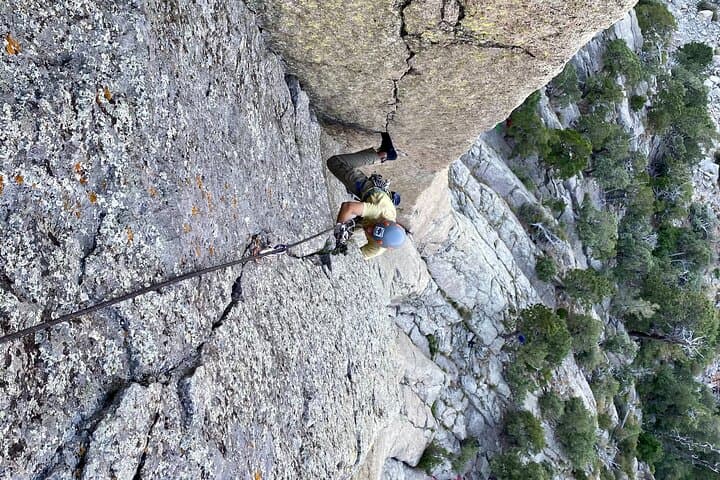
Devils Tower is part geology lesson, part climbing anthology. President Theodore Roosevelt named it the nation’s first national monument in 1906, but indigenous families have told creation stories about the formation for generations. Geologically, the Tower is an igneous intrusion whose cooling fracture patterns produced the dramatic cracks climbers follow. Those cracks delivered some of American trad climbing’s earliest and most famous lines — think Durrance and the East Face — routes first climbed in the early 20th century and still teaching climbers technique today.
Culture and conservation thread through the experience. Local climbing communities observe a voluntary climbing closure each June to honor Native American ceremonies; guides on-site promote Leave No Trace and trad ethics, minimizing fixed gear and avoiding chalk where possible. The prairie around the Tower is fragile; the sparse soil and short-grass ecosystem recovers slowly from off-trail travel.
Practically, guided trips run from half-day beginner introductions to full-day summit pushes. Expect multipitch trad terrain: vertical cracks, finger jams, and long runouts in places. Guides supply helmets, harnesses, and technical gear, and will teach anchor building, efficient transitions, and rope management. Fitness matters — participants should be comfortable with sustained climbing and exposure. The meeting spot is the upper gravel overflow lot at the Devils Tower Visitor Center; do not park in the paved lot.
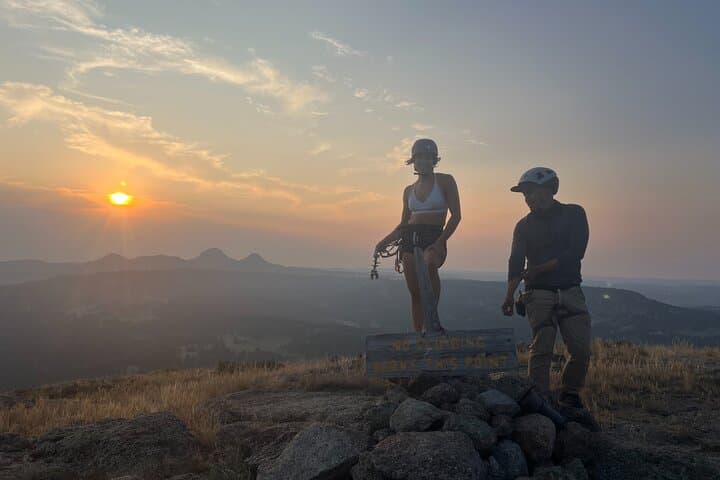
Timing is a tactical choice. Early starts cool the rock and shrink crowds; midweek visits ease parking and trail noise. Sun comes in hard on west-facing routes in summer, making dawn or late afternoon the better windows for long climbs. Water is limited at the monument: bring a hydration plan and sun protection. If you want quieter views after climbing, walk the short Tower Trail loop for changing perspectives and better photo angles.
A guided ascent of Devils Tower is more than a tick on a climbing resume. It is a day spent practicing hard-earned technique on columnar stone while learning the cultural and ecological contours that shape this place. Come prepared, move deliberately, and leave the Tower as you found it — a vertical classroom for the next generation of climbers.
challenging.
8 hours.
Participants should have a high level of cardiovascular fitness and be comfortable with sustained climbing and exposure.
No for guided beginner half-day programs — guides will top-rope and teach technique — but summit attempts and harder lines assume prior trad or multi-pitch experience.
Local tribes request climbers avoid the Tower during June for cultural ceremonies; many guides honor this and offer alternatives or rescheduling.
Meet at the upper gravel overflow lot at the Devils Tower Visitor Center; do not park in the paved lot used by other visitors.
Bring layered clothing, sun protection, 2–3 liters of water, snacks, any personal medications, and your sense of adventure; technical gear is provided by guides.
Age and ability limits vary by operator; expect fitness and weight requirements for safety — check booking questions in advance.
Guides may postpone or reroute climbs for lightning or unsafe conditions; check cancellation policy and plan flexible travel timing.
Designated the first U.S. national monument in 1906, Devils Tower is also known as Bear Lodge and holds long-standing cultural significance for several Plains tribes.
Climbing groups promote Leave No Trace and minimize fixed gear; respect the voluntary June closure and stay on trails to protect fragile soils and native plants.
Wyoming Mountain Guides operates guided outdoor trips and adventures with an emphasis on safety, stewardship, and memorable experiences.
The first steps up the gravel overflow lot feel ordinary — pickup trucks, backpacks, the nervous laugh before a rope goes tight — until the Tower itself rises from the prairie like a man-made cathedral. Granite columns, actually phonolite porphyry cooled into hexagonal pillars, climb straight up from grassland; the rock does not ask you to look, it insists. Climbers gather at the base, harnesses clicking, as guidebriefs parse rope etiquette and the history that sits on the same stone: Bear Lodge, a sacred site for several Plains tribes.
The first steps up the gravel overflow lot feel ordinary — pickup trucks, backpacks, the nervous laugh before a rope goes tight — until the Tower itself rises from the prairie like a man-made cathedral. Granite columns, actually phonolite porphyry cooled into hexagonal pillars, climb straight up from grassland; the rock does not ask you to look, it insists. Climbers gather at the base, harnesses clicking, as guidebriefs parse rope etiquette and the history that sits on the same stone: Bear Lodge, a sacred site for several Plains tribes.
Devils Tower is part geology lesson, part climbing anthology. President Theodore Roosevelt named it the nation’s first national monument in 1906, but indigenous families have told creation stories about the formation for generations. Geologically, the Tower is an igneous intrusion whose cooling fracture patterns produced the dramatic cracks climbers follow. Those cracks delivered some of American trad climbing’s earliest and most famous lines — think Durrance and the East Face — routes first climbed in the early 20th century and still teaching climbers technique today.
Culture and conservation thread through the experience. Local climbing communities observe a voluntary climbing closure each June to honor Native American ceremonies; guides on-site promote Leave No Trace and trad ethics, minimizing fixed gear and avoiding chalk where possible. The prairie around the Tower is fragile; the sparse soil and short-grass ecosystem recovers slowly from off-trail travel.
Practically, guided trips run from half-day beginner introductions to full-day summit pushes. Expect multipitch trad terrain: vertical cracks, finger jams, and long runouts in places. Guides supply helmets, harnesses, and technical gear, and will teach anchor building, efficient transitions, and rope management. Fitness matters — participants should be comfortable with sustained climbing and exposure. The meeting spot is the upper gravel overflow lot at the Devils Tower Visitor Center; do not park in the paved lot.
Timing is a tactical choice. Early starts cool the rock and shrink crowds; midweek visits ease parking and trail noise. Sun comes in hard on west-facing routes in summer, making dawn or late afternoon the better windows for long climbs. Water is limited at the monument: bring a hydration plan and sun protection. If you want quieter views after climbing, walk the short Tower Trail loop for changing perspectives and better photo angles.
A guided ascent of Devils Tower is more than a tick on a climbing resume. It is a day spent practicing hard-earned technique on columnar stone while learning the cultural and ecological contours that shape this place. Come prepared, move deliberately, and leave the Tower as you found it — a vertical classroom for the next generation of climbers.